
Crate training is not about confinement; it is about creating a safe sanctuary where your dog can retreat, relax, and feel secure. When done correctly, a crate becomes your dog's favorite place, mimicking the den-like environments their wild ancestors sought for rest and protection. This comprehensive 2026 guide will walk you through evidence-based methods that prioritize your dog's emotional wellbeing while solving common behavioral challenges.
Whether you have a new puppy who needs house training, an adopted rescue dealing with anxiety, or an adult dog who needs structure, positive crate training is one of the most valuable skills you can teach. Done wrong, crates become prisons; done right, they become bedrooms. Let us explore the science-backed approach that builds trust rather than fear. For related behavioral guidance, see our guide on Understanding Dog Behavior.
Table of Contents
- What Is Crate Training and Why It Matters
- Understanding the Den Instinct
- Choosing the Right Crate
- Setting Up the Perfect Crate Environment
- Step-by-Step Training Protocol
- Sample Crate Training Schedule
- Nighttime Crate Training
- Troubleshooting Common Issues
- Top 3 Recommended Dog Crates
- Frequently Asked Questions

What Is Crate Training and Why It Matters in 2026
Crate training is the process of teaching your dog to view a crate as a safe, comfortable space rather than a punishment tool. Modern training methodology has evolved significantly from the old "cry it out" approaches. Today's positive reinforcement methods focus on creating voluntary, enthusiastic crate use through gradual desensitization and counter-conditioning.
The benefits of proper crate training extend far beyond housebreaking:
- Housetraining assistance: Dogs naturally avoid soiling their sleeping area, making crates invaluable for potty training
- Safety during travel: Secured crates prevent injury during car accidents and reduce driver distraction
- Management during illness: Veterinary recovery often requires restricted activity that crates facilitate
- Prevention of destructive behavior: Confined dogs cannot chew dangerous items or ingest toxins
- Anxiety reduction: A den-like space provides security during stressful events like thunderstorms or fireworks
- Hotel and boarding compliance: Many facilities require crate comfort for overnight stays
According to the American Veterinary Society of Animal Behavior (AVSAB), when introduced properly, crates reduce stress behaviors and provide dogs with a coping mechanism during unavoidable confinement situations like veterinary stays or evacuations during natural disasters.
Critical 2026 Update
Recent veterinary behavior research emphasizes that the quality of crate introduction matters more than the duration. A 2025 study in the Journal of Veterinary Behavior found that dogs introduced to crates using positive association methods showed 73% less stress behavior than those subjected to forced confinement. Never use the crate as punishment, or you will undermine its effectiveness as a safe space.
Best Overall Wire Crate
Top Rated
MidWest Homes for Pets iCrate
Double door folding metal crate with divider panel, leak-proof plastic pan, and protective rubber feet. Includes carrying handle for portability. Available in sizes from 18" to 48".
Check Amazon PriceUnderstanding the Canine Den Instinct
To excel at crate training, you must understand your dog's biological programming. Dogs are den animals by ancestry. In the wild, wolves and wild canids seek out small, enclosed spaces for sleeping, raising young, and escaping harsh weather. This instinct persists in domestic dogs, though to varying degrees by breed and individual temperament.
The Science of Security Spaces
Researcher Dr. John Bradshaw, author of "Dog Sense," explains that enclosed spaces trigger a parasympathetic nervous system response in dogs the "rest and digest" state. When a dog backs into a tight space where nothing can approach from behind, their cortisol (stress hormone) levels measurably drop. This is why dogs often sleep under tables, desks, or in corners.
Breed Considerations
While all dogs can benefit from crate training, some breeds show stronger denning instincts:
Strong Den Instincts
Huskies, Malamutes, Dachshunds, Terriers, and Northern breeds often take to crates immediately as they seek out burrow-like environments. These dogs may naturally curl up in tight spaces.
Gradual Adaptation Needed
Greyhounds, Sight Hounds, and some Giant breeds may need slower introductions due to their history of open-space running or kennel-raising without personal dens.
Choosing the Right Crate: Size, Material, and Type
Selecting the appropriate crate is foundational to success. The wrong size or style can turn a safe space into a source of anxiety.
Size Guidelines
Your dog's crate should be large enough for them to:
- Stand up without hitting their head
- Turn around comfortably in a full circle
- Lie down with legs fully extended
However, for housetraining purposes, it should not be so large that they can eliminate in one corner and sleep in another. Many wire crates include divider panels that allow the space to grow with your puppy.
2026 Crate Size Chart by Breed
Use this guide to select the appropriate dimensions:
| Dog Size | Crate Dimensions | Example Breeds | Weight Range |
|---|---|---|---|
| X-Small | 18" L x 12" W x 14" H | Chihuahua, Yorkie, Maltese | 1-10 lbs |
| Small | 24" L x 18" W x 19" H | Jack Russell, Pug, French Bulldog | 11-25 lbs |
| Medium | 30" L x 19" W x 21" H | Beagle, Border Collie, Corgi | 26-40 lbs |
| Large | 36" L x 23" W x 25" H | Labrador, Golden Retriever, Boxer | 41-70 lbs |
| X-Large | 42" L x 28" W x 30" H | German Shepherd, Rottweiler, Husky | 71-90 lbs |
| XX-Large | 48" L x 30" W x 33" H | Mastiff, Great Dane, Saint Bernard | 90+ lbs |
*When in doubt, size up. A crate slightly too large is better than one too small. Use a divider for growing puppies.
Crate Material Comparison
| Type | Best For | Pros | Cons |
|---|---|---|---|
| Wire | Home use, puppies | Maximum ventilation, folding storage, divider panels available, easy to clean | Heavier, some dogs like privacy covers |
| Plastic | Travel, airline approved | Cozy enclosed feeling, lightweight, approved for cargo travel | Limited ventilation, harder to clean, no dividers |
| Soft-Side | Trained dogs, travel | Lightweight, portable, stores flat | Chewable, not for puppies or anxious chewers |
| Furniture Style | Living spaces, aesthetics | Blends with decor, dual purpose (end table) | Expensive, heavy, limited ventilation |

Setting Up the Perfect Crate Environment
The physical setup of the crate significantly impacts your dog's willingness to enter voluntarily. Think of it as interior design for dog psychology.
Location Strategy
Place the crate in a high-traffic family area during training. Isolation increases anxiety. Your dog should feel part of the family even when crated. Avoid direct sunlight, drafts, or near heating vents. For nighttime, consider a bedroom location initially, then gradually move to a permanent spot if desired.
Bedding and Comfort
Start with a thin, washable mat or old towel rather than an expensive bed. Some puppies will chew bedding initially. Once chewing stops, upgrade to orthopedic beds for senior dogs or memory foam for long crate periods. Avoid newspaper it can teach dogs to eliminate on paper textures.
Pro Setup Tips
- Cover 3 sides of a wire crate with a blanket to create a den-like atmosphere (leave front open)
- Place a worn t-shirt with your scent inside for comfort
- Include a safe chew toy (Kong with frozen peanut butter is ideal)
- Always remove collars to prevent hanging accidents
- Ensure water access using a crate bowl or bottle for long durations
Best Travel Crate
Airline Approved
Petmate Sky Kennel Portable Crate
IATA airline approved with 360-degree ventilation, secure interlocking door, and durable plastic shell. Includes travel necessities like "Live Animal" stickers and clip-on bowls.
Check Amazon PriceThe 4-Phase Crate Training Protocol
This evidence-based protocol emphasizes choice and positive reinforcement. Rushing any phase creates anxiety and setbacks. Most dogs progress through all phases in 2-4 weeks, but adjustment varies by age, history, and temperament.
Phase 1: Introduction and Positive Association (Days 1-3)
Goal: Dog voluntarily enters crate without force.
Exploration Without Pressure
Set up the crate with door tied open or removed. Toss high-value treats inside (chicken, cheese, hot dogs). Let your dog investigate without any prompting. Do not point or push let them choose to enter. Praise and toss more treats when they stick their head in.
Mealtime Migration
Begin feeding meals just inside the crate entrance. Gradually move the bowl further back over several meals until your dog is standing fully inside to eat. Do not close the door yet.
First Door Closure
Once your dog eats comfortably inside, feed a meal, then close the door while they eat. Open immediately when they finish. Gradually extend the time after eating by 1-2 minutes before opening, provided they remain calm.
Phase 2: Building Duration (Days 4-7)
Goal: Dog remains calm in closed crate for 30 minutes.
Duration Building Protocol
Use a "stationing" cue like "Crate" or "Bed." Toss treat inside, say cue as dog enters, then close door. Sit nearby and reward calm behavior every few minutes. If whining occurs, wait for 2 seconds of silence before opening (never open during vocalization). Start with 5 minutes, increase by 5 minutes daily.
Phase 3: Distance Training (Week 2)
Goal: Dog remains calm when you leave the room.
Now you begin adding distance. Crate your dog, give a long-lasting chew (stuffed Kong), then step out of sight for 10 seconds. Return before they finish the treat. Gradually extend absence time while varying your movements (go to kitchen, bathroom, etc.).
Phase 4: Alone Time (Week 3+)
Goal: Dog comfortable alone for 4+ hours (adults) or age-appropriate duration for puppies.
Begin short absences (30 minutes) while running errands. Use a pet camera to monitor. Ensure dog is tired (exercised) and has eliminated before longer crating. Return with calm energy no emotional reunions that create anticipation anxiety.

Sample Crate Training Schedule
Daily Structure for Success
- Wake up, immediate outdoor potty
- Breakfast in crate (door open)
- 15 min play/training
- First crate session: 1-2 hours
- Outdoor potty break
- Exercise walk (20-30 min)
- Free time supervised
- Second crate session: 2-3 hours
- Outdoor potty break
- Dinner in crate
- Family time/training
- Last potty: 11 PM
- Sleep in crate (bedroom ideal)
- Puppies: midnight potty break
- Adults: 6-8 hours sleep
- Consistent wake time
Maximum Crate Duration Guidelines
Never exceed these time limits to prevent physical and psychological harm:
- 8-10 weeks old: 30-60 minutes
- 11-14 weeks old: 1-3 hours
- 15-16 weeks old: 3-4 hours
- 17+ weeks old: 4-5 hours (max)
- Adult dogs: 6-8 hours maximum (less is better)
Puppies cannot physically hold their bladder longer than their age in months plus one hour (4-month-old puppy = 5 hours maximum, but less is better for training).
Nighttime Crate Training Strategies
Nights are often the hardest part of crate training, especially for puppies adjusting to separation from littermates.
Case Study: Max's First Week
When Sarah brought home 9-week-old Max, a Golden Retriever, bedtime was chaos. Following outdated advice to "let him cry it out" resulted in three sleepless nights and a puppy who began fearing the crate. After switching to a positive protocol:
- Night 1: Crate next to Sarah's bed, hand draped inside for comfort. Whining stopped in 10 minutes.
- Night 3: Moved crate 2 feet from bed. Max slept through with one potty break.
- Week 2: Crate moved to hallway outside bedroom. No vocalization.
- Week 4: Max now sleeps in living room crate, 8 hours straight, voluntarily enters at "bedtime."
The key was gradual separation and meeting biological needs (warmth, bathroom, comfort) rather than forcing independence too soon. For more puppy-specific advice, see our complete puppy schedule guide.
Nighttime Best Practices
- Place crate in bedroom initially, then gradually move further away
- Use a snuggle puppy (toy with heartbeat) for young puppies
- Set alarm for midnight potty breaks for puppies under 16 weeks
- Keep nighttime interactions boring no play, dim lights, business only
- Ensure adequate exercise during the day (tired dogs sleep better)
Furniture Style Option
Decor Friendly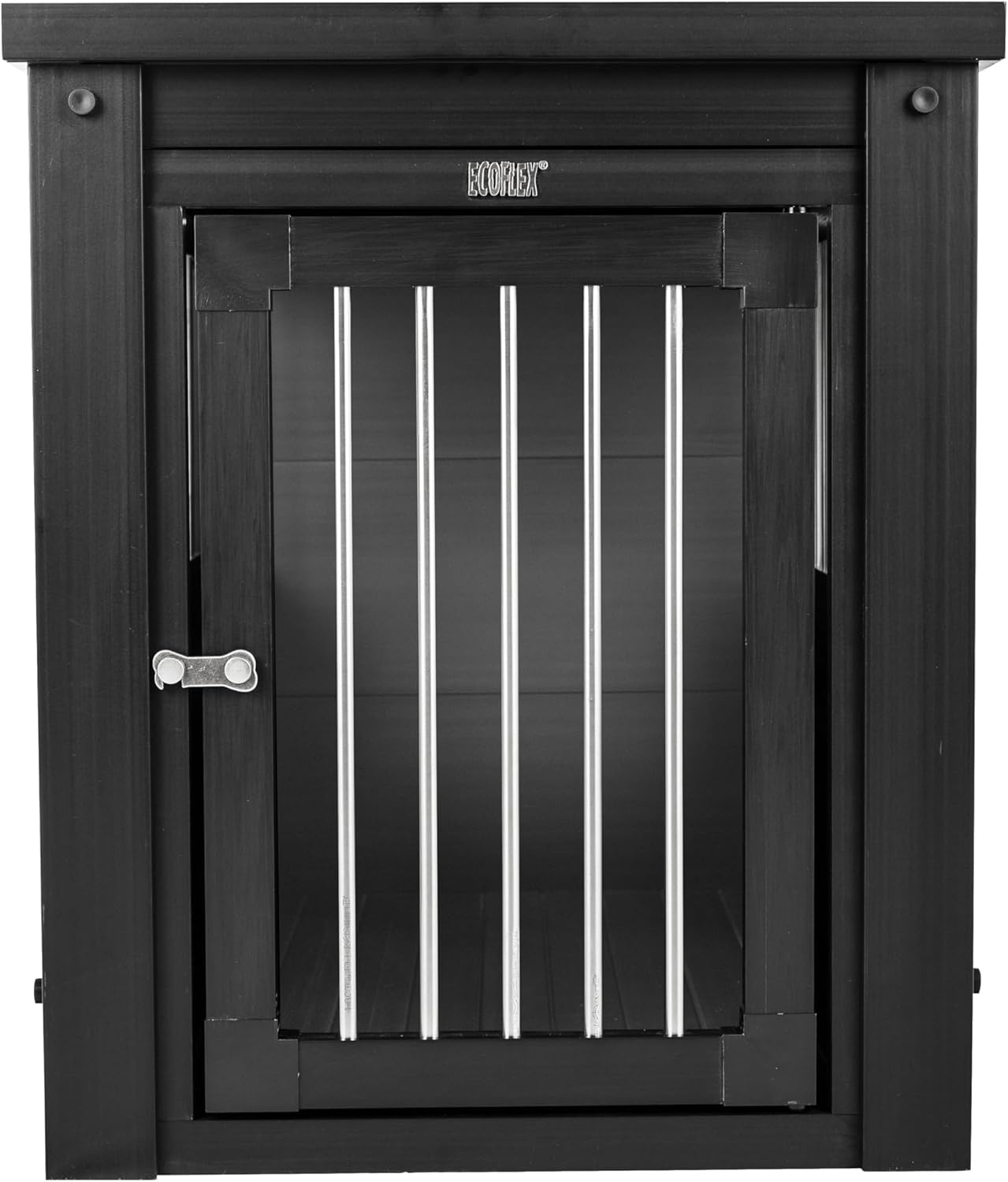
New Age Pet ecoFLEX Crate End Table
Dual-purpose end table and crate made from eco-friendly ecoFLEX material. Spill-proof floor, stainless steel spindles, and furniture-quality finish available in multiple colors. Perfect for living rooms.
Check Amazon PriceTroubleshooting Common Crate Training Issues
Even with perfect protocols, setbacks occur. Here is how to handle the most common challenges:
Problem: Whining and Barking in Crate
DO NOT: Yell, bang on the crate, or release while vocalizing (reinforces the behavior).
DO: Wait for 2-5 seconds of silence before opening. If impossible to wait, distract with a sudden noise (drop keys), then open when quiet. Ensure physical needs are met (potty, water, temperature).
Problem: Eliminating in the Crate
This usually indicates the crate is too large, dog was crated too long, or medical issue (UTI). Remove bedding temporarily (dogs avoid soiling hard surfaces), ensure proper sizing with divider, and increase potty break frequency. Consult vet if sudden change in housetrained adult.
Problem: Refusing to Enter
Go back to Phase 1. Use higher value treats (chicken breast, steak). Feed ALL meals in crate. Play "crate games" toss treat in, dog enters, release with "OK" cue, repeat 10 times daily. Never force or lure with leash choice is essential.
Problem: Separation Anxiety Signs
If your dog shows panic (salivating, destruction, self-injury attempting escape), stop crating and consult a veterinary behaviorist. True separation anxiety requires professional intervention, not just training. The crate can become a trigger for panic if anxiety is severe.
When to Seek Professional Help
- Dog injures themselves attempting escape
- Excessive drooling or panting only when crated
- No progress after 4 weeks of consistent training
- Aggression when approached near crate
- Regression to eliminations after months of success
Contact a board-certified veterinary behaviorist (DACVB).

Additional Training Resources
Final Thoughts on Crate Training Success
Remember that crate training is a journey, not a destination. Some days will be better than others. The goal is not to create a dog who can "endure" the crate, but one who chooses it as a comfortable resting place. Be patient, consistent, and always prioritize your dog's emotional wellbeing over convenience.
When implemented correctly, your dog's crate becomes their den, their bedroom, and their safe haven for life. The time you invest now in positive introductions pays dividends for years in flexibility, safety, and your dog's confidence.