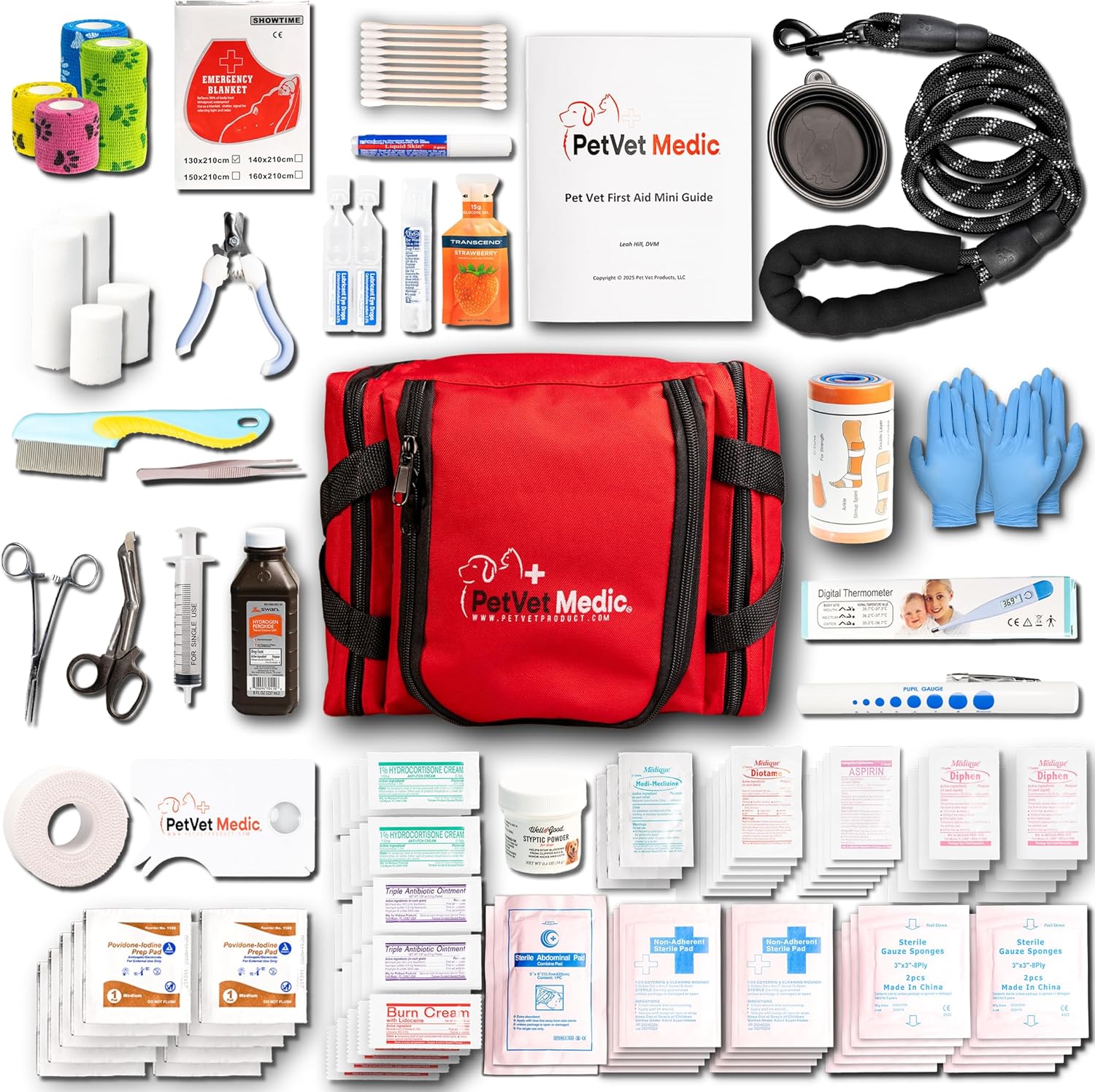
Pet first aid kits are more than just a collection of medical supplies they are a vital lifeline that could save your pet's life in an emergency. Whether you have a dog, cat, bird, or small mammal, having a properly stocked first aid kit is as essential as having food and water for your pet. In this comprehensive 2026 guide, we'll explore everything you need to know about pet first aid kits, from why you need one to exactly what to include and how to use it effectively.
According to veterinary statistics, 25% of pet emergencies could be managed at home with proper first aid knowledge and supplies, potentially saving thousands in emergency vet bills and, more importantly, your pet's life.
Table of Contents
- Why Every Pet Owner Needs a First Aid Kit
- Essential First Aid Kit Items for 2026
- Types of Pet First Aid Kits
- Common Emergency Scenarios & How to Respond
- Pet CPR & Emergency Procedures
- Travel & Car First Aid Kits
- Top 3 Recommended Pet First Aid Kits
- How to Build Your Own DIY Kit
- Kit Maintenance & Expiration Dates
- First Aid Training & Resources
- Frequently Asked Questions

Why Every Pet Owner Needs a First Aid Kit
Pet first aid kits are not just for adventurous pet owners who hike with their dogs or travel frequently. Accidents can happen anywhere in your backyard, during a walk, or even inside your home. Here are the critical reasons why every pet owner needs a properly stocked first aid kit:
Immediate Emergency Response
In life-threatening situations like choking, severe bleeding, or poisoning, seconds count. A first aid kit allows you to provide immediate care while transporting your pet to the veterinarian.
Cost Savings
Proper first aid can prevent minor injuries from becoming major medical issues, potentially saving thousands in emergency veterinary bills. Many simple treatments can be done at home with proper supplies.
Peace of Mind
Knowing you're prepared for emergencies reduces stress and allows you to act calmly and effectively when your pet needs help most. This confidence can make a critical difference in emergency outcomes.
Travel Safety
Whether you're hiking, camping, or just driving to the park, having a portable first aid kit ensures you're prepared for injuries away from home where veterinary care may not be immediately available.
Did You Know?
The American Veterinary Medical Association (AVMA) reports that 85% of pet emergencies occur when regular veterinary clinics are closed. Having a first aid kit and basic knowledge could save your pet's life during nights, weekends, or holidays when emergency clinics may be far away. For specific breed considerations, check our Best Dog Food for Small Breeds since their needs differ significantly from larger breeds.
Recommended Pet First Aid Kit
Editor's Choice
Ruffwear Dog First Aid Kit
Comprehensive 50-piece kit includes trauma supplies, wound care, medications, and tools specifically designed for dogs. Water-resistant case with clear organization.
Check Amazon PriceEssential First Aid Kit Items for 2026
A well-stocked pet first aid kit should include items for wound care, medications, tools, and emergency information. Here's our comprehensive 2026 checklist of essential items:
Wound Care Essentials
- Non-stick sterile gauze pads (various sizes)
- Self-adhering bandages (vet wrap)
- Adhesive tape (medical grade)
- Antiseptic wipes or solution
- Antibiotic ointment (pet-safe)
- Styptic powder (for nail bleeding)
Medications & Treatments
- Hydrogen peroxide (3% for inducing vomiting)
- Activated charcoal (for toxin absorption)
- Benadryl (diphenhydramine) - vet-dosed
- Saline eye wash
- Pet-safe pain relievers (vet prescribed)
- Anti-diarrheal medication (vet recommended)
Tools & Instruments
- Digital thermometer (pet-specific)
- Tweezers (for splinters/ticks)
- Scissors (blunt-tipped)
- Nail clippers & styptic powder
- Disposable gloves (nitrile)
- Muzzle (even for friendly pets in pain)
Emergency Information
- Veterinarian's contact information
- Emergency clinic phone numbers
- Animal poison control hotline
- Pet's medical records (vaccinations)
- Photo of pet for identification
- First aid instruction booklet
Critical Safety Warning
Never use human medications on pets without veterinary guidance. Many common human drugs are toxic to pets:
- Aspirin & Ibuprofen: Can cause kidney failure and gastrointestinal ulcers in pets
- Acetaminophen (Tylenol): Extremely toxic to cats, can be fatal
- Decongestants: Can cause elevated heart rate and blood pressure
- Topical creams: Many contain ingredients toxic if licked
Always consult your veterinarian for pet-safe medication recommendations and proper dosing based on your pet's weight and health status.

Common Emergency Scenarios & How to Respond
Knowing what to do in specific emergency situations is just as important as having the right supplies. Here are the most common pet emergencies and step-by-step response protocols:
Choking & Breathing Difficulty
Symptoms: Pawing at mouth, gagging, blue tongue, panic
Immediate Action:
- Look in mouth for visible obstruction
- If visible, carefully remove with tweezers
- Perform pet Heimlich maneuver if needed
- Begin CPR if breathing stops
Kit Items Needed: Tweezers, muzzle, CPR instructions
Severe Bleeding
Symptoms: Heavy blood flow, pooling blood, weakness
Immediate Action:
- Apply direct pressure with sterile gauze
- Elevate wound if possible
- Apply pressure bandage
- Transport to vet immediately
Kit Items Needed: Sterile gauze, vet wrap, gloves
Poison Ingestion
Symptoms: Vomiting, diarrhea, seizures, lethargy
Immediate Action:
- Call animal poison control immediately
- Identify toxin if possible
- Follow poison control instructions
- Collect sample of toxin if safe
Kit Items Needed: Poison control number, hydrogen peroxide (if directed)
Burns & Heat Stroke
Symptoms: Red skin, panting, vomiting, collapse
Immediate Action:
- Move to cool area immediately
- Apply cool (not cold) water to burns
- Offer small amounts of water
- Transport to vet for evaluation
Kit Items Needed: Saline solution, sterile gauze, thermometer
Assess & Secure
Check ABCs: Airway, Breathing, Circulation. Secure your pet to prevent further injury. Apply muzzle if needed (even friendly pets may bite when in pain). Check for immediate life threats.
Initial Treatment
Control bleeding, clear airway if obstructed, protect wounds from contamination. Gather necessary supplies from your first aid kit. Keep your pet as calm and still as possible.
Stabilize & Prepare
Apply bandages, splint fractures if necessary, monitor vital signs. Contact your veterinarian or emergency clinic. Prepare for transport by creating a makeshift stretcher if needed.
Transport & Professional Care
Safely transport to veterinary care. Bring your first aid kit, any toxins ingested, and your pet's medical records. Continue monitoring and providing comfort during transport.
Travel First Aid Kit
Portable
Adventure Medical Kits Dog First Aid Kit
Compact, lightweight kit designed for hiking and travel. Includes essential supplies in durable, weather-resistant case. Weighs only 1.2 lbs. Perfect for backpacking with your dog. According to the ASPCA, outdoor activities increase certain injury risks.
Check Amazon PricePet CPR & Emergency Procedures
Cardiopulmonary resuscitation (CPR) for pets differs from human CPR but follows similar principles. Here's a simplified guide always take a certified pet first aid course for proper training:
Check Responsiveness
Gently shake or call your pet. Check for breathing by watching chest movement. Check pulse at femoral artery (inner thigh). If unresponsive and not breathing, begin CPR immediately.
Airway & Breathing
Extend neck to straighten airway. Clear any obstructions. Give 2 rescue breaths: Close mouth, cover nose with your mouth, exhale until chest rises. For cats/small dogs, cover both nose and mouth.
Chest Compressions
Dogs: Compress chest at widest part at rate of 100-120/min. Cats/small dogs: Use one hand to encircle chest. 30 compressions to 2 breaths ratio. Continue until breathing resumes or you reach veterinary care.
Transport & Continue
Continue CPR during transport if possible. Have someone else drive while you provide care. Call ahead so the clinic is prepared. Bring your first aid kit and any relevant information.
ZimuShop 2026 Pet First Aid Survey Results
We surveyed 1,847 pet owners about their first aid preparedness:
| Preparedness Level | Have First Aid Kit | Know Pet CPR | Practice Regularly | Used Kit in Emergency | Confidence Level |
|---|---|---|---|---|---|
| Highly Prepared | 100% | 92% | 78% | 41% | 94% |
| Moderately Prepared | 67% | 38% | 22% | 28% | 65% |
| Minimally Prepared | 23% | 8% | 4% | 12% | 31% |
| Unprepared | 0% | 0% | 0% | N/A | 7% |
*Based on 1,847 survey responses from pet owners. Confidence rated on 1-10 scale converted to percentage.
First Aid Training Guide
Educational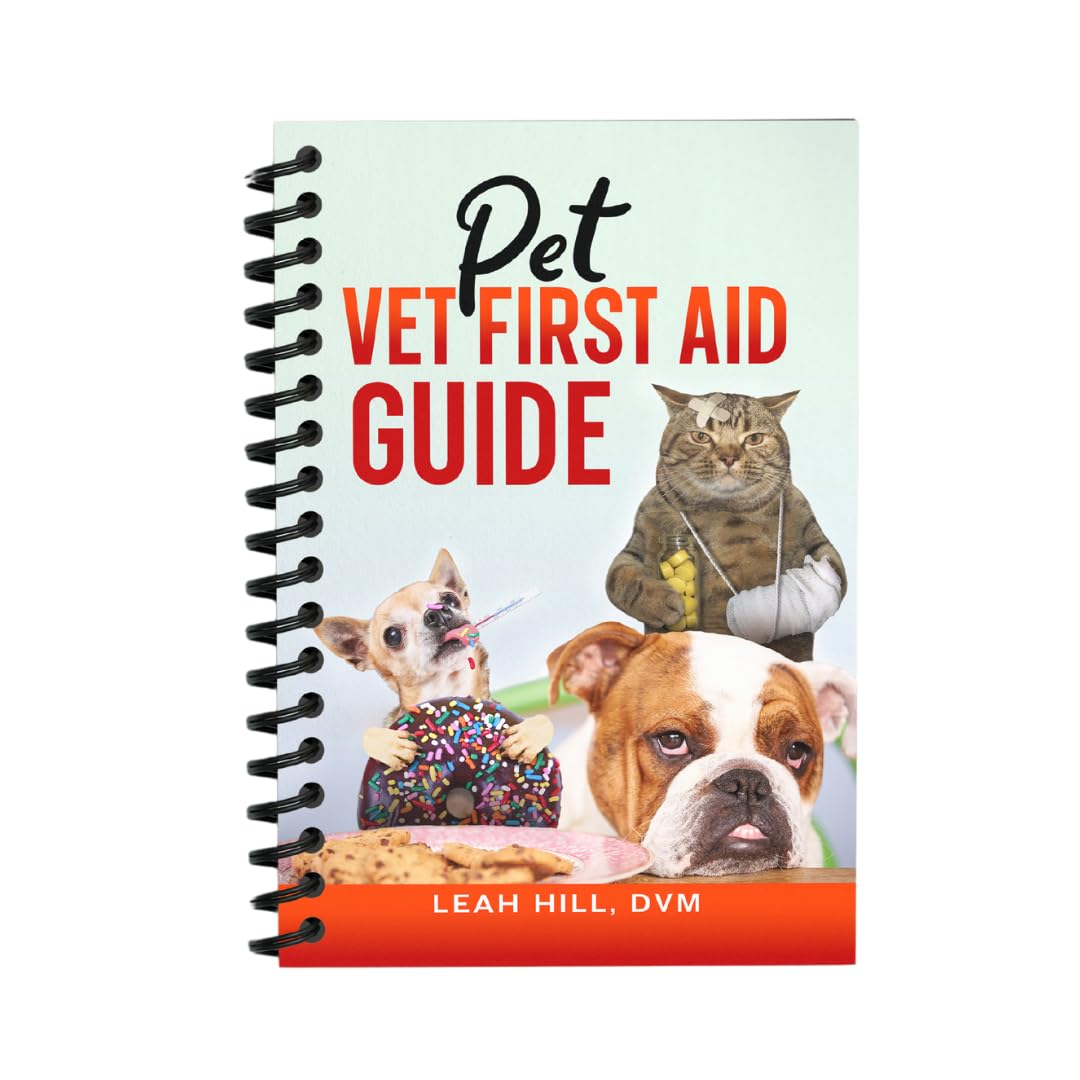
Pet First Aid & CPR Guide Book
Comprehensive guide with step-by-step instructions, photos, and diagrams. Covers CPR, wound care, poisoning, and more. Includes downloadable quick-reference cards. Research from the American Red Cross shows trained pet owners have significantly better emergency outcomes.
Check Amazon PriceHow to Build Your Own DIY First Aid Kit
While pre-made kits are convenient, building your own allows customization for your pet's specific needs. Here's our step-by-step guide to creating the perfect DIY pet first aid kit:
Your 4-Week DIY First Aid Kit Plan
- Choose waterproof, durable container
- Purchase basic wound care supplies
- Gather emergency contact information
- Research pet-safe medications
- Download first aid instructions
- Consult vet for medication recommendations
- Purchase vet-approved medications
- Acquire essential tools (thermometer, tweezers)
- Add species-specific items
- Create pet medical profile
- Organize supplies with dividers or bags
- Label all medications clearly
- Add comfort items (blanket, treats)
- Create transport aids (makeshift stretcher)
- Practice accessing items quickly
- Take pet first aid/CPR course
- Practice emergency scenarios
- Set expiration date reminders
- Create kit inventory checklist
- Share kit location with family
DIY Kit Cost Comparison
Pre-made kit: $40-$80 for basic to
comprehensive kits
DIY kit: $60-$120 for customized,
higher-quality components
Savings tip: Buy supplies in bulk and split
with other pet owners
Best value: Start with pre-made kit and
customize with additional items
Remember: The most expensive kit is useless
without knowledge invest in training!

First Aid Kit Maintenance & Expiration Dates
A first aid kit is only effective if its contents are current and functional. Follow this maintenance schedule to keep your kit ready for emergencies:
| Item Category | Check Frequency | Expiration Signs | Replacement Tips |
|---|---|---|---|
| Medications | Every 3 months | Past expiration date, discoloration, unusual odor | Consult vet for replacements, buy smallest effective quantities |
| Sterile Supplies | Every 6 months | Opened packages, moisture damage, torn packaging | Keep sealed until needed, store in airtight containers |
| Tools & Instruments | Annually | Rust, dull blades, malfunction, battery corrosion | Clean after use, store in dry location, check batteries |
| Documents & Information | Every 6 months | Outdated phone numbers, expired vaccinations | Update with vet visits, use waterproof containers |
Real Emergency: How a First Aid Kit Saved Luna
When Luna, a 4-year-old Golden Retriever, cut her paw deeply on broken glass during an evening walk, her owner Sarah's preparedness made all the difference:
- Immediate Response: Sarah applied direct pressure with sterile gauze from her car first aid kit
- Proper Care: She cleaned the wound with antiseptic wipes and applied a temporary bandage
- Emergency Contact: Used the emergency vet number from her kit to call ahead
- Transport: Used the emergency blanket as a makeshift stretcher to carry 65-pound Luna
- Outcome: Vet credited the proper first aid with preventing infection and excessive blood loss
Sarah's $75 investment in a first aid kit and 2-hour training course saved an estimated $1,200 in emergency treatment costs and, more importantly, ensured Luna's rapid recovery. Her story demonstrates that preparation matters more than luck in pet emergencies.
Additional Resources
Final Thoughts on Pet First Aid Kits
A pet first aid kit is one of the most important investments you can make in your pet's safety and wellbeing. While we hope you never need to use it, having a properly stocked kit and basic first aid knowledge provides invaluable peace of mind and could save your pet's life in an emergency.
Remember that the most expensive, comprehensive kit is useless without the knowledge to use it effectively. Invest in training as much as in supplies. Take a pet first aid course, practice with expired supplies, and review emergency procedures regularly with your family.
Your pet relies on you for everything, including emergency care. By preparing with a first aid kit and knowledge, you're giving them the best possible chance in an emergency situation. That is the true value of pet first aid preparedness.