
Knowing pet first aid could mean the difference between life and death for your furry companion. Every year, thousands of pets experience emergencies at home, and prompt, proper first aid can stabilize them until veterinary care is available. This comprehensive 2026 guide covers everything you need to know about emergency pet care, from basic wound treatment to life-saving CPR techniques.
According to the American Veterinary Medical Association, nearly 25% more pets could survive emergencies if owners knew basic first aid. Whether you have dogs, cats, or other small pets, this guide provides the essential knowledge to handle common emergencies confidently. For travel safety tips, see our pet travel safety guide.
Table of Contents
- Emergency Preparedness: Before Disaster Strikes
- How to Assess a Pet Emergency
- Pet CPR and Rescue Breathing: Step-by-Step
- Controlling Bleeding and Wound Care
- Poisoning: Identification and Immediate Response
- Choking: Clearing Airway Obstructions
- Burns, Heatstroke, and Temperature Emergencies
- Fractures, Sprains, and Mobility Injuries
- Seizures and Neurological Emergencies
- Essential Pet First Aid Kit Contents
- When to Seek Immediate Veterinary Care
- Frequently Asked Questions

Emergency Preparedness: Before Disaster Strikes
Preparation is the most important aspect of pet first aid. Having the right supplies and knowledge before an emergency occurs can save precious minutes when seconds count. Every pet owner should have a comprehensive first aid kit and basic training in emergency procedures.
Emergency Preparedness Checklist
- Assemble a complete pet first aid kit (see detailed list below)
- Program emergency numbers into your phone: regular vet, emergency vet, poison control
- Keep digital and printed copies of your pet's medical records
- Know the location and hours of the nearest 24-hour emergency veterinary clinic
- Practice safe restraint techniques for injured pets (muzzles for dogs, towels for cats)
- Take a certified pet first aid course from organizations like the American Red Cross
Safety First: Protecting Yourself
Even the gentlest pet may bite or scratch when frightened or in pain. Always approach injured animals cautiously. For dogs, use a muzzle if available (never muzzle a vomiting dog). For cats, wrap in a towel or blanket to restrain safely. If you're unsure or the animal is too agitated, wait for professional help rather than risking injury.
Recommended Pet First Aid Kit
Emergency Essential
Adventure Medical Kits Trail Dog First Aid Kit
Comprehensive 56-piece kit designed specifically for pets. Includes wound care supplies, tools, and instructions for common emergencies. Waterproof case ideal for home or travel. For additional preparedness, consider our emergency evacuation planning guide.
Check Amazon PriceHow to Assess a Pet Emergency
When you discover your pet in distress, follow the ABC assessment protocol used by veterinary professionals:
A: Airway
Check if the airway is clear. Look in the mouth for foreign objects, vomit, or excessive saliva. Listen for breathing sounds. If obstructed, proceed to choking protocols immediately.
B: Breathing
Watch the chest for movement. Normal breathing rate: 10-30 breaths/min for dogs, 20-30 for cats. Labored breathing, blue gums/tongue, or gasping requires immediate intervention.
C: Circulation
Check pulse (femoral artery inside hind leg). Normal: 60-140 bpm dogs, 140-220 bpm cats. Check gum color (should be pink). Pale, white, or blue gums indicate shock.
Vital Signs for Pets
Normal ranges for healthy pets:
- Temperature: 100.5-102.5°F (38-39.2°C) for both dogs and cats
- Heart Rate: Small dogs: 90-120 bpm, Large dogs: 60-90 bpm, Cats: 140-220 bpm
- Respiratory Rate: Dogs: 10-30 breaths/min, Cats: 20-30 breaths/min
- Capillary Refill Time: Press on gums; color should return in under 2 seconds
Know your pet's normal baselines when healthy to better recognize emergencies.
Pet CPR and Rescue Breathing: Step-by-Step
Pet CPR Protocol (No Heartbeat + No Breathing)
Only perform CPR when you cannot detect a heartbeat AND the pet is not breathing. CPR can cause injury and should only be used when absolutely necessary.
Check Responsiveness
Gently shake and call your pet's name. Check for breathing and heartbeat. If unresponsive with no heartbeat, begin CPR immediately.
Position for Compressions
Dogs: Lay on right side. For barrel-chested dogs (Bulldogs, Pugs), place on back. Cats/Small Pets: Place on firm surface, may compress with one hand.
Compression Technique
Location: For most dogs, compress the widest part of the chest. For cats/small dogs, compress directly over heart. Rate: 100-120 compressions per minute. Depth: 1/3 to 1/2 chest width.
Rescue Breathing
After 30 compressions, give 2 rescue breaths: Close pet's mouth, extend neck, cover nose with your mouth, and exhale until chest rises. For cats/small pets, cover both nose and mouth.
Continue Cycle
Continue 30:2 compression-to-breath ratio. Check for heartbeat and breathing every 2 minutes. Continue until pet revives or you reach veterinary care.
CPR Differences by Pet Size
Small pets (<30 lbs / 14 kg): Use one-hand compressions. Compress directly over heart. Medium-Large dogs: Use two-hand compressions. Position hands over widest part of chest. Barrel-chested breeds: Place on back, compress sternum. Never practice CPR on a healthy pet - take a certified course for hands-on training.

Controlling Bleeding and Wound Care
Most bleeding can be controlled with direct pressure. The goal is to stabilize until veterinary care, not to replace professional treatment for serious wounds.
Apply Direct Pressure
Use clean cloth, gauze, or your hand. Apply firm, steady pressure directly on the wound. Do not lift to check - maintain pressure for minimum 3-5 minutes. For heavily bleeding limbs, you can apply pressure to the artery above the wound (inside of leg).
Pressure Bandage
If direct pressure isn't enough, apply a pressure bandage: Place additional padding over wound, wrap firmly with bandage or cloth. Check toes/paws beyond bandage for swelling or coolness every 15 minutes.
Tourniquet (Last Resort)
Only for life-threatening limb bleeding uncontrolled by pressure. Use belt, bandage, or cloth 2-3 inches above wound. Note exact time applied. Loosen every 15-20 minutes for 30 seconds. Tourniquets can cause limb loss - use only when absolutely necessary.
| Wound Type | Immediate Action | Veterinary Follow-up |
|---|---|---|
| Minor Cuts/Scrapes | Clean with saline or mild soap/water. Apply pet-safe antiseptic. Bandage if needed. | Monitor for infection. Vet if redness, swelling, or pus develops. |
| Deep Lacerations | Control bleeding with pressure. Cover with clean cloth. Do NOT clean deeply. | Immediate veterinary care for stitching and antibiotics. |
| Puncture Wounds | Do NOT remove embedded objects. Stabilize object with bulky dressing. | Immediate veterinary care. High infection risk. |
| Animal Bites | Control bleeding. Clean gently if superficial. Note other animal's details. | Veterinary care within 24 hours. Rabies risk assessment needed. |
Pet Wound Care Essentials
Vet Recommended
Vetericyn Plus Antimicrobial Wound & Skin Care
Non-toxic, antimicrobial wound spray safe for dogs, cats, and other pets. Helps clean wounds without stinging or alcohol. Promotes healing of cuts, scrapes, hot spots, and surgical sites. According to veterinary wound care guidelines, proper cleansing reduces infection risk by 60%.
Check Amazon PricePoisoning: Identification and Immediate Response
Common Household Poisons for Pets
Immediate action is critical for suspected poisoning. Contact your veterinarian or pet poison control immediately: (888) 426-4435 (ASPCA Animal Poison Control Center).
Human Medications
Most common pet poisoning. NSAIDs (ibuprofen, naproxen), antidepressants, ADHD meds, acetaminophen (Tylenol). Even small amounts can be fatal to pets.
Human Foods
Chocolate, xylitol (sugar-free products), grapes/raisins, onions/garlic, alcohol, caffeine, macadamia nuts, raw yeast dough.
Household Products
Antifreeze (extremely toxic), rodenticides, insecticides, cleaning products, fertilizers, essential oils (tea tree, pennyroyal).
Plants
Lilies (cats), sago palm, azaleas/rhododendrons, oleander, castor bean, cyclamen, kalanchoe, yew, amaryllis, autumn crocus.
Poisoning Response Protocol
- Remove pet from poison source immediately
- Identify the poison and estimate amount ingested
- Call veterinarian or poison control immediately: (888) 426-4435
- Do NOT induce vomiting unless instructed by professional (some caustic substances cause more damage coming up)
- Bring poison container/plant sample to veterinary clinic
- Monitor for symptoms: vomiting, diarrhea, drooling, seizures, lethargy, irregular heartbeat
Choking: Clearing Airway Obstructions
Choking pets may paw at mouth, gag, cough, have blue-tinged gums, or collapse. Act quickly but carefully to avoid being bitten.
Check Mouth Safely
If pet is conscious, carefully open mouth and look for obstruction. Use pliers or tweezers to remove visible objects. Do NOT push objects deeper. For small pets, hold upside down (head lower than body) while checking.
Heimlich Maneuver for Pets
Small dogs/cats: Hold with back against your chest. Place fist just below rib cage, give 5 quick upward thrusts. Large dogs: Stand behind dog, wrap arms around belly just below ribs, make fist with one hand, cup with other, give 5 quick upward thrusts.
Check and Repeat
After thrusts, check mouth for dislodged object. Repeat cycles of 5 thrusts and mouth checks. If pet becomes unconscious, begin CPR with modified breaths (check for obstruction between breaths).
Choking Hazards for Pets
Common choking items: Balls, rawhide pieces, bones, sticks, toys with small parts, corn cobs, fruit pits, children's toys. Prevention: Supervise chewing, choose size-appropriate toys, avoid cooked bones, train "drop it" command. Even with successful removal, veterinary check is needed for potential internal injuries.
Emergency Rescue Tools
Safety Essential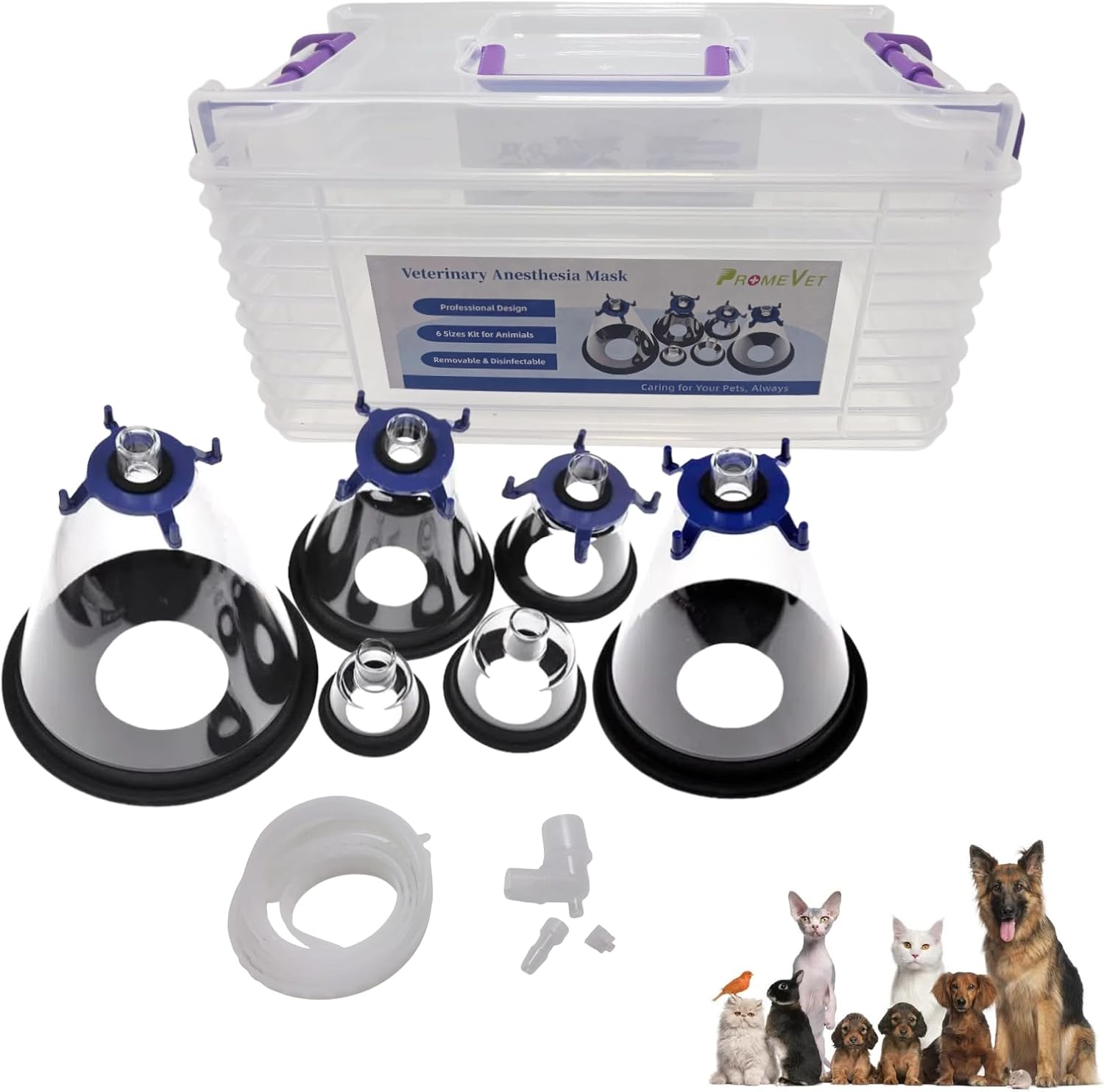
K9 Mask Universal Pet Oxygen Mask Set
3-size oxygen mask set for dogs and cats. Essential for smoke inhalation, near-drowning, or respiratory emergencies. Includes storage bag and instructions. Compatible with standard oxygen tanks. The AVMA recommends having emergency oxygen supplies for pets in disaster-prone areas.
Check Amazon PriceEssential Pet First Aid Kit Contents
A well-stocked pet first aid kit should be kept at home and a travel version in your car. Check expiration dates every 6 months and replace used items immediately.
Bandaging Supplies
Gauze pads, rolls, adhesive tape, self-adhering bandage, triangular bandage
Tools
Blunt-tip scissors, tweezers, tick remover, digital thermometer, disposable gloves
Medications
Pet-safe antiseptic, hydrogen peroxide (vomiting induction - vet direction only), electrolyte solution
Emergency Items
Muzzle (adjustable sizes), emergency blanket, flashlight, saline solution, splint materials
Documentation
Medical records, vet contact, poison control numbers, first aid manual
Contact Info
Vet clinic, emergency clinic, poison control, pet insurance info
Customizing Your First Aid Kit
Add based on your pet's needs:
- Medications: Include any regular medications with dosage instructions
- Breed-specific items: Brachycephalic breeds may need special airway management tools
- Seasonal additions: Cold packs for summer, warming items for winter
- Chronic conditions: Diabetic pets need glucose supplies, epileptic pets need seizure management items
- Travel additions: Motion sickness medication, water purification tablets

Pet First Aid FAQs
Should I induce vomiting if my pet eats something toxic?
Never induce vomiting without veterinary guidance. Some substances (caustic chemicals, petroleum products) cause more damage coming up. For some toxins (antifreeze), specific antidotes must be given first. Always call your veterinarian or animal poison control (888) 426-4435 before taking any action. They may recommend hydrogen peroxide (1 tsp per 10 lbs, max 3 tsp) if appropriate, but dosage is critical.
How do I take my pet's temperature safely?
Use a digital rectal thermometer with petroleum jelly. For cats/small dogs, pediatric thermometers work best. Gently insert about 1 inch (2.5 cm). Normal: 100.5-102.5°F (38-39.2°C). Above 103°F requires veterinary attention; above 106°F is life-threatening emergency. Always have someone restrain your pet and stop if they struggle excessively to avoid injury.
What human medications are safe for pets in emergencies?
Most human medications are NOT safe for pets. Never give ibuprofen, naproxen, acetaminophen, or decongestants. Some veterinarians may recommend limited uses of certain antihistamines (like diphenhydramine/Benadryl) for allergic reactions, but dosage is weight-specific and must be confirmed by your vet. Always consult your veterinarian before giving any medication.
How do I safely transport an injured pet to the vet?
For spinal injuries: Slide onto rigid surface (board, cookie sheet). For other injuries: Use blanket as stretcher. Place in carrier or confine in car (prevent movement during transport). Cover with blanket for warmth/shock. Have someone call ahead so vet is prepared. Drive carefully - your safety matters too. For bleeding pets, bring towels to contain blood in vehicle.
What are the signs of shock in pets?
Pale or white gums, rapid weak pulse, shallow rapid breathing, weakness/collapse, depressed mental state, cool extremities. Shock requires immediate veterinary care. While transporting: Keep pet warm (blanket), elevate hindquarters slightly (unless respiratory distress), minimize movement. Do NOT offer food/water to potentially surgical patients.
How can I tell if my pet is dehydrated?
Check skin elasticity: Gently pinch skin at shoulder blades; it should snap back immediately. If it remains tented, dehydration is likely. Dry gums, sunken eyes, and lethargy are other signs. For mild dehydration, offer small amounts of water or electrolyte solution. For severe dehydration (skin tents >2 seconds), veterinary fluids are needed.
What should I do if my pet has a seizure?
Clear area of furniture/objects. Do NOT restrain or put anything in mouth. Time the seizure. Most last 1-3 minutes. After seizure, keep pet in quiet, dim area. They may be confused/disoriented. Contact veterinarian: First-time seizures or clusters need immediate attention. For known epileptic pets, follow your vet's seizure plan. Status epilepticus (seizure >5 minutes) is life-threatening emergency.
How do I handle a pet with suspected broken bones?
Minimize movement. Muzzle if necessary (painful pets may bite). For limb fractures: Apply temporary splint only if transport will be delayed. Use rolled newspaper/magazine, wrap gently. Do NOT attempt to set bone. For suspected spine/hip injuries: Slide onto rigid surface without bending spine. Transport immediately for x-rays and treatment.
What's the difference between heatstroke and normal panting?
Heatstroke signs: Excessive panting/drooling, bright red gums, rapid pulse, weakness/collapse, vomiting/diarrhea, body temperature >104°F. Immediate action: Move to cool area, apply cool (not cold) water to body, especially groin/armpits. Offer small water amounts. Do NOT use ice/ice water (causes shock). Veterinary care is crucial - internal damage continues after cooling.
Should I remove ticks myself or go to the vet?
Remove ticks promptly using fine-tipped tweezers or tick remover. Grasp close to skin, pull straight up steadily. Do NOT twist or crush tick. Clean area with antiseptic. Save tick in container (for identification if pet gets sick). Monitor for tick-borne illness symptoms (lethargy, lameness, fever) for 2-3 weeks. Multiple ticks or difficulty removing warrants veterinary visit.
How often should I refresh my pet first aid kit?
Check expiration dates every 6 months. Replace medications, saline, hydrogen peroxide annually. After use, restock immediately. Update contact information with any changes. Consider seasonal updates: Add cold packs in summer, hand warmers in winter. Review contents annually to ensure they match your current pets' needs (size changes, new health conditions).
Are there pet first aid apps I should have on my phone?
Yes! Recommended apps: Pet First Aid (American Red Cross), PetCoach, 11pets, ASPCA Animal Poison Control (has direct dial). These provide step-by-step instructions, videos, and emergency contact storage. Also save your vet's number and local emergency clinic in contacts. Consider adding medical info (vaccinations, conditions) to your phone's emergency medical ID section.