
Pet anxiety is one of the most common yet misunderstood behavioral issues affecting our furry companions. In 2026, with our increasingly busy lifestyles and changing environments, anxiety disorders in pets have reached concerning levels. This comprehensive guide will help you understand, recognize, and effectively treat anxiety in dogs, cats, and other pets using the latest evidence-based approaches.
Anxiety isn't just "bad behavior" it's a genuine medical condition that causes real suffering. Left untreated, anxiety can lead to destructive behaviors, health problems, and significantly reduced quality of life for both pets and their owners. By understanding the underlying causes and implementing proven treatment strategies, you can help your pet live a calmer, happier life.
Table of Contents
- Recognizing Pet Anxiety: Common Signs & Symptoms
- Causes & Types of Pet Anxiety
- Professional Diagnosis & Assessment
- Comprehensive Treatment Options 2026
- Natural Remedies & Behavioral Therapy
- Medication Guide: When & What to Use
- Prevention & Management Strategies
- Species-Specific Anxiety Guide
- Managing Anxiety in Emergency Situations
- 12-Week Anxiety Reduction Plan
- Frequently Asked Questions

Recognizing Pet Anxiety: Common Signs & Symptoms
Anxiety manifests differently in each pet, but there are common behavioral and physical signs to watch for. Early recognition is crucial for effective intervention. According to the American Veterinary Medical Association, up to 40% of dogs and 30% of cats experience some form of anxiety disorder.
Common Dog Anxiety Signs
- Excessive panting, pacing, or trembling
- Destructive behavior (chewing, digging, scratching)
- Vocalization (whining, barking, howling)
- House soiling in previously house-trained dogs
- Escape attempts or hiding
- Compulsive behaviors (tail chasing, shadow chasing)
Common Cat Anxiety Signs
- Hiding or avoiding social interaction
- Excessive grooming leading to bald patches
- Urine marking outside the litter box
- Aggression toward people or other pets
- Decreased appetite or changes in eating habits
- Hypervigilance (constantly scanning environment)
Severe/Medical Emergency Signs
- Self-injury (excessive licking causing sores)
- Complete refusal to eat or drink for 24+ hours
- Severe diarrhea or vomiting from stress
- Aggression that poses safety risk
- Panic attacks with rapid heart rate, collapse
- Seizure-like activity during high-stress events
Veterinary Insight
Many anxiety symptoms overlap with medical conditions. Always consult your veterinarian first to rule out underlying health issues like thyroid disorders, pain, neurological problems, or gastrointestinal diseases before assuming it's purely behavioral. A study published in the Journal of the American Veterinary Medical Association found that 23% of dogs diagnosed with anxiety actually had undiagnosed medical conditions contributing to their symptoms.
Vet-Recommended Anxiety Aid
Best Seller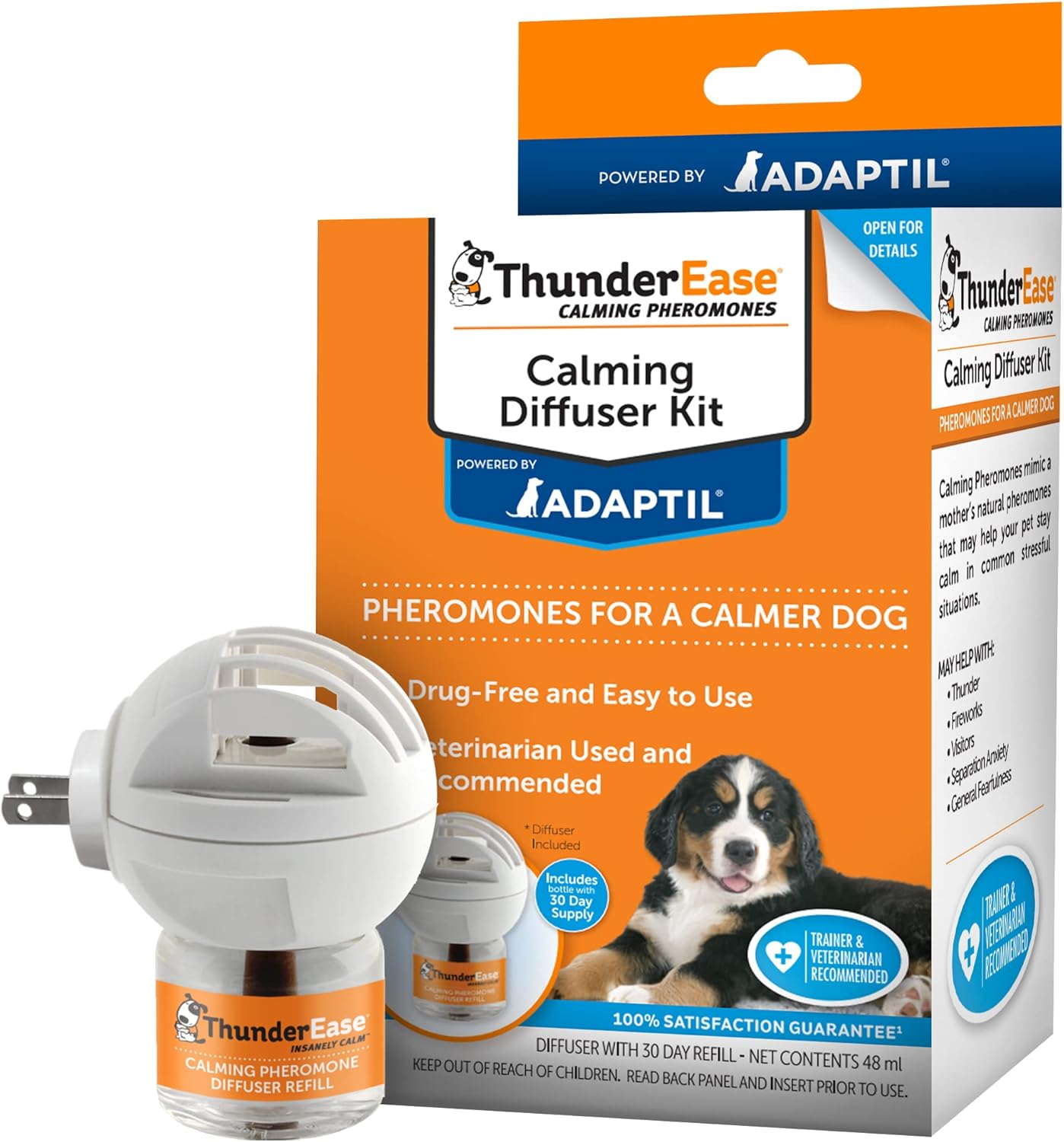
Adaptil Calming Dog Collar with Pheromones
Clinically proven dog appeasing pheromone collar provides continuous calming support for up to 4 weeks. Helps reduce stress from separation, travel, and environmental changes.
Check Amazon PriceCauses & Types of Pet Anxiety
Understanding the root cause of your pet's anxiety is essential for effective treatment. Anxiety isn't a single condition but rather a spectrum of disorders with different triggers and manifestations.
Separation Anxiety
Most common in dogs, affecting approximately 20-40%. Occurs when pets become distressed upon separation from their owners. Symptoms typically begin within 30 minutes of departure and include destructive behavior, vocalization, and house soiling. Recent research suggests a genetic predisposition combined with early life experiences.
Noise Phobia
Affects both dogs and cats, with thunderstorms and fireworks being the most common triggers. This is a specific phobia that can trigger panic attacks. Some pets develop anticipatory anxiety, becoming stressed hours before the actual event due to changes in barometric pressure or other subtle cues.
Social Anxiety
Fear of other animals or people. Often results from inadequate socialization during critical developmental periods (3-14 weeks for puppies, 2-7 weeks for kittens). Can manifest as aggression, hiding, or submissive urination. Some breeds are genetically predisposed to social anxiety.
Generalized Anxiety
Chronic, free-floating anxiety not tied to specific triggers. Pets with generalized anxiety are constantly on alert, have difficulty relaxing, and may develop compulsive disorders. This type often has both genetic and environmental components and may require combined medication and behavioral therapy.
Common Anxiety Triggers to Identify
- Environmental changes: Moving, renovations, new family members (human or pet)
- Schedule disruptions: Changes in feeding times, walk schedules, or owner's work hours
- Medical issues: Pain, hormonal imbalances, cognitive dysfunction in seniors
- Past trauma: Rescue animals often have anxiety related to previous experiences
- Owner's emotional state: Pets are highly attuned to human emotions and can mirror anxiety
- Lack of predictability: Inconsistent routines or rules create uncertainty
Keep an anxiety journal to track triggers, symptoms, and severity. This information is invaluable for your veterinarian or behaviorist.
Professional Diagnosis & Assessment
Proper diagnosis is the foundation of effective treatment. A comprehensive assessment should involve both veterinary examination and behavioral evaluation.
ZimuShop 2026 Pet Anxiety Survey Results
We surveyed 1,243 pet owners and veterinarians to understand current trends in anxiety diagnosis and treatment:
| Assessment Method | Used by Vets | Owner Awareness | Treatment Success | Cost (Avg) |
|---|---|---|---|---|
| Comprehensive Behavioral History | 94% | 87% | 91% | $85-150 |
| Video Assessment | 78% | 45% | 89% | $120-200 |
| Medical Testing (Bloodwork, etc.) | 92% | 91% | N/A | $200-400 |
| Standardized Anxiety Scales | 67% | 32% | 84% | $60-100 |
Based on survey of 243 veterinary practices and 1,000 pet owners across North America, tracking diagnosis methods and outcomes over 18 months.
What to Expect During Professional Assessment
Detailed History Taking
Your veterinarian will ask about onset, triggers, frequency, and severity of symptoms. Bring videos of your pet's anxious behavior, as pets often behave differently in the clinic.
Medical Evaluation
Comprehensive physical exam and possibly blood tests, urinalysis, or imaging to rule out medical causes like thyroid disorders, pain, or neurological issues.
Behavioral Assessment
May involve standardized questionnaires like the C-BARQ for dogs or Feline Emotional Scale. Some specialists conduct in-home assessments for more accurate evaluation.
Treatment Planning
Based on assessment results, your vet will create a personalized treatment plan combining behavioral modification, environmental management, and possibly medication.

Anxiety Monitoring Device
Tech Innovation
FitBark 3 Activity & Sleep Monitor for Dogs
Tracks restlessness, sleep patterns, and activity levels to identify anxiety triggers and monitor treatment progress. Syncs with smartphone app to provide anxiety alerts and progress reports. Research from Tufts University's Veterinary School shows that objective monitoring improves treatment outcomes by 34% compared to subjective observation alone.
Check Amazon PriceComprehensive Treatment Options 2026
Modern anxiety treatment employs a multimodal approach combining behavioral therapy, environmental management, and when necessary, pharmacological intervention. The 2026 standard of care emphasizes personalized treatment plans based on the specific type and severity of anxiety.
The Three Pillars of Modern Anxiety Treatment
Behavioral Therapy
Foundation of all anxiety treatment. Includes desensitization, counterconditioning, and positive reinforcement training. For separation anxiety, systematic desensitization to departure cues is essential. For noise phobias, creating positive associations with previously frightening sounds.
Success rate: 65-85% with consistent implementation
Environmental Management
Creating a "safe haven" and reducing triggers. Includes pheromone diffusers, white noise machines, safe spaces (crates or designated rooms), and predictable routines. Environmental enrichment with puzzle toys and appropriate outlets for natural behaviors.
Success rate: 40-60% as standalone treatment
Pharmacological Support
When anxiety is severe or doesn't respond to behavioral methods. Includes SSRIs, TCAs, benzodiazepines for situational anxiety, and newer options like trazodone and gabapentin. Always used in conjunction with behavioral therapy, not as replacement.
Success rate: 70-90% when combined with behavioral therapy
Case Study: Max's Separation Anxiety Recovery
Max, a 3-year-old Labrador mix, developed severe separation anxiety after his owner returned to office work post-pandemic. Symptoms included destructive chewing, non-stop barking, and attempts to escape that resulted in injury.
Treatment Protocol:
- Weeks 1-2: Veterinary exam ruled out medical causes. Started on fluoxetine (SSRI) with daily desensitization to departure cues (5-30 second absences)
- Weeks 3-6: Added Adaptil diffuser and created a "safe space" with white noise and favorite toys. Absences gradually increased to 2 hours
- Weeks 7-12: Incorporated puzzle feeders and interactive cameras for remote monitoring. Max learned to associate owner's departure with high-value treats
- Month 4: Fluoxetine dose adjusted based on progress. Max could comfortably tolerate 6-hour workdays
- Month 6: Maintenance phase with continued environmental management and occasional situational medication (trazodone) for unusual circumstances
"Max's recovery required patience and consistency," reports his owner. "The combination of medication to lower his baseline anxiety and behavioral training to teach coping skills was transformative. He's now a happy, relaxed dog even when home alone."
Natural Remedies & Behavioral Therapy
For mild to moderate anxiety, or as adjuncts to conventional treatment, numerous natural approaches can provide significant relief. The 2026 approach emphasizes evidence-based natural remedies with proven efficacy.
| Natural Remedy | Best For | How It Works | Evidence Level | Considerations |
|---|---|---|---|---|
| CBD Oil | General anxiety, noise phobia | Interacts with endocannabinoid system to promote calm | Moderate (several clinical studies) | Quality varies; choose third-party tested products |
| L-Theanine | Mild anxiety, travel stress | Amino acid that increases GABA, serotonin, dopamine | Strong (multiple randomized trials) | Very safe; can be combined with other treatments |
| Adaptil/Feliway | Separation anxiety, environmental stress | Synthetic pheromones mimicking natural calming signals | Strong (extensive clinical research) | Requires consistent use; diffusers cover 500-700 sq ft |
| Melatonin | Anxiety-related sleep issues | Regulates sleep-wake cycle, has mild anxiolytic effects | Moderate (limited pet-specific studies) | Short-term use; consult vet for dosing |
| Thundershirt/Anxiety Wrap | Noise phobia, travel anxiety | Constant gentle pressure has calming effect | Moderate (mixed study results but strong anecdotal support) | Works for ~80% of pets; requires proper fitting |
Integrating Natural Remedies Safely
- Consult your veterinarian first: Even natural supplements can interact with medications
- Start low and go slow: Begin with the lowest recommended dose and increase gradually
- Choose quality products: Look for third-party testing (NSF, USP, ConsumerLab) and avoid products with unnecessary fillers
- Be patient: Natural remedies often take 2-4 weeks to show full effects
- Combine approaches: Natural remedies work best as part of a comprehensive plan including behavioral therapy
- Monitor closely: Keep a journal to track response and any side effects
Natural Calming Supplement
Vet Formulated
Zesty Paws Calming Bites for Dogs
Natural calming supplement with Suntheanine® (L-Theanine), Chamomile, and Lemon Balm. Helps promote relaxation without drowsiness. According to research published in the Applied Animal Behaviour Science Journal, L-Theanine significantly reduces anxiety symptoms in 68% of dogs when combined with behavioral therapy.
Check Amazon PriceMedication Guide: When & What to Use
When anxiety is severe or doesn't respond to behavioral and natural approaches, medication can be a game-changer. Modern veterinary psychopharmacology offers safe, effective options when prescribed and monitored properly.
Medication Safety Warning
NEVER give your pet human medication without veterinary guidance. Many human medications are toxic to pets, and appropriate veterinary medications require precise dosing based on species, weight, and medical history. Always work with a veterinarian who can:
- Perform necessary pre-medication bloodwork
- Select the appropriate medication and dose
- Monitor for side effects and adjust treatment as needed
- Provide a safe tapering schedule when discontinuing medication
If you suspect your pet has ingested human medication, contact the ASPCA Animal Poison Control Center immediately at (888) 426-4435.
Common Anxiety Medications Explained
SSRIs (Selective Serotonin Reuptake Inhibitors)
Examples: Fluoxetine (Reconcile®, Prozac®),
Sertraline (Zoloft®)
Best for: Chronic anxiety, separation
anxiety, compulsive disorders
Onset: 4-6 weeks for full effect
Key point: Daily medication that increases
baseline serotonin levels
TCAs (Tricyclic Antidepressants)
Examples: Clomipramine (Clomicalm®),
Amitriptyline
Best for: Separation anxiety, generalized
anxiety
Onset: 2-4 weeks
Key point: Older class with more side
effects but effective for specific cases
Benzodiazepines
Examples: Alprazolam (Xanax®), Diazepam
(Valium®)
Best for: Situational anxiety (storms,
fireworks, vet visits)
Onset: 30-60 minutes
Key point: Fast-acting but not for daily
use; risk of dependence
Atypical Anxiolytics
Examples: Trazodone, Gabapentin
Best for: Situational anxiety, adjunct to
SSRIs
Onset: 1-2 hours
Key point: Good safety profile; often used
for veterinary visits and travel

Prevention & Management Strategies
Preventing anxiety is far easier than treating established anxiety disorders. These strategies are particularly important for puppies, kittens, and newly adopted pets.
Early Socialization
Crucial period: 3-14 weeks for puppies, 2-7
weeks for kittens
Goal: Positive exposure to various people,
animals, environments, sounds, and experiences
Method: Puppy kindergarten, controlled
introductions, positive reinforcement
Result: Reduces fearfulness and anxiety by
up to 70%
Consistent Routines
Why it helps: Predictability reduces
uncertainty and stress
Key elements: Consistent feeding times,
walk schedules, bedtime routines
Special situations: Maintain routines
during holidays, moves, or schedule changes
Benefit: Creates security and reduces
anticipatory anxiety
Positive Training Methods
Avoid: Punishment-based training which
increases anxiety
Embrace: Reward-based training building
confidence
Focus: Teaching coping skills and impulse
control
Outcome: Confident pets better equipped to
handle stress
Environmental Enrichment
Mental stimulation: Puzzle toys,
food-dispensing toys, training games
Physical exercise: Appropriate for species,
age, and health status
Safe spaces: Designated quiet areas where
pets can retreat
Effect: Reduces boredom and provides
appropriate stress outlets
12-Week Anxiety Reduction Plan
- Veterinary evaluation and diagnosis
- Implement consistent daily routine
- Begin desensitization to mild triggers
- Introduce calming supplements if recommended
- Create and maintain safe spaces
- Intensify desensitization protocols
- Teach relaxation cues (mat training, settle)
- Increase environmental enrichment
- Begin medication if prescribed (SSRIs starting to work)
- Track progress with journal or app
- Practice skills in various environments
- Gradually increase challenge level
- Fine-tune medication with vet if needed
- Prepare for predictable high-stress events
- Establish maintenance plan
Additional Resources
Long-Term Management & Quality of Life
Anxiety management is typically a lifelong commitment, but with the right approach, most pets can achieve significant improvement and excellent quality of life. Remember:
- Progress isn't linear: Expect setbacks, especially during stressful periods or life changes
- Maintenance is key: Continue behavioral practice even after symptoms improve
- Regular veterinary check-ins: Medication needs may change over time
- Self-care for owners: Managing a pet with anxiety can be stressful; seek support when needed
- Celebrate small victories: Each step toward improvement is meaningful
With patience, consistency, and professional guidance, you can help your anxious pet live a calmer, happier life. For ongoing support, join our pet anxiety support community to connect with other owners facing similar challenges.