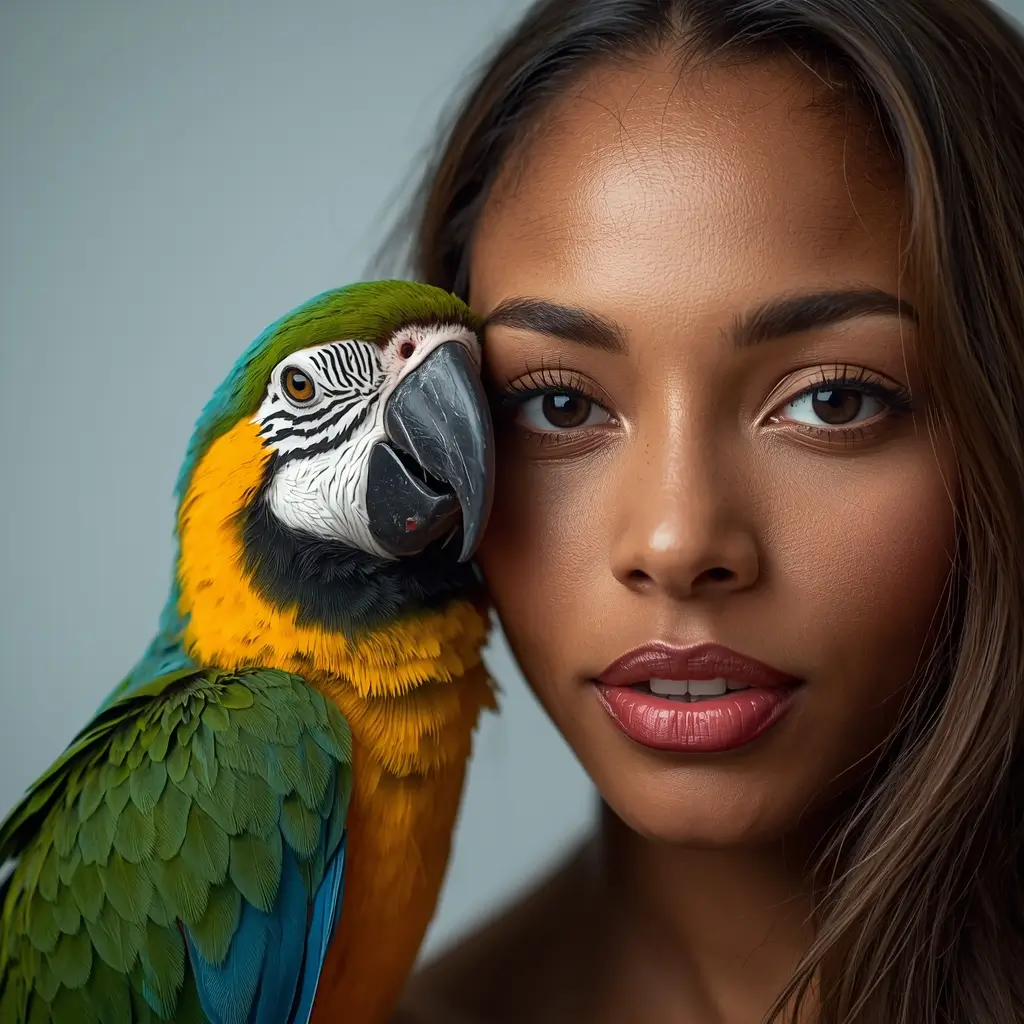
Bird behavior is a complex tapestry of communication, instinct, and intelligence that many bird owners struggle to understand. Unlike dogs or cats, birds communicate through subtle body language, intricate vocalizations, and specific behaviors that often go misinterpreted. In this comprehensive 2026 guide, we'll decode the mystery of avian behavior, helping you build a stronger bond with your feathered companion.
Understanding bird behavior is not just about preventing problem behaviors; it's about creating a rich, fulfilling life for your bird. Whether you own a chatty parrot, a melodic canary, or a curious cockatiel, this guide will provide you with the knowledge to interpret their actions and respond appropriately. For beginners, check out our complete guide for Bird Health Guide owners.
Table of Contents
- How Birds Communicate: Beyond Just Chirps
- Reading Bird Body Language
- Common Bird Behaviors Explained
- Behavior Differences by Species
- Understanding and Solving Problem Behaviors
- Bird Intelligence and Learning
- Building Trust and Bonding
- Environmental Enrichment for Mental Health
- Positive Reinforcement Training Techniques
- Recognizing Signs of Stress and Illness
- Frequently Asked Questions

How Birds Communicate: Beyond Just Chirps
Bird communication is incredibly sophisticated, involving vocalizations, body language, feather positioning, and even eye movements. Understanding these signals is key to interpreting your bird's emotional state and needs.
Common Bird Vocalizations and Their Meanings
Singing and Whistling
Meaning: Contentment, happiness, territorial declaration, or courtship behavior. Male birds often sing to attract mates or establish territory. Continuous singing usually indicates a happy, healthy bird.
Alarm Calls
Meaning: Sharp, loud, repetitive calls indicating fear, danger, or distress. These are often heard when a predator is spotted or something unfamiliar enters their environment.
Contact Calls
Meaning: Soft chirps or calls used to maintain contact with flock members (including you!). These are checking-in sounds that say "I'm here, where are you?"
Chattering and "Talking"
Meaning: Mimicry of human speech or environmental sounds indicates curiosity, intelligence, and a desire for social interaction. Some birds use specific words in appropriate contexts.
Expert Insight
According to avian behaviorist Dr. Susan Friedman, "Birds don't have 'problem behaviors' they have behaviors that solve problems for them. Understanding what need a behavior meets is the first step to modifying it positively.
Recommended Bird Enrichment Toy
Mental Stimulation
Prevue Hendryx Foraging Toy
Interactive foraging toy that stimulates natural behaviors. Encourages problem-solving and prevents boredom. Made from bird-safe materials. For more enrichment ideas, see our complete guide to bird toys.
Check Amazon PriceReading Bird Body Language: A Visual Guide
Birds communicate volumes through their posture, feather position, eye movement, and beak activity. Learning to read these signals can prevent misunderstandings and build trust.
Body Language Indicators
Relaxed Posture
Appearance: Feathers slightly fluffed, one foot tucked up, soft eyes, gentle beak grinding. Meaning: Content, comfortable, possibly ready to sleep. This is a happy, relaxed bird.
Alert/Interested
Appearance: Sleek feathers, upright posture, focused gaze, possibly head tilting. Meaning: Curious, paying attention to something, ready to interact or investigate.
Fearful/Aggressive
Appearance: Flattened feathers, crouched position, pinned eyes (rapidly contracting/expanding pupils), beak open, possible hissing. Meaning: Fear, threat, or readiness to defend. Give space.
Courtship Behavior
Appearance: Dancing, wing flapping, regurgitation, dilated pupils, specific vocalizations. Meaning: Hormonal behavior indicating bonding (sometimes directed at owners).
Eye Pinning: The Window to Bird Emotions
Many parrot species exhibit eye pinning rapid dilation and contraction of the pupils. This can indicate excitement, interest, curiosity, or aggression depending on context:
- With relaxed body: Interest, excitement about food or toys
- With raised feathers: Aggression or fear
- During talking/mimicry: Engagement with the activity
- With specific individuals: Preference or bonding
Important Safety Note
Never punish a bird for aggressive behavior. Birds don't understand punishment and it will damage your bond. Instead, identify the trigger and use positive reinforcement to encourage alternative behaviors.
Common Bird Behaviors Explained
Many bird behaviors that concern owners are actually normal avian activities. Understanding their purpose helps you respond appropriately.
Preening and Feather Care
Normal behavior: Birds spend hours daily maintaining feathers. Mutual preening (allopreening) is social bonding. When to worry: Excessive preening leading to bald spots may indicate stress, boredom, or health issues.
Beak Grinding
Normal behavior: Rhythmic side-to-side beak movement, often before sleep. Indicates contentment and relaxation. Similar to a cat purring. Good sign: Means your bird feels safe and comfortable.
Feather Plucking
Potential problem: Can be caused by medical issues, stress, boredom, or nutritional deficiencies. Action required: Veterinary check to rule out health problems, then address environmental and behavioral factors.
Bathing and Splashing
Normal behavior: Essential for feather health and temperature regulation. Some birds prefer misting, bowls, or showering with owners. Encourage it: Regular bathing maintains plumage and provides enrichment.
ZimuShop 2026 Bird Behavior Survey Results
We surveyed 842 bird owners about common behaviors and concerns:
| Behavior | % of Birds Exhibiting | Owner Understanding | Common Misinterpretation |
|---|---|---|---|
| Beak Grinding | 92% | 45% | Aggression or discomfort |
| Eye Pinning | 78% (parrots) | 32% | Always aggression |
| Regurgitation | 67% | 28% | Illness (often affection) |
| Feather Plucking | 23% | 61% | "Bad behavior" rather than symptom |
| Contact Calling | 94% | 56% | Demanding attention (often checking in) |
Based on survey of bird owners with at least one year of experience.

Behavior Differences by Species
Different bird species have distinct behavioral characteristics. Understanding these helps set appropriate expectations and provide proper care.
Parrots & Cockatoos
Intelligence: Very high, problem-solving
abilities
Social needs: Extremely high, flock
animals
Common behaviors: Talking, chewing, loud
vocalizations
Challenges: Boredom, feather plucking,
screaming
Cockatiels & Lovebirds
Intelligence: Moderate to high
Social needs: High, prefer companionship
Common behaviors: Whistling, head bobbing,
mimicry
Challenges: Night frights, hormonal
aggression
Finches & Canaries
Intelligence: Moderate
Social needs: Variable (some colony, some
solitary)
Common behaviors: Singing, flying, minimal
handling tolerance
Challenges: Stress from handling, specific
dietary needs
Conures & Parakeets
Intelligence: High
Social needs: Very high, affectionate
Common behaviors: Cuddling, playful,
"conure roll"
Challenges: Loud contact calls, demanding
attention
Recommended Bird Cage
Spacious Design
Yaheetech Large Bird Cage
52-inch wrought iron cage with playtop, rolling stand, and multiple perches. Spacious design allows for natural movement and wing stretching. Essential for preventing cage-bound behaviors. Learn about proper cage setup to maximize your bird's wellbeing.
Check Amazon PriceUnderstanding and Solving Problem Behaviors
What owners often call "problem behaviors" are usually natural bird behaviors expressed in inappropriate ways or contexts. The key is addressing the underlying cause, not just suppressing the behavior.
Common Problem Behaviors and Solutions
Excessive Screaming
Possible causes: Attention-seeking, boredom, lack of sleep, environmental stress, flock calling. Solutions: Ensure 10-12 hours of darkness for sleep, provide foraging toys, ignore screaming (reward quiet), establish a consistent routine.
Biting
Possible causes: Fear, territoriality, hormonal changes, overstimulation, communication ("I don't want to step up"). Solutions: Learn to read warning signs, respect boundaries, use positive reinforcement for stepping up, avoid punishment.
Feather Destructive Behavior
Possible causes: Medical issues (first rule out!), stress, boredom, inadequate diet, lack of bathing, environmental allergies. Solutions: Veterinary examination, environmental enrichment, proper diet, bathing opportunities, reduce stressors.
Fearfulness/Aggression
Possible causes: Lack of socialization, past trauma, hormonal periods, pain/illness. Solutions: Counter-conditioning, desensitization, positive association building, ensuring health is not the cause.
The ABCs of Behavior Modification
Use the ABC framework to understand and modify behaviors:
- A - Antecedent: What happens before the behavior (trigger)
- B - Behavior: The specific behavior you're observing
- C - Consequence: What happens after the behavior (reinforcement)
By changing the antecedent or consequence, you can modify the behavior. For example, if screaming gets your attention (consequence), the behavior is reinforced. Instead, give attention when quiet.
Bird Intelligence and Learning Capacity
Birds are among the most intelligent animals on Earth. Understanding their cognitive abilities helps you provide appropriate mental stimulation.
Early Intelligence Studies
Alex the African Grey parrot demonstrated concept understanding (same/different, numbers, colors). Irene Pepperberg's work revolutionized understanding of avian cognition, showing parrots have reasoning abilities comparable to primates.
Problem-Solving Abilities
Studies showed crows using tools, understanding water displacement, and planning multiple steps ahead. New Caledonian crows demonstrated tool modification and cultural transmission of tool use.
Emotional Intelligence
Research revealed birds experience complex emotions including empathy, grief, and joy. Parrots demonstrated ability to delay gratification and understand fairness in reward distribution.
Practical Applications
Current research focuses on applying cognitive understanding to improve captive bird welfare through enrichment, training, and environmental design that challenges their intellect appropriately.
African Grey Parrots
Cognitive level: Equivalent to 4-6 year old
human child
Abilities: Abstract reasoning, numerical
concepts, emotional understanding
Training potential: Very high - can learn
hundreds of words in context
Crows and Ravens
Cognitive level: Problem-solving equivalent
to 7-year-old human
Abilities: Tool use, future planning, face
recognition
Training potential: High in wild settings,
less studied in captivity
Cockatiels and Budgies
Cognitive level: Moderate with specific
strengths
Abilities: Mimicry, pattern recognition,
social learning
Training potential: Good for basic commands
and tricks with consistency

Building Trust and Bonding with Your Bird
Trust is the foundation of a healthy relationship with your bird. Unlike domesticated dogs, most pet birds are only a few generations removed from wild ancestors and maintain strong instincts.
30-Day Bonding Protocol
- Observe without direct interaction
- Note favorite foods and behaviors
- Speak softly near the cage
- Establish consistent routines
- Respect all fear responses
- Offer treats through cage bars
- Read aloud near the cage
- Slow, predictable movements
- Identify non-threatening body language
- Begin target training through bars
- Work with door open, bird inside
- Teach "step up" to perch first
- Respect "no" (turning away)
- Short, positive sessions (5-10 min)
- End every session on a good note
- Encourage play away from you
- Teach returning to cage willingly
- Vary treats and rewards
- Introduce to safe, bird-proofed area
- Establish mutual trust routines
Patience is Essential
Bonding timelines vary dramatically by species, individual history, and age. A hand-fed baby parrot may bond in weeks, while a rehired adult with trauma may take 6-12 months. Never force interaction. Let the bird set the pace. Forced handling creates fear that can take years to overcome. Signs of progress include relaxed body language when you approach, taking treats gently, and voluntary interaction initiation.
Recognizing Signs of Stress and Illness
Birds instinctively hide illness (a survival mechanism), so behavior changes are often the first indicators of health problems. Knowing normal behavior helps you spot abnormalities early.
| Normal Behavior | Possible Problem Indicator | Action Required |
|---|---|---|
| Daily preening (1-2 hours) | Excessive preening, bald spots | Vet check, environmental assessment |
| Regular vocalization patterns | Sudden silence or constant screaming | Health check, evaluate stressors |
| Balanced perching (both feet) | Consistent one-foot standing, fluffed | Immediate veterinary attention |
| Consistent appetite | Reduced eating, food throwing | Health evaluation, dietary review |
| Playful interaction | Withdrawal, aggression changes | Rule out pain/illness, reduce stress |
Additional Bird Behavior Resources
Continuing Your Education
Bird behavior understanding is an ongoing journey. Consider these next steps:
- Keep a behavior journal: Track patterns, triggers, and responses
- Join a bird club: Learn from experienced owners
- Take an online course: Many universities offer animal behavior classes
- Consult professionals: Certified avian behavior consultants can help with specific challenges
- Read current research: Bird cognition and behavior science is rapidly evolving
Remember that understanding your bird's behavior is the foundation of a lifetime of companionship. The time invested in learning their language pays dividends in mutual trust and enjoyment.