Dog behavior problems can be frustrating, confusing, and even dangerous if not properly addressed. However, with the right understanding and approach, most behavior issues can be successfully managed or eliminated. This comprehensive 2026 guide covers the most common dog behavior problems, their root causes, and evidence-based solutions that work.
Understanding why dogs behave the way they do is the first step toward effective solutions. Whether you are dealing with excessive barking, destructive chewing, separation anxiety, or aggression, this guide provides practical strategies based on the latest canine behavioral science. For puppies just starting their training journey, see our puppy training guide.
Table of Contents
- Understanding Canine Behavior
- 10 Most Common Behavior Problems
- Excessive Barking: Causes & Solutions
- Destructive Chewing: Prevention & Training
- Separation Anxiety: Complete Guide
- Understanding Dog Aggression
- Jumping Up on People
- Leash Pulling Solutions
- House Training Problems
- Behavior Problem Prevention
- When to Seek Professional Help
- Recommended Training Products
- Frequently Asked Questions

Understanding Canine Behavior: The Foundation
Before addressing specific behavior problems, it is essential to understand why dogs behave the way they do. Dogs are not trying to be "bad" or "spiteful." Their behavior is driven by:
- Instinct: Genetic predispositions (herding, guarding, hunting)
- Learning: Past experiences and reinforcement history
- Environment: Current living situation and stimuli
- Health: Medical conditions that may affect behavior
- Emotional State: Anxiety, fear, excitement, or frustration
The most effective behavior modification approaches address the root cause rather than just suppressing symptoms. According to the American Veterinary Society of Animal Behavior, positive reinforcement methods are the most effective and humane approach to behavior modification.
Key Principle: The 3 D's of Behavior
When evaluating behavior problems, consider these three factors:
- Distance: How close is the trigger?
- Duration: How long does the behavior last?
- Distraction: What else is happening in the environment?
Successful training often involves gradually increasing these factors while maintaining desired behavior.
10 Most Common Dog Behavior Problems
Here are the behavior issues dog owners most frequently encounter, ranked by severity and prevalence:
Aggression
SevereIncludes growling, snapping, biting toward people, dogs, or other animals. Requires professional intervention. Early warning signs include stiff body language and prolonged staring.
Separation Anxiety
SevereExtreme distress when left alone, resulting in destruction, vocalization, or elimination. Affects 20-40% of dogs. Often mistaken for boredom or disobedience.
Excessive Barking
ModerateBarking that exceeds normal communication. Common types: alert barking, demand barking, boredom barking, and anxiety barking. Different causes require different solutions.
Destructive Chewing
ModerateChewing inappropriate objects, often due to teething (puppies), boredom, anxiety, or lack of proper outlets. Can be dangerous if objects are swallowed.
Jumping Up
MildJumping on people for attention. Usually a learned behavior that was accidentally reinforced. Common in excitable, social dogs. Can be dangerous for children or elderly.
Leash Pulling
MildPulling on leash during walks. Makes walks unpleasant and can cause injury. Often results from lack of leash training or using improper equipment.
Important Safety Note
If your dog shows signs of aggression (growling, snapping, biting), consult a certified professional dog trainer or veterinary behaviorist immediately. Do not attempt to address severe aggression issues without professional guidance, as improper handling can make the problem worse or lead to injury.
Recommended Training Tool
Editor's Choice
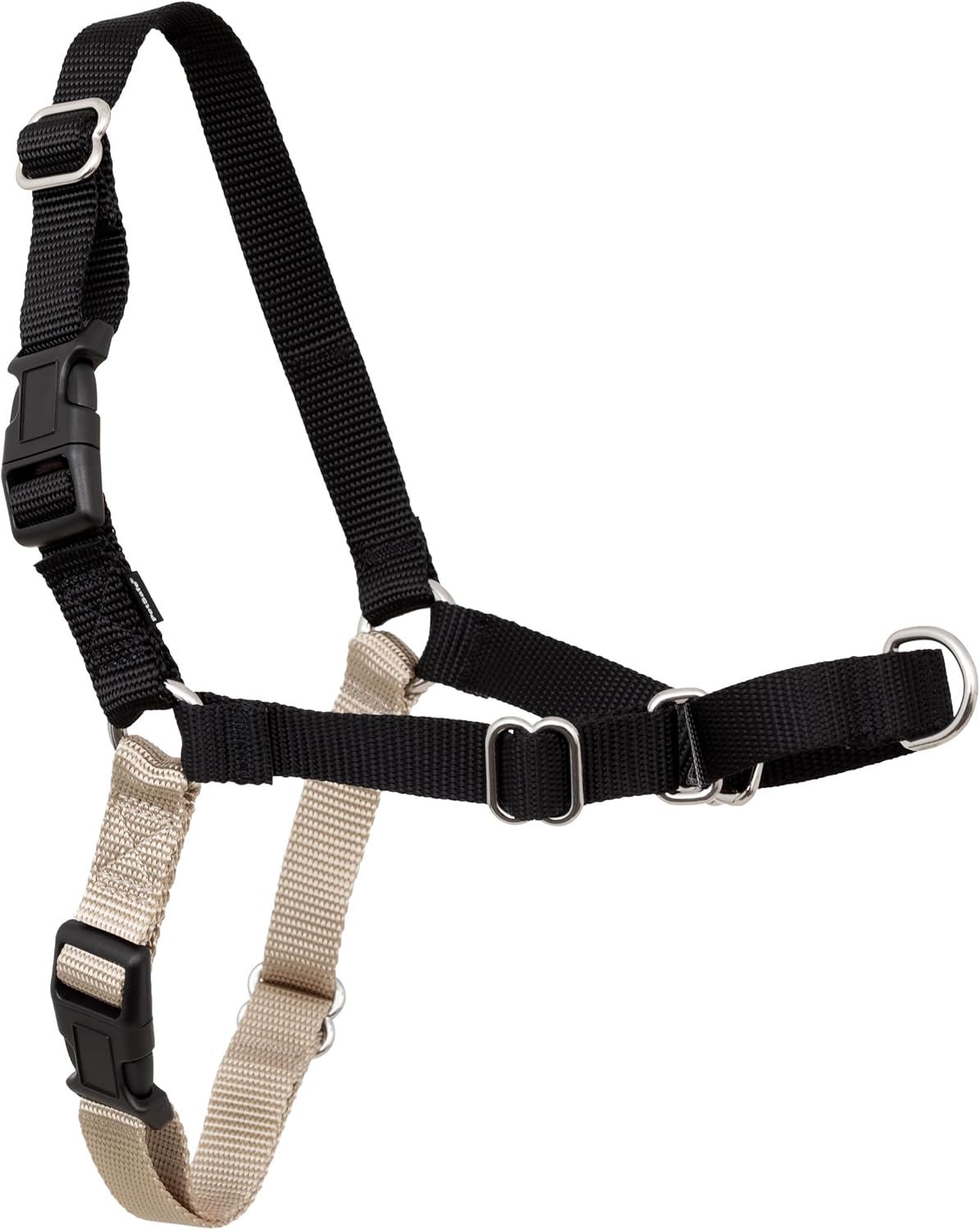
PetSafe Gentle Leader Headcollar
Veterinarian-recommended headcollar for controlling pulling without choking. Provides gentle control similar to horse halters. Effective for leash training and managing reactive dogs. According to studies by the ASPCA, headcollars can reduce pulling by 70-90% when used correctly.
Check Amazon PriceExcessive Barking: Causes & Solutions
Barking is normal dog communication, but excessive barking becomes problematic. Understanding the type of barking is crucial for effective intervention:
5-Step Barking Reduction Plan
-
Identify the Trigger
Determine what causes the barking: strangers, other dogs, doorbells, boredom, or separation. Keep a barking journal for 3 days noting time, duration, and apparent cause.
-
Remove Reinforcement
Stop accidentally rewarding barking. Do not give attention (even negative attention), food, or access to desired areas when barking occurs.
-
Teach "Quiet" Command
Wait for a pause in barking, say "quiet," then immediately reward with treats. Gradually increase duration of quiet before rewarding.
-
Address Underlying Needs
Ensure adequate exercise, mental stimulation, and environmental management. A tired, mentally engaged dog barks less.
-
Manage the Environment
Use white noise machines, window films, or strategic barriers to reduce triggers. For alert barking at windows, consider blocking access during trigger-heavy times.
Identification & Management
Document all barking incidents. Implement environmental changes to reduce triggers. Begin teaching "quiet" command in low-distraction settings. Increase daily exercise by 20%.
Consistent Training
Practice "quiet" command during mild barking triggers. Introduce puzzle toys for mental stimulation. Implement a "barking break" protocol: when barking starts, calmly remove dog from the situation.
Generalization
Practice "quiet" command with gradually stronger triggers. Begin counter-conditioning for specific triggers (like doorbells). Track progress and adjust approach as needed.
Destructive Chewing: Prevention & Training
Chewing is a natural canine behavior, but becomes problematic when directed at inappropriate objects. The key is management and redirection rather than punishment.
Chewing Prevention Checklist
Check off these items to create a chew-proof environment:

Separation Anxiety: Complete Guide
Separation anxiety is one of the most challenging behavior problems, affecting an estimated 20-40% of dogs. It is characterized by extreme distress when left alone, leading to destruction, vocalization, elimination, or attempts to escape.
Separation Anxiety vs. Boredom
Separation Anxiety: Distress begins within minutes of departure, destruction focused on exits (doors, windows), vocalization is distressed (howling, whining), may include drooling or panting.
Boredom Destruction: Occurs after longer periods alone, destruction is random, often includes stealing items, less distressed vocalization.
Correct diagnosis is essential as treatments differ significantly. Video recording your dog when alone can help determine which issue you are facing.
Separation Anxiety Recovery Progress
Typical improvement timeline with consistent training:
Desensitization Protocol for Separation Anxiety
This evidence-based approach gradually teaches your dog to feel comfortable alone:
| Training Phase | Duration Goal | Key Activities | Success Signs |
|---|---|---|---|
| Pre-departure Cues | 30-60 seconds | Practice grabbing keys, putting on shoes without leaving | No signs of anxiety during cues |
| Brief Absences | 5-30 minutes | Step out, immediately return before anxiety begins | Calm behavior during short absences |
| Variable Duration | 30 min - 2 hours | Vary departure times randomly (short and long) | Consistent calmness regardless of duration |
| Real-life Practice | 2-4 hours | Actual errands while monitoring via camera | Calm behavior for typical errand durations |
Anxiety Relief Product
Vet Recommended
ThunderShirt Classic Dog Anxiety Jacket
Calming pressure wrap that applies gentle, constant pressure to reduce anxiety. 80% of dogs show significant improvement according to clinical studies. Can be used for separation anxiety, thunderstorms, travel, and other stressful situations. Works best when combined with behavior modification training.
Check Amazon PriceUnderstanding Dog Aggression
Aggression is a serious behavior problem that requires professional assessment. It is crucial to understand that aggression is usually a symptom of an underlying issue such as fear, pain, or resource competition.
Leash Aggression (Reactivity)
Many dogs display aggression only when on leash due to:
- Barrier frustration: Inability to approach or retreat normally
- Fear: Feeling trapped with no escape option
- Redirected aggression: Frustration directed at nearest target
Leash Reactivity Protocol
Work with a professional trainer on this systematic approach:
- Identify your dog's "threshold distance" (where they notice but don't react)
- Use high-value treats to create positive associations at sub-threshold distances
- Gradually decrease distance as your dog remains calm
- Implement U-turns when triggers appear unexpectedly
- Consider using a "Do Not Disturb" vest during training
Resource Guarding
Guarding food, toys, spaces, or people is a natural canine behavior but can become dangerous. Management strategies include:
Resource Guarding Management
-
Never Punish Growling
Growling is a warning signal. Punishing it may lead to biting without warning. Respect the communication.
-
Trade-Up Protocol
When your dog has a guarded item, offer a higher-value item in exchange. This teaches that giving up items leads to better things.
-
Environmental Management
Prevent access to highly valued items when supervision isn't possible. Feed in separate rooms if multiple dogs guard food.
-
Professional Assessment
For severe guarding (biting, intense aggression), consult a certified professional immediately.
Success Story: Max's Leash Reactivity
Max, a 3-year-old German Shepherd, would lunge and bark at other dogs on walks, making walks stressful for his owner Sarah. After 8 weeks of systematic desensitization:
"The key was identifying Max's threshold distance and using chicken to create positive associations. We started with seeing dogs 50 feet away, and gradually worked closer. Now we can pass other dogs on the same sidewalk calmly!" - Sarah, Max's owner

Behavior Problem Prevention
Preventing behavior problems is far easier than fixing them. These strategies apply to all dogs, regardless of age or breed:
Mental Stimulation
Provide daily mental exercise through training, puzzle toys, scent work, or food-dispensing toys. A mentally tired dog is less likely to develop problem behaviors.
Adequate Exercise
Meet breed-specific exercise needs. Most behavior problems decrease with proper physical outlet. Combine physical and mental exercise for best results.
Consistent Routine
Dogs thrive on predictability. Establish consistent feeding, walking, and training schedules. Reduces anxiety and provides security.
Proper Socialization
Positive exposures during critical periods (3-16 weeks). Continue socialization throughout life. Focus on quality, controlled experiences rather than quantity.
When to Seek Professional Help
While many behavior problems can be addressed with consistent training, some situations require professional intervention:
Seek Professional Help If:
- Your dog has bitten or attempted to bite someone
- Aggression is increasing in frequency or intensity
- You feel afraid of your dog or unable to manage the behavior
- Behavior problems persist despite 4+ weeks of consistent training
- There is a sudden change in behavior (may indicate medical issue)
- Behavior is causing household stress or safety concerns
Look for certified professionals with these credentials: Certified Professional Dog Trainer (CPDT), Certified Dog Behavior Consultant (CDBC), or Veterinary Behaviorist (DACVB).
Final Thoughts on Behavior Problems
Remember that behavior problems are just that problems with behavior, not problems with your dog's character. With patience, consistency, and often professional guidance, most behavior issues can be significantly improved or resolved.
The key is to approach behavior modification with empathy and science-based methods. Understand the underlying cause, implement a systematic training plan, and celebrate small victories along the way. Your relationship with your dog will be stronger for the effort.
For ongoing support and additional resources, visit our complete dog training resource center.