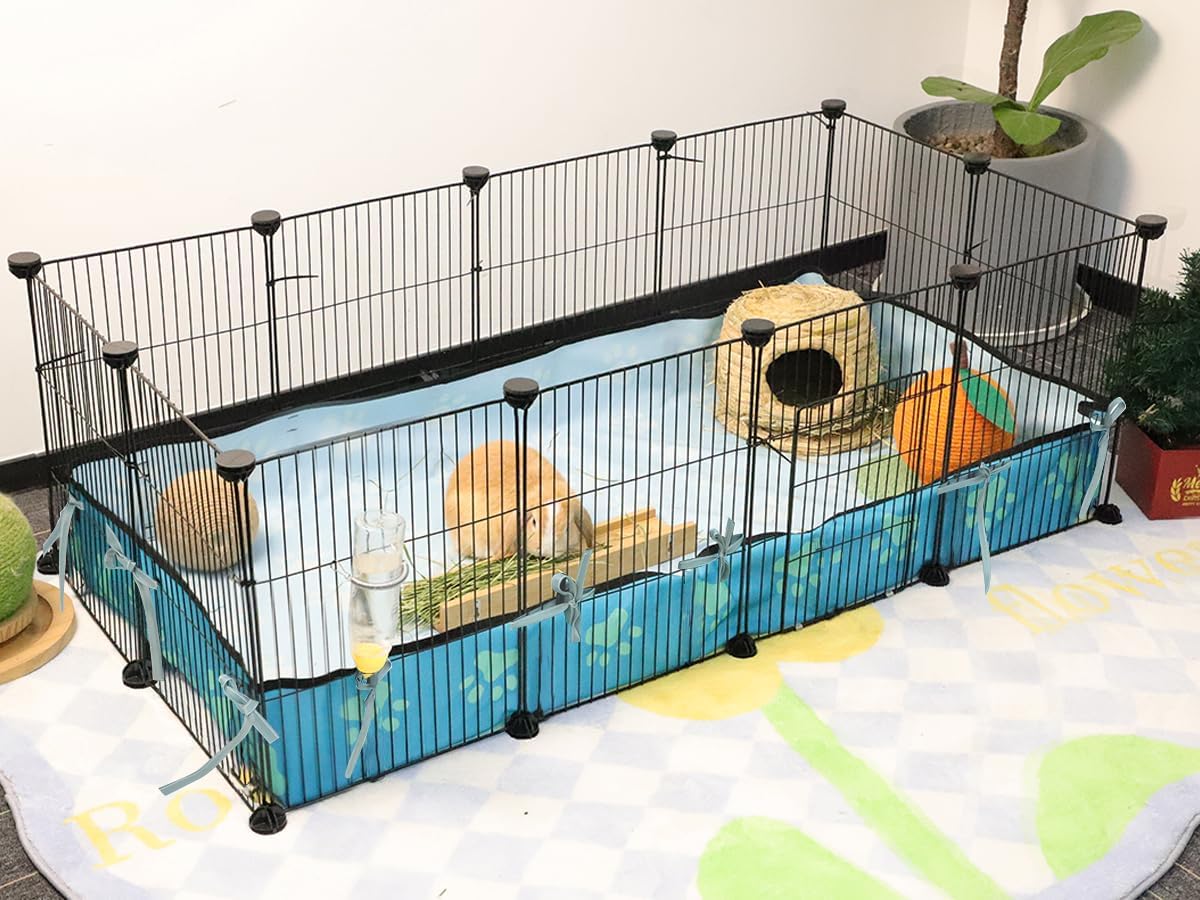
Choosing the right enclosure size for your small pet is one of the most important decisions you'll make as a pet owner. Proper housing directly impacts your pet's physical health, mental well-being, and overall happiness. Unfortunately, many commercial cages sold in pet stores are too small to meet animals' basic needs.
This comprehensive guide and interactive calculator will help you determine the perfect enclosure size for your rabbit, guinea pig, hamster, or other small pet. We'll also provide recommendations for creating an enriched habitat that promotes natural behaviors. For more information on small pet care, check out our complete small pet care guide.
Table of Contents

Why Proper Enclosure Size Matters
Small pets are often more active and require more space than people realize. In the wild, rabbits cover areas equivalent to several football fields, guinea pigs forage over large territories, and hamsters run miles each night. Confining them to tiny cages can lead to serious health and behavioral issues.
Health Benefits of Proper Housing
Physical Health
Larger enclosures encourage movement, preventing obesity, muscle atrophy, and joint problems. They also allow for proper separation of living, eating, and bathroom areas.
Mental Health
Space allows for environmental enrichment, preventing boredom, stress, and depression. Enriched environments reduce stereotypical behaviors like bar chewing and excessive grooming.
Social Needs
For social species like guinea pigs and rabbits, adequate space allows for proper social dynamics and reduces conflict when housing multiple animals together.
Longevity
Studies show that pets in appropriately sized, enriched environments live longer, healthier lives with fewer veterinary issues.
Expert Insight
The Humane Society recommends that rabbits need at least 8 square feet of enclosure space plus daily exercise time in a larger area. This is significantly more than most commercial cages provide. For guinea pigs, the Guinea Pig Cages website provides excellent guidelines based on scientific research about their spatial needs.
Interactive Enclosure Calculator
Use our calculator below to determine the recommended enclosure size based on your pet type, number of pets, and whether they'll have additional exercise time outside the enclosure.
Enclosure Size Calculator
Recommended Enclosure Size
Minimum Floor Area
--
Recommended Dimensions
--
Height Requirement
--
Total Space Level
--
Recommendations:
Important Note
Remember that these are minimum recommendations. Whenever possible, provide more space than the minimum. Larger enclosures always benefit your pet's health and wellbeing. For animals that require socialization, never house a single guinea pig or rabbit alone - they are social creatures that need companionship of their own species. Check our guide to small pet social needs for more information.
Minimum Size Requirements by Species
Different species have different spatial requirements based on their natural behaviors, activity levels, and social structures. Below are the generally accepted minimum requirements from veterinary and animal welfare organizations.
| Pet Type | Minimum Floor Area (1 pet) | Additional per Extra Pet | Minimum Height | Notes |
|---|---|---|---|---|
| Rabbit | 12 sq ft (1.1 m²) | + 6 sq ft each | High enough to stand upright | Plus daily exercise in larger area |
| Guinea Pig | 7.5 sq ft (0.7 m²) | + 2-3 sq ft each | 12-14 inches (30-35 cm) | Never house alone - social animals |
| Syrian Hamster | 450 sq in (0.29 m²) | Not applicable (solitary) | 12 inches (30 cm) | Must be housed alone |
| Dwarf Hamster | 360 sq in (0.23 m²) | + 180 sq in for pairs | 12 inches (30 cm) | Some species can live in same-sex pairs |
| Rat | 2 cubic feet (0.06 m³) | + 1 cubic foot each | Multi-level preferred | Highly social, never house alone |
| Chinchilla | 6 sq ft (0.56 m²) | + 3 sq ft each | Tall for jumping (3+ ft) | Need vertical space for jumping |

Beyond Size: Creating an Enriched Habitat
Size is just the beginning. An ideal enclosure should also provide mental stimulation, opportunities for natural behaviors, and proper environmental conditions.
Essential Enclosure Elements
- Multiple hiding places: At least one hide per animal, plus extras
- Proper bedding: Species-appropriate, absorbent, and safe if ingested
- Foraging opportunities: Scatter feeding, puzzle feeders, hay racks
- Chewing materials: Safe woods, chew toys, mineral blocks
- Exercise equipment: Appropriately sized wheels, tunnels, climbing structures
- Separate areas: Designated sleeping, eating, and bathroom areas
Pro Tip
Rotate toys and rearrange enclosure furniture weekly to provide novel stimulation. This simple practice can significantly reduce boredom and associated behavioral problems.
DIY and Alternative Housing Options
Commercial cages are often inadequate and expensive. Many pet owners are turning to DIY solutions that provide more space for less money.
Popular DIY Enclosure Ideas
C&C Cages
Cubes & Coroplast cages are customizable, affordable, and perfect for guinea pigs and rabbits. They can be configured to any size and shape.
IKEA Hacks
Furniture like the IKEA Detolf glass cabinet makes an excellent hamster enclosure. Kallax shelves can be converted into multi-level habitats.
Custom Wood Enclosures
Well-ventilated wooden enclosures with plexiglass fronts provide excellent insulation and can be built to exact specifications.
Playpen/Free-Roam Areas
For rabbits and guinea pigs, consider dedicating a pet-proofed room or large playpen area instead of traditional cages.
Enclosure Maintenance and Cleaning
Proper cleaning is essential for your pet's health. Larger enclosures actually make maintenance easier when designed correctly.
Cleaning Schedule Recommendations
- Daily: Spot clean soiled bedding, remove uneaten fresh food, refill water
- Weekly: Replace bedding, wash food/water dishes, clean accessories
- Monthly: Deep clean entire enclosure with pet-safe disinfectant
- As needed: Replace worn toys, repair any damage to the enclosure
Cleaning Efficiency
Use a litter box for rabbits and guinea pigs to minimize bedding waste and simplify cleaning. Place hay racks above litter boxes since these animals often eat while eliminating. This natural behavior makes litter training easier and keeps the enclosure cleaner.
Frequently Asked Questions
My pet store sold me a cage that's smaller than your recommendations. Is it really inadequate?
Unfortunately, many commercially available cages are marketed based on convenience and price rather than animal welfare. Pet stores often prioritize what sells easily over what's best for the animal. The Rabbit Welfare Association and other animal welfare organizations have been campaigning for years to improve cage size standards. If you already have a small cage, consider using it as a base or travel carrier while providing a larger primary enclosure.
Can I make up for a smaller cage with more exercise time outside?
Exercise time is essential, but it doesn't replace adequate enclosure size. Pets need a comfortable, safe "home base" where they can eat, sleep, and retreat when stressed. Think of it like a human living in a tiny closet but being allowed to roam a mansion for a few hours daily - the mansion time is great, but you still need a properly sized bedroom. The enclosure calculator accounts for exercise time in its recommendations.
How do I convert square feet to actual cage dimensions?
Square footage is length × width. For example, a 12 square foot enclosure could be 3 ft × 4 ft, 2 ft × 6 ft, or any combination that multiplies to 12. Longer, narrower cages often provide better running space than square ones. Our calculator provides suggested dimensions, but you can adjust based on your available space as long as you maintain the minimum area.
What's more important: floor space or vertical space?
It depends on the species. For most small mammals, floor space is most important for running and exploring. However, some animals like rats, chinchillas, and mice benefit greatly from vertical space and multi-level setups. Syrian hamsters need ample floor space for their burrowing instincts. Check species-specific requirements in our species care guides for detailed information.
How often should I upgrade my pet's enclosure as they grow?
For young animals, it's best to start with an adult-sized enclosure from the beginning. Baby rabbits and guinea pigs grow quickly and will soon need full-sized housing. For hamsters and other rodents that are typically purchased young, ensure the enclosure meets adult requirements from day one. This prevents stress from multiple moves and saves money in the long run.
Are multi-level cages counted differently in square footage?
For floor space requirements, only the base level counts toward the minimum. Upper levels are bonus space but don't replace needed floor area. However, for cubic space requirements (like for rats), all levels count toward the total volume. Always ensure ramps and levels are safely constructed with appropriate incline and traction to prevent falls.
What's the best material for a small pet enclosure?
The best material depends on the species and your needs: wire cages offer good ventilation but need solid flooring to protect feet; glass aquariums provide visibility and contain bedding but need good ventilation; plastic bins are affordable and contain bedding but need ventilation holes; wood is attractive and insulating but must be protected from urine. Many owners use combinations, like a wire cage with plastic base or a wooden frame with plexiglass panels.