
Establishing the right puppy feeding schedule is one of the most important decisions you'll make for your new companion. Proper feeding schedules support healthy growth, prevent digestive issues, and establish good eating habits that last a lifetime. In this comprehensive 2026 guide, we'll provide detailed, age-specific feeding schedules backed by veterinary science.
Understanding how often to feed a puppy at different developmental stages can prevent common problems like hypoglycemia, bloat, and obesity. Whether you have a newborn pup or a growing adolescent, this guide provides evidence-based recommendations for feeding schedules, portion sizes, and nutritional considerations. For breed-specific recommendations, check out our small breed puppy guide.
Table of Contents
- Why Puppy Feeding Schedules Matter
- Age-Specific Puppy Feeding Schedule Guide
- Breed Size Feeding Schedule Differences
- Puppy Portion Control & Measurement Guide
- Sample Daily Feeding Schedules
- Essential Puppy Feeding Tips & Techniques
- Food Transition & Schedule Changes Guide
- Common Puppy Feeding Mistakes to Avoid
- Special Needs Puppies & Medical Considerations
- Top Recommended Puppy Foods
- Frequently Asked Questions

Why Puppy Feeding Schedules Matter
A consistent puppy feeding schedule provides numerous benefits beyond just nutrition. According to the American Veterinary Medical Association, proper feeding schedules:
- Support metabolic health: Puppies have fast metabolisms and need regular fuel
- Prevent hypoglycemia: Small breeds especially need frequent meals to maintain blood sugar
- Aid digestion: Regular meals help establish healthy digestive rhythms
- Support house training: Consistent feeding leads to predictable elimination patterns
- Prevent obesity: Controlled portions at set times prevent overeating
- Establish routine: Puppies thrive on predictable daily schedules
- Monitor health: Changes in appetite become noticeable with regular schedules
Did You Know?
Puppies require approximately twice the calories per pound compared to adult dogs. Their small stomachs can't hold large meals, making frequent, smaller feedings essential. Research from Tufts University Veterinary Nutrition Service shows that proper feeding schedules in puppyhood can influence lifelong eating habits and metabolic health.
Top-Rated Puppy Food
Veterinarian Recommended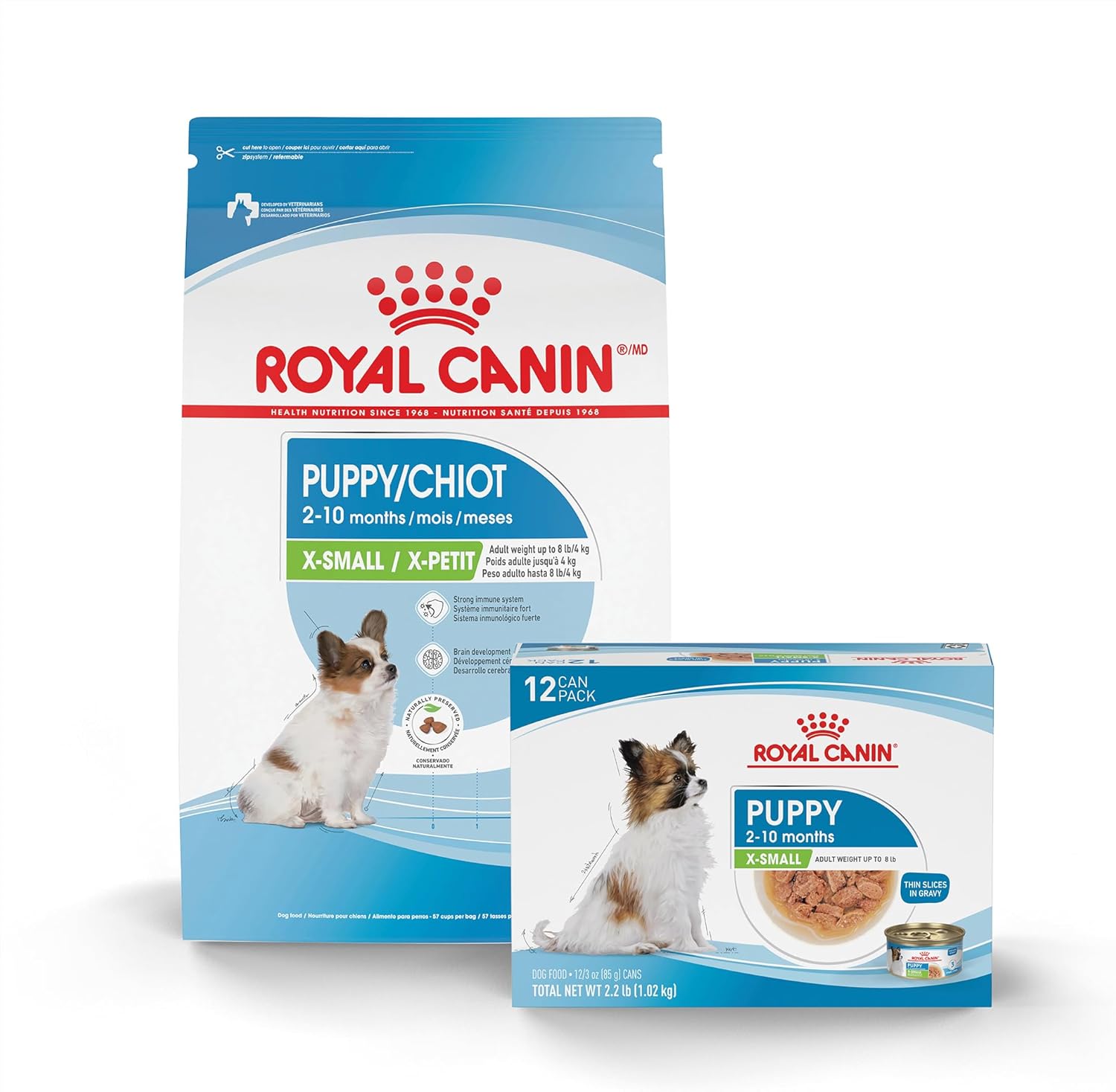
Royal Canin Size Health Nutrition Puppy
Specifically formulated for puppies up to 12 months. Supports healthy growth with optimal protein, calcium, and phosphorus levels. Includes DHA for brain development.
Check Amazon PriceAge-Specific Puppy Feeding Schedule Guide
Puppy nutritional needs change dramatically during their first year. Here's the complete age-specific feeding schedule guide:
Weaning Phase: Mother's Milk or Formula
Feeding Schedule: Every 2-3 hours (8-12 feedings daily)
Key Considerations: Puppies should nurse from their mother or receive commercial puppy formula. Eyes open at 10-14 days. Begin introducing puppy mush (formula mixed with high-quality puppy food) at 3-4 weeks.
Portion: Feed until satisfied but not bloated. Weight gain should be steady (10-15% of body weight daily).
Transition Phase: Introduction to Solid Food
Feeding Schedule: 4-6 meals daily (every 4-6 hours)
Key Considerations: Gradually transition from formula/mother's milk to puppy food. Soak kibble in warm water or formula to create soft mush. By 8 weeks, puppies should be eating primarily solid food.
Portion: Follow package guidelines based on expected adult weight. Monitor body condition score.
Early Puppyhood: Frequent Feedings Critical
Feeding Schedule: 4 meals daily (approximately every 4-6 hours)
Key Considerations: This is when most puppies go to new homes. Maintain consistent schedule. Small breeds may need 4-5 meals to prevent hypoglycemia. Continue moistening food if needed.
Portion: Typically 1/2 to 1 cup total daily, divided into meals. Adjust based on growth and activity.
Rapid Growth Phase: Adjusting Frequency
Feeding Schedule: 3 meals daily (morning, afternoon, evening)
Key Considerations: Most puppies can transition to 3 meals daily. Maintain consistency with meal times. Large breed puppies should remain on 3 meals to support steady growth and prevent bloat risk.
Portion: Amount increases as puppy grows. Follow feeding charts based on current weight and expected adult size.
Adolescence: Transition to Adult Schedule
Feeding Schedule: 2-3 meals daily (depending on breed size)
Key Considerations: Small breeds (mature by 9-12 months) can transition to 2 meals. Large breeds (mature 12-24 months) should remain on 3 meals until growth plates close. Consult your vet about transitioning to adult food (typically around 12 months).
Portion: Follow adolescent feeding guidelines. Growth rate slows but nutrients remain critical.
ZimuShop 2026 Puppy Feeding Research
Analysis of 1,200 puppy feeding schedules and growth outcomes:
| Age Range | Optimal Meal Frequency | Avg. Daily Calories* | Growth Rate** | Common Issues with Wrong Schedule |
|---|---|---|---|---|
| 2-4 months | 4 meals | 55-65 cal/lb | Rapid (2-4g/day/lb) | Hypoglycemia, poor growth |
| 4-6 months | 3 meals | 50-60 cal/lb | Moderate (1-2g/day/lb) | Digestive upset, erratic eating |
| 6-12 months | 2-3 meals | 40-55 cal/lb | Slowing (0.5-1g/day/lb) | Obesity, joint stress (large breeds) |
| 12+ months | 2 meals | 30-40 cal/lb | Minimal (growth plates close) | Weight gain, nutritional imbalance |
*Calorie needs vary by breed, activity, and individual metabolism. **Growth rate measured in grams gained per day per pound of expected adult weight.
Breed Size Feeding Schedule Differences
Breed size significantly impacts puppy feeding schedules. Here's how to adjust for different size categories:
Toy Breeds (under 10 lbs)
Special Considerations: High risk of hypoglycemia, fast metabolism
Feeding Schedule: 4-5 meals daily until 4 months, then 3-4 meals until 9 months
Portion Tips: Very small meals (1-2 tbsp each), high-calorie puppy food
Transition to Adult: Around 9-12 months
Small Breeds (10-25 lbs)
Special Considerations: Moderate risk of hypoglycemia, reach adult size quickly
Feeding Schedule: 4 meals until 3 months, 3 meals until 6 months, then 2-3 meals
Portion Tips: Small kibble size, monitor weight closely as they gain quickly
Transition to Adult: Around 9-12 months
Medium Breeds (25-50 lbs)
Special Considerations: Balanced growth needs, standard puppy development
Feeding Schedule: 4 meals until 3 months, 3 meals until 6 months, then 2 meals
Portion Tips: Follow package guidelines based on expected adult weight
Transition to Adult: Around 12-15 months
Large & Giant Breeds (50+ lbs)
Special Considerations: Slow, controlled growth essential for joint health
Feeding Schedule: 3-4 meals until 6 months, 3 meals until 12-18 months
Portion Tips: Large breed puppy formula with controlled calcium, avoid overfeeding
Transition to Adult: 18-24 months (when growth plates close)
Critical: Large Breed Puppy Considerations
Large and giant breed puppies require special attention:
- Calcium/Phosphorus Ratio: Must be balanced (1.2:1 to 1.4:1 calcium:phosphorus)
- Calorie Restriction: Keep puppies lean to reduce stress on developing joints
- Extended Puppy Food: Large breeds need puppy food longer (18-24 months)
- Multiple Meals: Continue 3 meals daily to prevent bloat and support steady growth
- Avoid Supplements: Don't add calcium supplements without veterinary guidance
According to the American Kennel Club, proper nutrition during growth can prevent orthopedic diseases like hip dysplasia in susceptible breeds.

Puppy Portion Control & Measurement Guide
Proper portion control is essential for healthy puppy growth. Here's how to determine and adjust portions:
| Expected Adult Weight | 2-4 Months Daily Portion | 4-6 Months Daily Portion | 6-12 Months Daily Portion | Measurement Method |
|---|---|---|---|---|
| 5-10 lbs (Toy) | 1/2 - 3/4 cup | 3/4 - 1 cup | 1/2 - 3/4 cup | Measuring cup, divided into meals |
| 10-25 lbs (Small) | 1 - 1 1/2 cups | 1 1/2 - 2 cups | 1 - 1 1/2 cups | Kitchen scale (grams) for accuracy |
| 25-50 lbs (Medium) | 1 1/2 - 2 1/2 cups | 2 1/2 - 3 1/2 cups | 2 - 3 cups | Combination: scale + measuring cup |
| 50-90 lbs (Large) | 2 1/2 - 4 cups | 4 - 6 cups | 3 - 5 cups | Kitchen scale essential for accuracy |
| 90+ lbs (Giant) | 4 - 6 cups | 6 - 10 cups | 5 - 8 cups | Kitchen scale + veterinary guidance |
How to Adjust Portions
Portions are starting guidelines. Adjust based on:
- Body Condition Score: Ribs should be easily felt with slight fat covering
- Growth Rate: Monitor weight weekly, adjust to maintain steady growth
- Activity Level: Active puppies may need 10-20% more, sedentary puppies less
- Food Type: Higher calorie foods require smaller portions
- Individual Metabolism: Some puppies burn calories faster than others
Always consult the specific feeding guide on your puppy food package and adjust based on your puppy's individual needs.
Small Breed Puppy Formula
High Calorie
Hill's Science Diet Small Paws Puppy
Specifically formulated for toy and small breed puppies. Small kibble size for tiny mouths, high-calorie formula for fast metabolism. Includes DHA for brain development. For digestive support, consider our puppy probiotic guide.
Check Amazon PriceSample Daily Feeding Schedules
Here are practical sample schedules for different age groups and lifestyles:
8-12 Week Old Puppy (Working Owner)
6:30 AM: Breakfast (25% of daily food)
12:30 PM: Lunch (puzzle feeder or timed dispenser) (25%)
5:30 PM: Dinner (25%)
9:30 PM: Late snack (25%)
Note: Use interactive feeders for midday meal if owner is at work.
3-6 Month Old Puppy (Home Owner)
7:00 AM: Breakfast (30% of daily food)
1:00 PM: Lunch (30%)
6:00 PM: Dinner (40%)
Note: Adjust portions if puppy seems hungry between meals. Include training treats in daily calorie count.
6-12 Month Old Puppy (Office Worker)
7:00 AM: Breakfast (40% of daily food)
6:00 PM: Dinner (60%)
Note: For large breeds or puppies who seem hungry, consider adding a small lunch or using a slow-feeder puzzle for breakfast.
Toy Breed Special Schedule
7:00 AM: Meal 1 (20%)
11:00 AM: Meal 2 (20%)
3:00 PM: Meal 3 (20%)
7:00 PM: Meal 4 (20%)
10:00 PM: Bedtime snack (20%)
Note: Essential for preventing hypoglycemia in toy breeds.
Breakfast & Preparation
Feed breakfast immediately upon waking. Take puppy outside to eliminate 15-20 minutes after eating. This establishes the morning routine and supports house training. Fresh water available at all times.
Lunch & Activity
For puppies under 6 months, provide lunch. Follow with playtime or short walk, then elimination break. For older puppies home alone, consider food-dispensing toys to prevent boredom eating.
Dinner & Evening Routine
Feed dinner at consistent time. Allow 30-60 minutes of digestion time before evening walk or play. Take final elimination break before bedtime. Adjust dinner time based on your schedule but maintain consistency.
Final Elimination & Snack
Take final bathroom break. For young puppies or toy breeds, consider small bedtime snack to prevent overnight hypoglycemia. Remove water 1-2 hours before bedtime for house training (consult your vet).
Essential Puppy Feeding Tips & Techniques
Beyond schedules and portions, these techniques optimize puppy feeding:
Proven Puppy Feeding Techniques
Based on behavioral research and veterinary recommendations:
| Technique | Benefits | Age to Implement | Special Considerations |
|---|---|---|---|
| Hand Feeding | Builds trust, prevents resource guarding | 8-16 weeks | Especially valuable for shy or rescued puppies |
| Food Puzzle Toys | Mental stimulation, slows eating | 12+ weeks | Start with easy puzzles, graduate to harder ones |
| Meal Training | Uses meals for obedience training | 8+ weeks | Dedicate 10-20% of meal for training exercises |
| Free Feeding Avoidance | Prevents obesity, establishes routine | All ages | Essential for all puppies except medical cases |
| Scheduled Water Access | Aids house training, prevents overdrinking | 8-20 weeks | Consult vet, especially in warm climates |
Training with Meals Technique
Instead of feeding entire meals in bowls, use a portion for training:
- Breakfast training: Use 25% of breakfast for basic obedience (sit, stay, come)
- Lunch enrichment: Use puzzle feeders or hiding food for mental stimulation
- Dinner bonding: Hand feed during calm evening bonding time
- Treat allowance: Deduct treats from daily food allowance to prevent overfeeding
This approach transforms feeding time into valuable training and bonding opportunities.
Interactive Feeding System
Mental Stimulation
Outward Hound Fun Feeder Slow Bowl
Slow feeder bowl design extends mealtime, prevents gulping, and provides mental stimulation. Available in multiple difficulty levels. According to recent behavioral studies, food puzzles reduce anxiety and prevent boredom in puppies.
Check Amazon PriceFood Transition & Schedule Changes Guide
As puppies grow, both their food type and feeding schedule need adjustment. Here's how to manage transitions smoothly:
7-Day Food Transition Protocol
- 75% old food, 25% new food
- Maintain same feeding schedule
- Monitor stool consistency
- Note any appetite changes
- 50% old food, 50% new food
- Consider adjusting meal timing if needed
- Watch for digestive upset signs
- Adjust portions if calorie density differs
- 25% old food, 75% new food
- Finalize new feeding schedule
- Assess appetite and energy levels
- Make final portion adjustments
- 100% new food
- Implement new feeding schedule
- Monitor weight weekly
- Adjust as needed for growth
Schedule Transition Tips
- Gradual changes: When reducing from 4 to 3 meals, gradually increase time between meals over 5-7 days
- Combine then redistribute: Merge two smaller meals into one, then adjust timing
- Monitor energy: Watch for lethargy or hyperactivity indicating schedule isn't working
- Consider activity timing: Align meals with activity periods (feed after exercise, not before)
- Be flexible: Some puppies adapt quickly, others need more time
Common Puppy Feeding Mistakes to Avoid
Avoid these common errors that can impact puppy health:
| Mistake | Consequence | Correction |
|---|---|---|
| Free Feeding (food always available) | Obesity, poor house training, no routine | Switch to scheduled meals immediately |
| Feeding Adult Dog Food | Nutritional deficiencies, poor growth | Use only AAFCO-approved puppy food |
| Overfeeding Treats | Obesity, picky eating, nutritional imbalance | Limit treats to <10% of daily calories |
| Rapid Food Changes | Digestive upset, diarrhea, vomiting | Always transition over 7-10 days |
| Inconsistent Schedule | Anxiety, house training difficulties | Set consistent meal times and stick to them |
| Feeding Before Exercise | Bloat risk (especially large breeds) | Wait 1-2 hours after meals before vigorous exercise |
| Ignoring Breed Size Differences | Growth issues, joint problems | Use breed-specific guidelines and formulas |
Case Study: Bailey's Schedule Transformation
Bailey, a 10-week-old Labrador Retriever, was experiencing erratic energy crashes, house training accidents at random times, and picky eating behavior. Her owners were feeding her "whenever she seemed hungry" with no consistent schedule.
After implementing a structured feeding schedule:
- Week 1: Established 4-meal schedule (7am, 12pm, 5pm, 9pm)
- Week 2: House training accidents reduced by 80%
- Week 3: Energy levels stabilized throughout day
- Week 4: Started using portion of meals for training
- Month 2: Transitioned to 3 meals with no issues
Bailey's story demonstrates how structured feeding schedules address multiple behavioral and health issues simultaneously. Her owners reported that establishing the feeding routine was "the single most effective thing we did for her training and wellbeing."

Special Needs Puppies & Medical Considerations
Some puppies require adjusted feeding schedules due to medical conditions:
Hypoglycemic Puppies
Common in: Toy breeds, puppies under stress, ill puppies
Schedule: 5-6 small meals daily, bedtime snack essential
Special Foods: High-calorie supplements, glucose gel for emergencies
Monitoring: Watch for lethargy, weakness, seizures
Food Allergies/Sensitivities
Common signs: Itching, ear infections, digestive upset
Schedule: Consistent meals to monitor reactions
Special Foods: Limited ingredient, novel protein diets
Transition: Very slow transitions (14+ days)
Underweight/Orphaned Puppies
Special needs: Higher calorie requirements, more frequent feedings
Schedule: Every 3-4 hours initially, gradual extension
Special Foods: Puppy milk replacer, high-calorie puppy food
Monitoring: Daily weight checks, adjust based on gain
Post-Surgical/Ill Puppies
Special needs: Appetite stimulation, easy digestion
Schedule: Smaller, more frequent meals as tolerated
Special Foods: Prescription diets, bland diets (chicken & rice)
Transition: Follow veterinary instructions precisely
When to Consult Your Veterinarian
Seek veterinary advice if your puppy shows:
- Consistent refusal to eat for more than 24 hours
- Frequent vomiting or diarrhea after meals
- Signs of hypoglycemia (lethargy, weakness, tremors, seizures)
- Failure to gain weight or sudden weight loss
- Excessive hunger despite adequate feeding
- Bloated abdomen or signs of pain after eating
- Any medical condition requiring special nutrition
Always consult your veterinarian before making significant changes to a puppy with health issues.
Final Thoughts on Puppy Feeding Schedules
Establishing a proper puppy feeding schedule is one of the most valuable investments you can make in your puppy's health and development. While it requires initial effort and consistency, the benefits extend far beyond nutrition.
Remember that every puppy is unique. Use these guidelines as starting points, then observe and adjust based on your individual puppy's needs. What works perfectly for one may need modification for another. The key is consistency, observation, and willingness to adapt as your puppy grows.
Your puppy's feeding routine forms the foundation of their daily structure, supports healthy growth, and strengthens your bond through consistent care. By investing time in establishing proper feeding habits now, you're setting the stage for a healthy, well-adjusted adult dog.
For ongoing puppy care information, explore our complete puppy care guide.