
Proper pet care planning and organization are essential for ensuring your furry, feathered, or scaled friends live happy, healthy lives. According to the American Veterinary Medical Association, organized pet care reduces stress for both pets and owners while ensuring nothing falls through the cracks.
This comprehensive guide will walk you through creating effective pet care systems, emergency preparedness plans, and organizational strategies that work for any type of pet. For more general pet care advice, check out our complete pet care guide.
Table of Contents

Why Pet Care Planning Matters
Organized pet care isn't just about convenience it's about safety, health, and peace of mind. Studies show that pet owners with organized care systems are:
42% More Likely
To remember regular veterinary appointments and preventive care, leading to earlier detection of health issues.
67% Better Prepared
For emergencies and unexpected situations that could impact their pets' safety and wellbeing.
Save 23% Annually
On pet care costs through better planning, bulk purchasing, and preventive care that avoids expensive treatments.
Pro Tip
Start small with one organizational system at a time. Trying to implement everything at once can be overwhelming. Begin with creating a basic pet information sheet and build from there.
Creating a Pet Care Binder
A physical pet care binder is an excellent starting point for organization. The Humane Society recommends keeping important documents in one accessible location.
Essential Binder Sections:
Pet Care Binder Checklist
Digital Pet Care Organization
In today's digital age, complementing your physical binder with digital tools can provide accessibility and automation. Research from veterinary journals shows that digital health records improve care consistency.
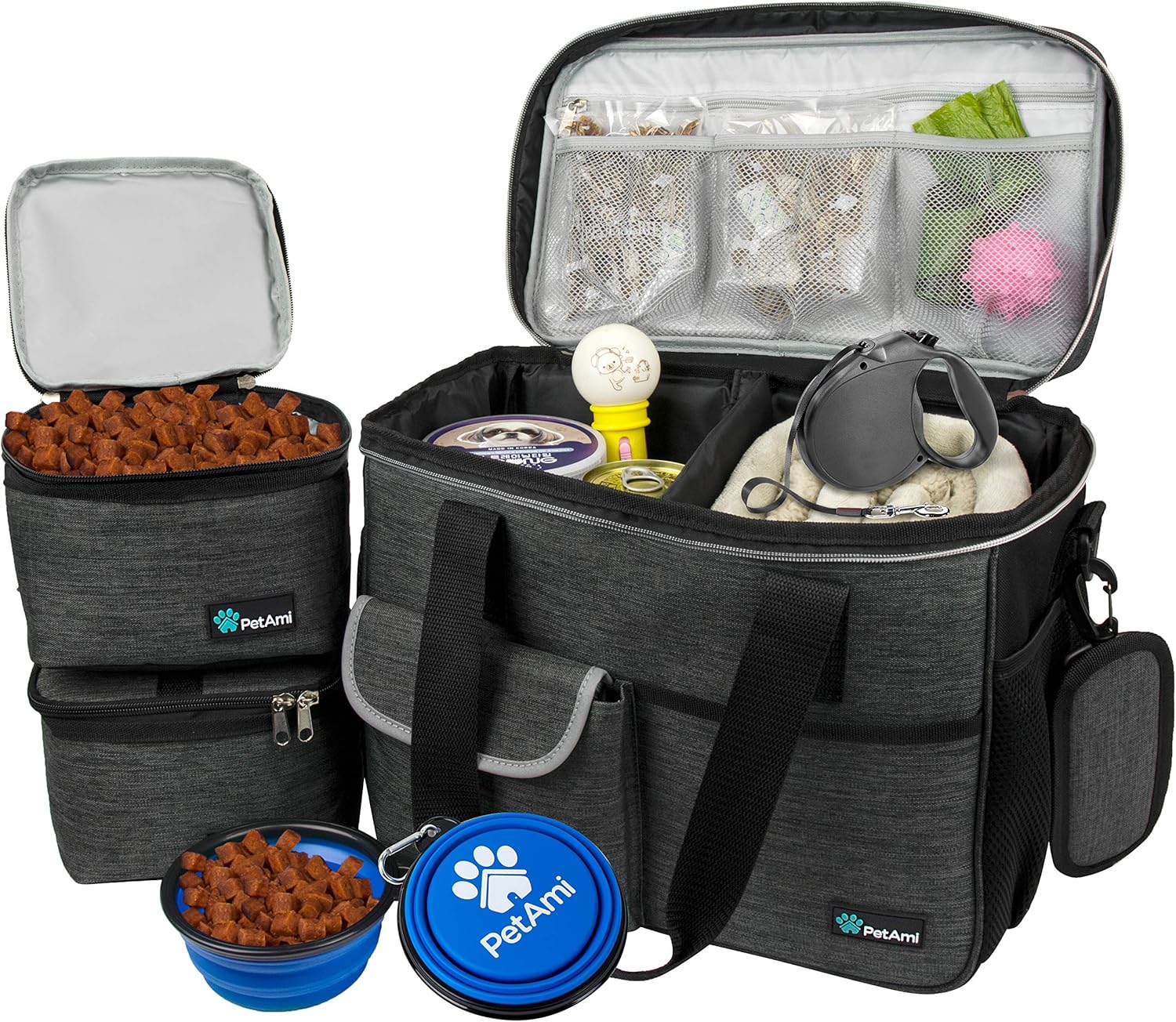
PetAmi Dog Travel Organizer with Food Container and Bowls
Buy now on AmazonRecommended Digital Tools:
| Tool Type | Purpose | Recommended Apps/Services |
|---|---|---|
| Health Tracking | Record vet visits, medications, symptoms | PetDesk, 11Pets, Apple Health (with pet profiles) |
| Medication Reminders | Never miss a dose | Medisafe, Round Health, Google Calendar alerts |
| Supply Management | Track food, medication inventory | OurGroceries, AnyList, simple spreadsheet |
| Document Storage | Secure digital copies of important papers | Google Drive, Dropbox, Evernote |
Feeding and Medication Schedules
Consistent feeding and medication schedules are crucial for pet health. The ASPCA provides excellent guidelines for pet feeding schedules based on age and health status.
Free Downloadable Template
Download our customizable weekly pet care schedule template to get started with organized feeding, medication, and exercise routines.
Download Schedule TemplateSample Daily Schedule for Adult Dog:
7:00 AM - Morning Routine
Morning walk, fresh water, breakfast with any morning medications. Check water bowl and refill if needed.
12:00 PM - Midday Check
Quick bathroom break, water refresh, short play session or mental stimulation activity.
5:00 PM - Evening Routine
Main walk/exercise session, dinner, evening medications, grooming if needed.
9:00 PM - Bedtime Routine
Final bathroom break, water for overnight, settle in sleeping area with favorite toy.
Emergency Preparedness for Pets
Emergency planning is the most critical aspect of pet care organization. Natural disasters, home emergencies, or personal emergencies can happen without warning.
Create an Evacuation Plan
Go-Bag Essentials
Prepare a pet emergency kit with 3-7 days of supplies including food, water, medications, and comfort items.
Must-Have Items:
- Food & water for 3-7 days
- Medications & medical records
- Leash, harness, carrier
- Recent photo of you with your pet
Safe Locations
Identify pet-friendly hotels, shelters, or friends/family outside your immediate area who could take your pets in an emergency.
Research Options:
- Local pet-friendly hotels
- Emergency animal shelters
- Friends/family contacts
- Veterinary hospitals with boarding
Pet First Aid Kit Essentials
Every pet household should have a dedicated pet first aid kit. The American Red Cross provides comprehensive guidelines for pet first aid kits.
Important
A pet first aid kit should be separate from your human first aid kit and include pet-specific items like a pet thermometer, muzzle (for safety when in pain), and pet emergency contact numbers. Store it in an easily accessible location and check expiration dates every 6 months.
Financial Planning for Pet Care
Pet ownership comes with financial responsibilities that should be planned for. According to the AVMA's cost of pet care study, the average annual cost of dog ownership ranges from $1,400 to $4,300 depending on size and needs.

Creating a Pet Care Budget:
- Monthly Essentials: Food, treats, preventative medications, grooming supplies
- Quarterly Expenses: Toys replacement, bedding refresh, training classes if applicable
- Annual Costs: Veterinary check-ups, vaccinations, license fees, dental care
- Emergency Fund: Aim to save 3-6 months of pet care expenses for unexpected veterinary costs
- Insurance Consideration: Research pet insurance options that fit your budget and pet's needs
Budgeting Tip
Set up a separate savings account or envelope system specifically for pet expenses. Automate monthly transfers to build your pet emergency fund gradually. Consider using apps like Mint or YNAB to track pet-related expenses separately from household budgets.
Managing Multiple Pets
Households with multiple pets require additional organizational strategies to ensure each pet's needs are met individually.
Color-Coding System:
Red - Max
Senior dog, special diet, medication twice daily, gentle exercise only.
Green - Luna
Indoor cat, weight management diet, play sessions 3x daily, monthly grooming.
Blue - Skye
Cockatiel, seed/pellet mix, fresh fruits/vegetables daily, cage cleaning weekly.
Seasonal Pet Care Planning
Different seasons bring different challenges and requirements for pet care. Proactive seasonal planning prevents last-minute scrambling.
Seasonal Planning Checklist
Final Thought
Pet care planning and organization is an ongoing process that evolves with your pet's life stages and your family's changing circumstances. The most important step is simply to begin. Start with one system today whether it's creating a basic information sheet, setting up medication reminders, or assembling an emergency go-bag. Each small step makes you better prepared to provide the excellent care your pet deserves. For more resources, explore our complete blog.