
Recipe Introduction
Bearded dragons are omnivores that thrive on a varied diet of leafy greens, vegetables, and live insects. Making homemade reptile food for bearded dragons lets you control ingredient quality, avoid pesticides, and tailor meals to your dragon's age and health. This recipe combines staple greens, nutritious vegetables, and guidance on insect protein to create a balanced daily diet.
Proper nutrition is critical for bearded dragons to prevent metabolic bone disease, obesity, and other health issues. This guide provides a reliable base mix plus tips for supplementing with calcium and gut‑loaded insects.
Table of Contents
Bearded Dragon Greens & Veggie Mix
Staple Diet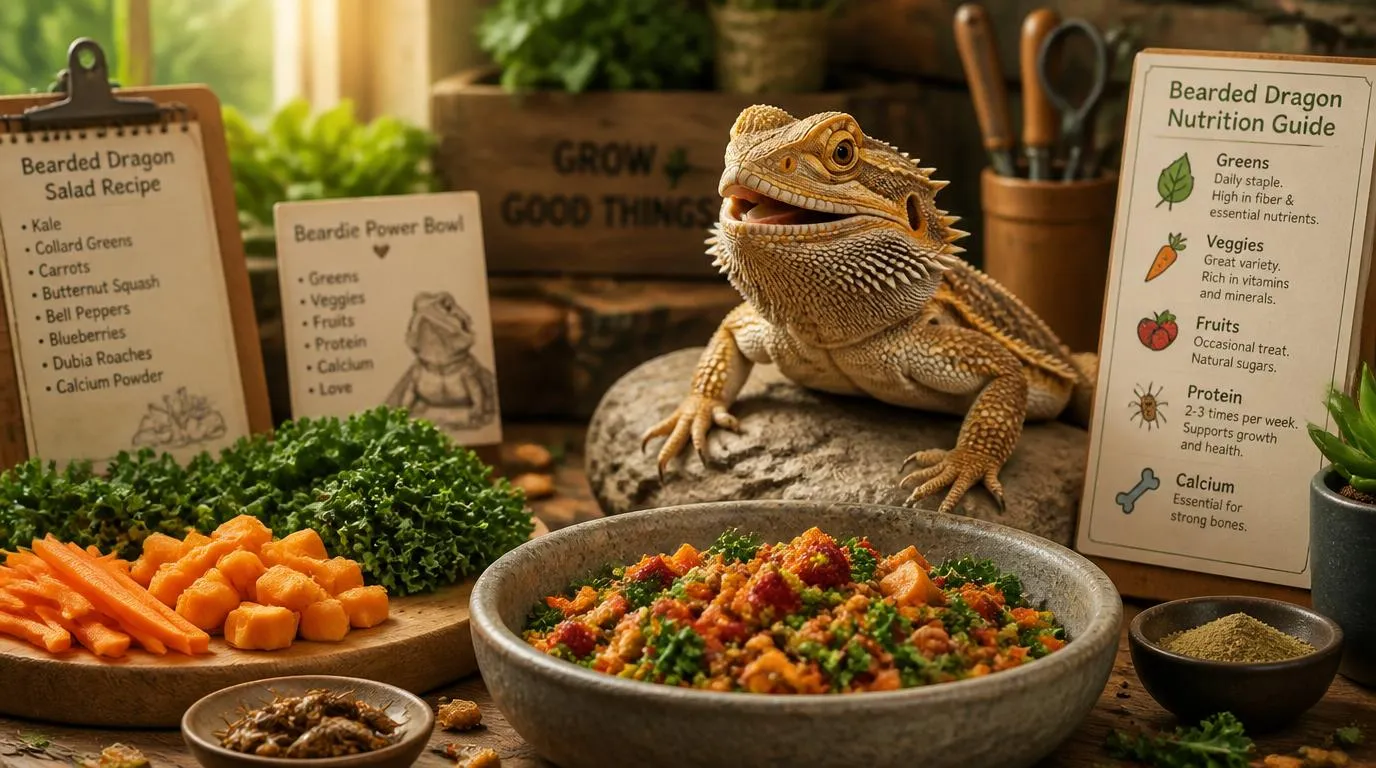
Ingredients
- Collard greens or mustard greens 1 cup (chopped)
- Dandelion greens (optional) ½ cup
- Butternut squash (grated) ½ cup
- Carrot (grated) ¼ cup
- Bell pepper (finely diced) ¼ cup
- Calcium powder (without D3 unless advised) 1 tsp
- Reptile multivitamin ¼ tsp (once weekly)
Protein (insects): Offer separately – gut‑loaded crickets, dubia roaches, or black soldier fly larvae. Dust insects with calcium before feeding.
Nutritional Highlights (per ¼ cup veggie mix)
Always dust with calcium; insect portion provides additional protein and fat.
Step-by-Step Instructions
- Wash all greens and vegetables thoroughly to remove pesticides and dirt.
- Chop greens into small, bite‑sized pieces appropriate for your dragon's size.
- Grate squash and carrot for easier digestion.
- Dice bell pepper finely.
- Combine all vegetables in a bowl. Add calcium powder and mix well.
- Serve immediately at room temperature. Remove uneaten vegetables after 4‑6 hours.
- Feed insects separately in a separate dish or during a separate feeding session. Always dust insects with calcium before offering.
Pros and Cons of Homemade Food for Bearded Dragons
Pros
- Complete control over ingredients – no fillers, preservatives, or unsafe additives.
- Optimal calcium:phosphorus ratio – crucial for bone health.
- Freshness – higher moisture content supports hydration.
- Cost‑effective compared to pre‑packaged diets.
- Tailored to life stage – adjust greens to veggies ratio for juveniles vs. adults.
Cons
- Requires careful supplementation – missing calcium or vitamins can cause metabolic bone disease.
- Time‑consuming to prepare fresh daily.
- Insect sourcing – need to maintain gut‑loaded, healthy insects.
- Potential for picky eating – some dragons may refuse certain greens.
Nutritional Tips for Bearded Dragons
Why These Ingredients Are Great
- Collard/mustard greens: Excellent calcium source, low oxalates. Staple green.
- Dandelion greens: High in vitamin A and calcium; great addition.
- Butternut squash: Beta‑carotene and fiber; supports eye health.
- Carrot: Vitamin A precursor; use in moderation due to sugar.
- Bell pepper: Vitamin C and hydration; adds variety.
- Calcium powder: Essential to prevent metabolic bone disease.
- Live insects: Provide protein, fat, and enrichment. Always gut‑load 24 hours before feeding.
Foods to avoid: Spinach, kale, and chard in large amounts (oxalates bind calcium); iceberg lettuce (no nutrition); avocado, rhubarb, and fireflies (toxic).
Feeding Guidelines by Age
- Juveniles (0‑12 months): 70% insects, 30% greens/vegetables. Feed 2‑3 times daily, offering as many insects as they can eat in 10‑15 minutes.
- Adults (12+ months): 70‑80% greens/vegetables, 20‑30% insects. Feed once daily, offering about 10‑15 insects 2‑3 times per week.
- Portion size: Vegetable portion roughly the size of the dragon's head. Adjust based on body condition.
- Supplement schedule: Dust vegetables and insects with calcium at every feeding for juveniles, 5‑6 times weekly for adults. Multivitamin once weekly for all ages.
- Always provide fresh water in a shallow dish, though many dragons get hydration from greens and baths.
Recipe Variations & Insect Options
Customize for Your Dragon
- Add variety: Rotate greens – turnip greens, arugula, escarole, and endive are excellent choices.
- Vegetable swaps: Use zucchini, yellow squash, or snap peas (in moderation).
- Occasional treats: Small amounts of berries (blueberries, raspberries) or mango can be offered once a week.
- Insect choices: Crickets, dubia roaches, black soldier fly larvae (calcium‑rich), and silkworms are best. Avoid wild‑caught insects (pesticides) and too many mealworms or waxworms (high fat).
- Gut‑loading: Feed insects fresh greens, carrots, and commercial gut‑load 24‑48 hours before offering to your dragon.
Introduce new foods gradually to avoid digestive upset. Monitor stool consistency and weight.
Must‑Have Items
Recommended Tools & Supplies
- Fine Grater or Food Processor – for shredding vegetables. Check price on Amazon
- Digital Scale – for precise supplement dosing. Check price on Amazon
- Insect Keeper – for gut‑loading crickets or roaches. Check price on Amazon
- Calcium Powder with D3 – essential supplement. Check price on Amazon
- Feeding Tweezers – for safe insect offering. Check price on Amazon
We participate in the Amazon Services LLC Associates Program, an affiliate advertising program designed to provide a means for us to earn fees by linking to Amazon.com and affiliated sites. As an Amazon Associate, we earn from qualifying purchases.
Storage and Safety Tips
Keep It Fresh & Safe
- Refrigerator: Store prepared veggie mix in an airtight container for up to 3 days.
- Freezer: Portion into ice cube trays for single servings; freeze for up to 2 months. Thaw before serving.
- Never feed spoiled food – discard if any odor or mold appears.
- Wash hands thoroughly after handling raw ingredients and before handling your dragon (to avoid salmonella risk).
- Sanitize feeding dishes daily with hot soapy water or reptile‑safe disinfectant.
- Remove uneaten insects after 15 minutes to prevent them from biting your dragon.
Conclusion
Making homemade food for your bearded dragon is a rewarding way to provide optimal nutrition. By combining fresh greens, vegetables, and properly supplemented insects, you can support strong bones, vibrant skin, and a long, healthy life. Remember to tailor portions and insect frequency to your dragon's age and monitor their body condition regularly.
With this recipe as a foundation, you can experiment with safe ingredient variations to keep mealtime interesting. Enjoy the bond that comes from preparing wholesome meals for your scaly friend!
Frequently Asked Questions
How often should I feed my bearded dragon vegetables?
Adults should have fresh vegetables daily. Juveniles also need vegetables daily, but their diet should consist of more insects (about 70% insects, 30% vegetables). Always remove uneaten vegetables after a few hours to prevent spoilage.
Can bearded dragons eat fruit?
Yes, but only as an occasional treat (once a week or less). Fruits are high in sugar and can cause digestive upset and obesity if overfed. Good choices: blueberries, raspberries, mango, and papaya in small amounts.
What insects are best for bearded dragons?
Dubia roaches, crickets, and black soldier fly larvae are excellent staple feeders. They have a good calcium:phosphorus ratio and are nutritious. Mealworms and waxworms should be treats only due to high fat and chitin.
Do I need to dust vegetables with calcium if I dust insects?
Yes. Both vegetables and insects should be dusted with calcium (without D3 for most meals, unless your dragon has limited UVB). The vegetable portion is a major part of the adult diet, so calcium must be added directly.
How do I know if my bearded dragon is overweight?
A healthy dragon should have a slight belly but you should be able to feel the ribs without pressing hard. If the belly drags on the ground or fat pads are visible on the head, reduce insect frequency and increase greens.
Can I feed my bearded dragon only insects?
No. Adult bearded dragons need a diet rich in greens and vegetables for fiber, vitamins, and proper calcium absorption. An all‑insect diet can lead to obesity, kidney issues, and metabolic bone disease.