
Recipe Introduction
Pet rats are intelligent, social omnivores that thrive on variety. A high-quality homemade diet lets you control ingredients, avoid fillers, and cater to your rat's individual taste. This homemade rat food for pet rats combines wholesome grains, seeds, and vegetable protein for a balanced base, plus optional fresh add-ins. With proper supplementation, homemade diets support healthy coats, energy, and longevity.
This recipe includes a dry staple mix that can be stored for weeks, plus simple veggie-protein bites for enrichment. Always provide fresh water and consider supplementing with a high-quality lab block to ensure complete micronutrient coverage.
Table of Contents
Rat Staple Mix & Veggie Bites
Nutritionally Balanced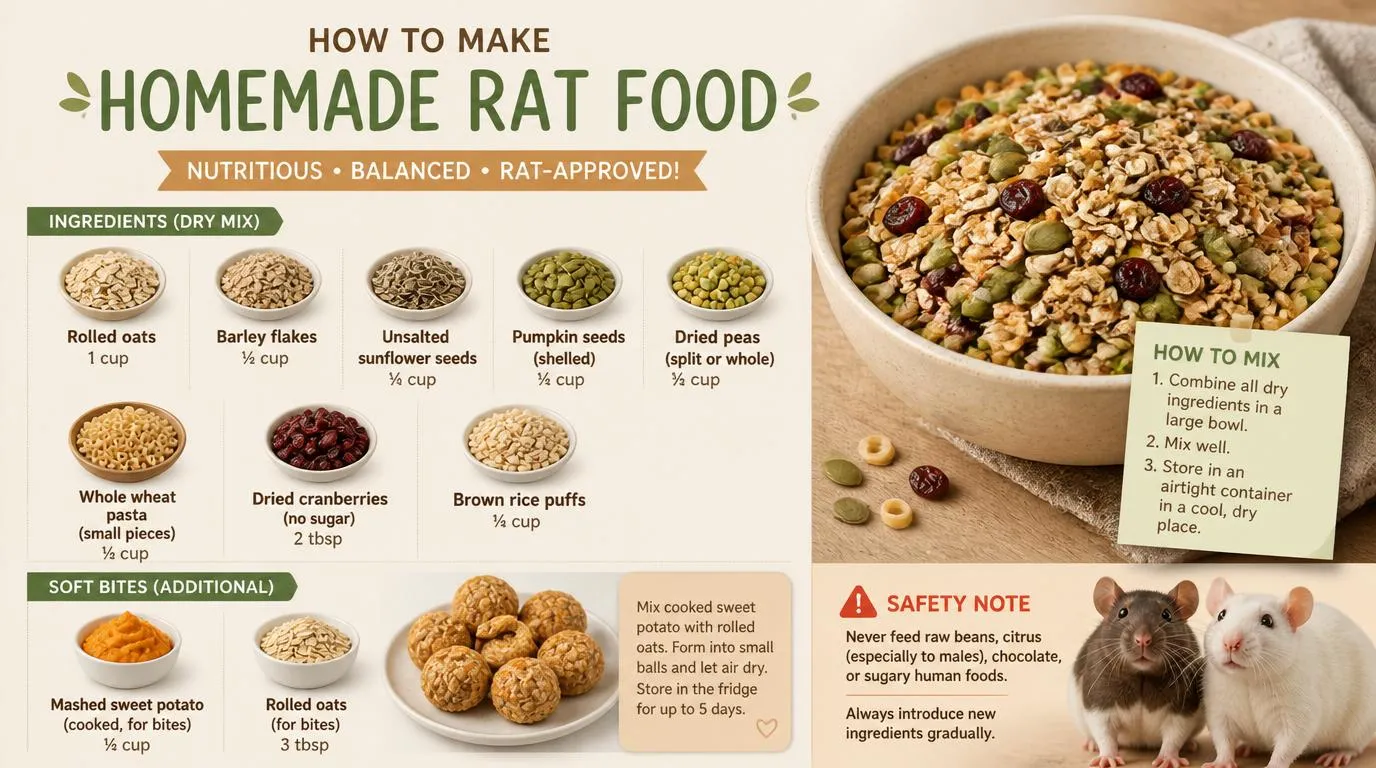
Ingredients
- Rolled oats 1 cup
- Barley flakes ½ cup
- Unsalted sunflower seeds ¼ cup
- Pumpkin seeds (shelled) ¼ cup
- Dried peas (split or whole) ½ cup
- Whole wheat pasta (small pieces) ½ cup
- Dried cranberries (no sugar) 2 tbsp
- Brown rice puffs ¼ cup
- Mashed sweet potato (cooked, for bites) ¼ cup
- Rolled oats (for bites) 3 tbsp
Safety note: Never feed raw beans, citrus (especially to males), chocolate, or sugary human foods. Always introduce new ingredients gradually.
Approximate Nutritional Profile (per 2 tbsp dry mix)
Values are approximate. Supplement with fresh vegetables and a quality lab block for complete nutrition.
Step-by-Step Instructions
- Make dry base: Combine oats, barley, sunflower seeds, pumpkin seeds, dried peas, pasta, brown rice puffs, and dried cranberries in a large bowl. Mix well. Store in an airtight container in a cool, dry place.
- Serve staple mix: Offer 1–2 tablespoons per rat daily in a heavy ceramic bowl. Always provide fresh water.
- Veggie protein bites (optional treat): Mash cooked sweet potato and mix with 3 tbsp rolled oats until a dough forms. Roll into small balls (about ½ inch). Refrigerate for 1 hour until firm.
- Fresh add-ins (daily): Supplement with small amounts of leafy greens (kale, spinach), carrot, broccoli, or a sliver of apple 3–4 times a week.
- Portion control: Remove uneaten fresh foods after 4–6 hours to prevent spoilage. Dry mix can be left in cage; refresh every 2 days.
Pros and Cons of Homemade Rat Food
Pros
- No fillers or preservatives – you control every ingredient.
- Customizable – adapt for picky eaters or health conditions.
- Cost‑effective – buying in bulk saves money.
- Freshness – you know exactly how old the food is.
- Bonding – preparing meals enriches your relationship.
Cons
- Requires nutritional balance – may need lab block supplement.
- Risk of obesity if portions are not measured.
- Time‑consuming compared to commercial food.
- Spoilage risk – fresh items must be removed promptly.
Nutritional Tips – Why These Ingredients Are Great for Rats
Ingredient Benefits
- Rolled oats & barley: Digestible fiber and steady energy; easy on the digestive system.
- Sunflower & pumpkin seeds: Healthy fats, vitamin E, and essential fatty acids for coat health.
- Dried peas: Plant-based protein and fiber; mimics natural foraging.
- Whole wheat pasta: Complex carbohydrates for active rats.
- Brown rice puffs: Light, low‑fat crunch with B vitamins.
- Sweet potato: Rich in beta‑carotene and vitamin A; supports immune function.
- Dark leafy greens: Provide calcium, vitamin K, and antioxidants.
Feeding Guidelines for Pet Rats
Follow these best practices to keep your rats healthy and happy:
- Portion size: Adult rats typically need 15–20g of dry mix per day plus a tablespoon of fresh vegetables.
- Water: Always provide clean water in a bottle or heavy ceramic bowl; change daily.
- Lab block supplement: Offer a high‑quality rat lab block (e.g., Oxbow) alongside homemade mix to ensure all micronutrients are met.
- Treats in moderation: Veggie bites, small pieces of fruit, or cooked egg can be given 2–3 times a week.
- Enrichment: Scatter feed or use foraging toys to mimic natural behavior and prevent boredom.
- Monitor weight: Weigh your rats weekly and adjust portions if they become overweight or underweight.
Recipe Variations for Specific Needs
Customize for Life Stage & Health
- Growing rats (under 6 months): Add extra protein: cooked egg, small pieces of boiled chicken, or mealworms 3‑4 times a week.
- Senior rats: Softer grains like quick oats, reduce seeds to prevent obesity, and offer easily chewable vegetables.
- Weight management: Limit sunflower seeds and increase barley and leafy greens. Use a food scale to measure portions.
- Allergy or sensitive stomach: Omit corn or wheat; use rice puffs and millet instead.
- Foraging enrichment: Hide small amounts of the dry mix in cardboard tubes or treat puzzles.
Observe your rats' preferences and adjust gradually. Always consult an exotic veterinarian before making major dietary changes.
Must‑Have Items
Recommended Tools & Supplies
- Large Mixing Bowl & Spoon – for combining ingredients. Check price on Amazon
- Airtight Storage Container – keeps dry mix fresh for months. Check price on Amazon
- Digital Kitchen Scale – for precise portion control. Check price on Amazon
- Silicone Mini Molds – for shaping veggie bites. Check price on Amazon
- Stainless Steel Bowls – heavy, tip‑proof dishes for food. Check price on Amazon
We participate in the Amazon Services LLC Associates Program, an affiliate advertising program designed to provide a means for us to earn fees by linking to Amazon.com and affiliated sites. As an Amazon Associate, we earn from qualifying purchases.
Storage and Safety Tips
Keep It Fresh & Safe
- Dry mix: Store in an airtight container in a cool, dark place for up to 3 months.
- Veggie bites: Refrigerate in a sealed container for up to 5 days; freeze for up to 2 months.
- Fresh vegetables: Remove uneaten portions daily to prevent mold and bacterial growth.
- Signs of spoilage: Musty smell, clumping, or insects in dry mix – discard immediately.
- Hygiene: Wash food bowls daily with hot soapy water. Clean the cage regularly to avoid food debris accumulation.
- Avoid toxic foods: Never give citrus (especially to male rats), raw beans, chocolate, caffeine, blue cheese, or green potato skins.
Conclusion
Making your own homemade rat food for pet rats is a rewarding way to provide wholesome, varied meals that your rats will love. With a balanced mix of grains, seeds, vegetables, and occasional protein treats, you can support their health and happiness. Remember to monitor their weight, introduce new foods gradually, and always provide a quality lab block for complete nutrition.
Enjoy watching your rats forage, explore, and thrive on the diet you've prepared for them. Happy rat keeping!
Frequently Asked Questions
Can rats eat this homemade mix every day?
Yes, as a staple alongside fresh vegetables and a high‑quality lab block to ensure all micronutrient needs are met. Rotate ingredients occasionally to maintain variety.
What foods are toxic to rats?
Avoid citrus (especially for male rats), raw beans, chocolate, caffeine, blue cheese, licorice, and green potato skins. Also avoid sugary or salty human treats.
How much homemade food should I give per rat?
About 1–2 tablespoons of dry mix per adult rat daily, plus a tablespoon of mixed fresh vegetables. Adjust based on activity level, age, and weight.
Can I add meat or eggs to their diet?
Absolutely! Cooked chicken, boiled egg, or mealworms are excellent protein supplements 2–3 times a week, especially for young or nursing rats.
Is it cheaper to make rat food at home?
Often yes, especially if you buy grains and seeds in bulk. It also reduces packaging waste and gives you control over freshness and quality.
Do I still need to feed a commercial lab block?
It is highly recommended to offer a quality lab block (such as Oxbow) alongside your homemade mix to guarantee complete and balanced nutrition, especially for minerals and vitamins that may be inconsistent in homemade blends.