
Recipe Introduction
Rabbits are herbivores with sensitive digestive systems. A proper diet consists mainly of unlimited grass hay, fresh leafy greens, and a small portion of high-quality pellets. Making homemade rabbit food allows you to control freshness, avoid fillers, and create variety that encourages natural foraging behavior. This guide offers a daily fresh greens bowl and a simple hay-based treat recipe — both packed with fiber and essential nutrients. Always introduce new foods gradually and consult your exotic vet.
Table of Contents
Fresh Greens Bowl + Hay Treats
Daily & Occasional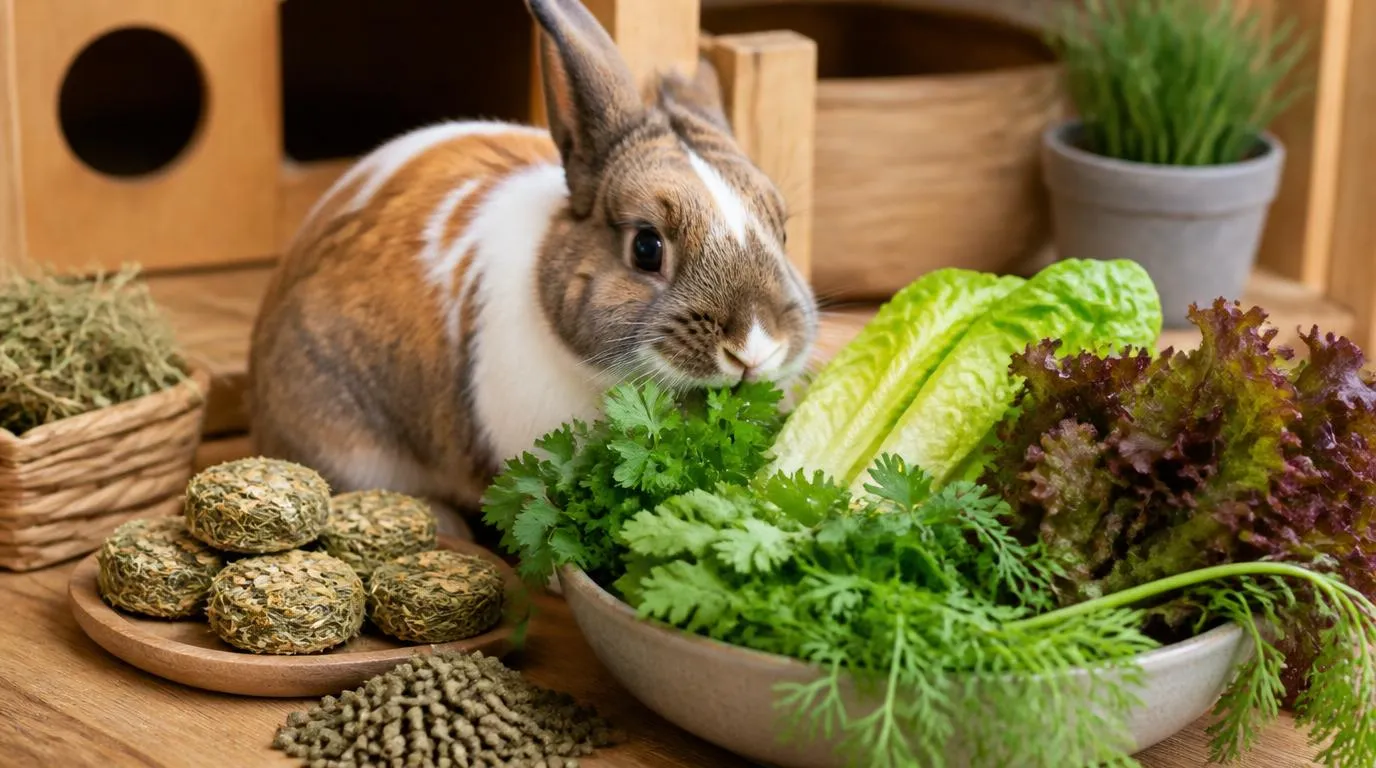
Ingredients
- Romaine lettuce 1 cup
- Red leaf lettuce 1 cup
- Fresh cilantro ½ cup
- Flat-leaf parsley ¼ cup
- Carrot tops (optional) ¼ cup
- Timothy hay pellets 2 tbsp
- For Hay Treats: —
- Timothy hay (finely chopped) 1 cup
- Mashed banana ½ cup
- Rolled oats ¼ cup
⚠️ Never feed iceberg lettuce, rhubarb, chocolate, or seeds.
Approximate Nutrition (per salad serving)
Step-by-Step Instructions
- Fresh greens bowl: Wash all greens thoroughly. Tear into bite-sized pieces and mix in a ceramic bowl. Sprinkle 1–2 tbsp of timothy pellets on top for enrichment. Serve daily (remove uneaten greens after 4 hours).
- Hay treats (1–2 times/week): In a bowl combine chopped timothy hay, mashed banana, and rolled oats. Mix until sticky.
- Press mixture into small silicone molds or shape into 1‑inch balls. Refrigerate for 1 hour until firm.
- Offer one treat per rabbit as an occasional reward. Store extras in fridge for up to 5 days or freeze for 2 months.
- Always provide unlimited fresh grass hay (timothy, oat, orchard) alongside these foods.
Pros and Cons of Homemade Rabbit Food
Pros
- Fresh & preservative-free – ideal for sensitive digestion.
- Encourages natural foraging and hydration.
- Customizable to your rabbit’s taste and seasonal greens.
- Cost-effective when using local produce.
- Strengthens bond through hand-feeding treats.
Cons
- Requires careful ingredient selection (avoid toxic foods).
- Fresh greens spoil quickly – must be removed daily.
- Time needed for washing and preparation.
- Improper ratios can cause digestive upset.
Nutritional Tips – Why These Ingredients Are Great for Rabbits
Key Benefits
- Romaine/Red leaf lettuce: High in fiber, low in oxalates – safe daily staples.
- Cilantro & parsley: Rich in antioxidants and vitamins; provide variety.
- Timothy hay pellets: Concentrated fiber; avoid alfalfa-based for adults.
- Timothy hay (treats): Essential for dental health and gut motility.
- Banana (tiny amount): Natural sweetness for bonding; use sparingly due to sugar.
Always prioritize unlimited grass hay (80% of diet) with fresh greens as supplement.
Feeding Guidelines for Pet Rabbits
- Hay first: Unlimited timothy, orchard, or oat hay at all times.
- Greens amount: About 1 packed cup per 2 lbs of body weight daily.
- Pellets: High-quality timothy-based pellets: 1/8 cup per 5 lbs daily.
- Treats: Hay-based treats 1–2 times a week; avoid commercial sugary treats.
- Water: Fresh, clean water in a heavy bowl (not bottle) at all times.
- Introduce gradually: Add one new vegetable every 48 hours to monitor digestion.
Safe vs. Unsafe Greens
Safe daily: Romaine, red/green leaf lettuce, arugula, cilantro, parsley, carrot tops. Occasional (small amounts): Kale, spinach, mustard greens (high in oxalates). Never: Iceberg lettuce, rhubarb, avocado, onion, garlic, chocolate, nuts, seeds.
Recipe Variations for Your Bunny
Customize Based on Preference
- For picky eaters: Add a few fresh mint leaves or basil for aroma.
- Herb garden blend: Mix dill, oregano, and cilantro for variety.
- Cooling summer bowl: Include cucumber slices and fresh wheatgrass.
- Digestive support: Sprinkle a pinch of dried chamomile flowers.
- Hay treat twist: Replace banana with unsweetened applesauce.
Must‑Have Items
Recommended Tools & Supplies
- Large Mixing Bowl & Colander – for washing greens. Check price on Amazon
- Ceramic Food Bowl – heavy base to prevent tipping. Check price on Amazon
- Airtight Storage Container – keep hay treats fresh. Check price on Amazon
- Herb Scissors / Salad Spinner – for efficient prep. Check price on Amazon
We participate in the Amazon Services LLC Associates Program, an affiliate advertising program designed to provide a means for us to earn fees by linking to Amazon.com and affiliated sites. As an Amazon Associate, we earn from qualifying purchases.
Storage and Safety Tips
Keep Greens Fresh & Safe
- Fresh greens: Store in refrigerator in perforated bags; use within 3–4 days.
- Hay treats: Refrigerate up to 5 days or freeze for up to 2 months.
- Remove uneaten greens after 4–6 hours to prevent spoilage and fly attraction.
- Wash all produce thoroughly to remove pesticides.
- Never feed moldy or wilted greens – can cause serious GI stasis.
Conclusion
Preparing homemade rabbit food deepens your bond and ensures your bunny enjoys a varied, fiber-rich diet. The fresh greens bowl provides essential hydration and nutrients, while hay-based treats offer a healthy reward. Always remember: unlimited grass hay is non‑negotiable. With careful ingredient choices and proper storage, your pet rabbit will thrive on these wholesome recipes. Happy feeding!
Frequently Asked Questions
What is the best homemade food for pet rabbits?
A mix of leafy greens (romaine, red leaf, cilantro) plus unlimited timothy hay and a small amount of timothy pellets is ideal. Avoid starchy vegetables and sugary fruits.
Can rabbits eat carrots every day?
Carrots are high in sugar and should be given only as an occasional treat (a small slice 1–2 times/week). Carrot tops (greens) are much healthier and can be offered daily.
How much fresh greens should I feed my rabbit?
Provide at least 1 packed cup of mixed greens per 2 lbs of body weight per day, split into morning and evening feedings. Adjust based on your rabbit's size and stool quality.
Can I use this recipe for baby rabbits?
No. Baby rabbits (under 6 months) need alfalfa-based pellets and limited greens. Consult your vet before introducing fresh vegetables to kits.
Are hay-based treats safe daily?
Hay-based treats are healthier than commercial ones but still contain fruit (banana) – limit to 1–2 small treats per week to avoid obesity and digestive issues.