
Recipe Introduction
Hamsters are energetic little creatures that thrive on a balanced, varied diet. While commercial mixes are convenient, many contain fillers, artificial colors, and high-sugar ingredients that can lead to obesity and health issues. Making your own homemade hamster food for pet hamsters allows you to control every ingredient, ensuring your furry friend gets the nutrition they need without any hidden nasties.
This all‑purpose recipe combines the seeds, grains, and protein sources that hamsters love most – millet, oats, barley, pumpkin seeds, and mealworms – into a simple mix that can be served daily. For extra enrichment, we'll also show you how to add fresh vegetables and occasional fruits safely. With just a few pantry staples, you can create a wholesome diet that will keep your hamster active, healthy, and happy.
Table of Contents
Balanced Hamster Seed Mix & Fresh Boosts
All‑Species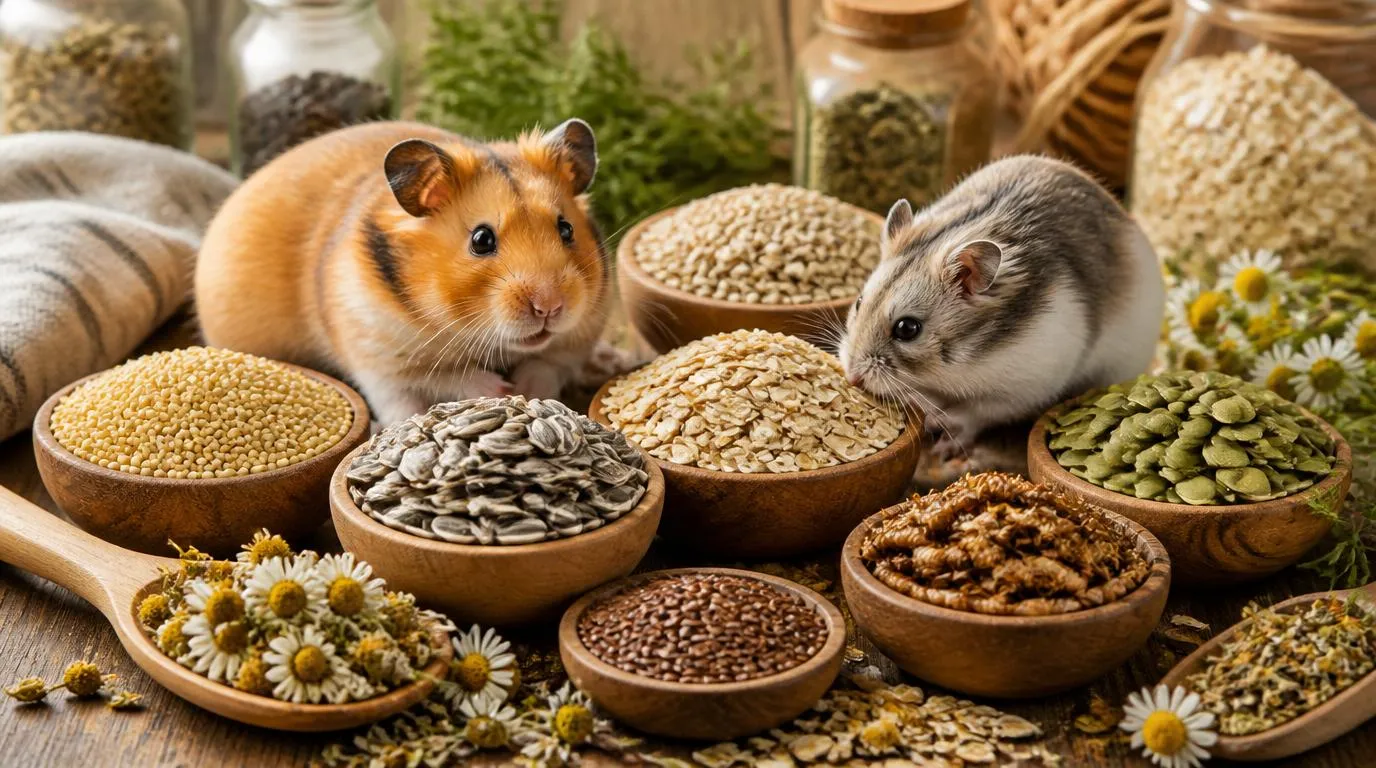
Ingredients
- Millet (spray or whole) ½ cup
- Rolled oats ½ cup
- Barley (pearled) ¼ cup
- Raw pumpkin seeds (unsalted) ¼ cup
- Sunflower seeds (unsalted) 3 tbsp
- Flaxseed (linseed) 2 tbsp
- Dried mealworms (optional protein) 2 tbsp
- Dried herbs (chamomile, dandelion) 1 tbsp
Tip: Use only unsalted, unflavored ingredients. Avoid any products with artificial sweeteners (xylitol is toxic to hamsters).
Approximate Nutritional Profile (per tablespoon of dry mix)
Values are approximate. This mix provides a balanced diet for most hamsters when supplemented with fresh vegetables.
Step-by-Step Instructions
- Prepare dry mix: In a large bowl, combine millet, oats, barley, pumpkin seeds, sunflower seeds, flaxseed, and mealworms. Stir until evenly mixed.
- Add dried herbs: Toss in chamomile or dandelion for enrichment and mix well.
- Store: Transfer to an airtight container. Keep in a cool, dark place. Use within 3 months.
- Serve: Offer 1–2 tablespoons per day (adjust for species). Remove uneaten fresh food after 4 hours.
- Fresh veggie boost: Provide a small piece of fresh vegetable (broccoli, carrot, cucumber) 2–3 times per week. Never feed citrus, onion, or garlic.
- Treats: Occasional fruit (apple without seeds, berries) can be given in tiny amounts.
Pros and Cons of Homemade Hamster Food
Pros
- No fillers or artificial ingredients – every ingredient is nutritious.
- Customizable – adjust seeds and protein to suit your hamster’s species and age.
- Cost‑effective – buying in bulk is cheaper than premium commercial mixes.
- Promotes natural foraging – scatter feeding mimics wild behavior.
Cons
- Requires careful portion control – overfeeding can lead to obesity.
- Risk of nutritional imbalance if not varied properly.
- Must be stored correctly – seeds can spoil or attract pantry pests.
Nutritional Tips – Why These Ingredients Are Great for Hamsters
Ingredient Benefits
- Millet & Oats: Easily digestible carbohydrates for energy; gentle on the stomach.
- Barley: Provides fiber and helps wear down teeth.
- Pumpkin & Sunflower seeds: Rich in healthy fats, vitamin E, and zinc for a shiny coat.
- Flaxseed: Omega‑3 fatty acids support skin and heart health.
- Mealworms: High‑quality animal protein essential for growth and maintenance.
- Dried herbs: Natural antioxidants and foraging enrichment.
Feeding Guidelines for Pet Hamsters
Follow these best practices to keep your hamster healthy and happy:
- Portion size: Syrians: 1.5–2 tbsp per day; dwarfs: 1–1.5 tbsp per day.
- Fresh food: Offer a small amount of fresh vegetables 2–3 times per week. Remove uneaten portions after a few hours to prevent spoilage.
- Water: Always provide fresh, clean water in a bottle or shallow bowl.
- Monitor weight: Weigh your hamster weekly; adjust portions if they become overweight.
- Introduce new foods gradually: Sudden changes can cause digestive upset.
- Enrichment: Scatter food around the enclosure or use foraging toys to encourage natural behavior.
Recipe Variations for Specific Hamster Species
Customize for Your Hamster
- Syrian hamsters: Add extra mealworms and a few more sunflower seeds for protein and energy.
- Dwarf hamsters (Campbell’s, Winter White, Roborovski): Limit sunflower seeds and fruits; emphasize millet and flaxseed. Offer smaller portions.
- Senior hamsters: Soak oats or barley in a little water to soften; increase easily digestible grains.
- Pregnant or nursing females: Boost protein with extra mealworms, boiled egg, or small bits of plain cooked chicken.
Observe your hamster’s preferences and adjust accordingly. A food journal can help you refine the mix over time.
Must‑Have Items
Recommended Tools & Supplies
- Large Mixing Bowl & Spoon – for combining ingredients. Check price on Amazon
- Airtight Storage Container – to keep dry mix fresh. Check price on Amazon
- Digital Kitchen Scale – for precise portioning. Check price on Amazon
- Small Ceramic Bowl – for fresh vegetables. Check price on Amazon
We participate in the Amazon Services LLC Associates Program, an affiliate advertising program designed to provide a means for us to earn fees by linking to Amazon.com and affiliated sites. As an Amazon Associate, we earn from qualifying purchases.
Storage and Safety Tips
Keep It Fresh & Safe
- Dry mix: Store in an airtight container in a cool, dry place for up to 3 months.
- Fresh food: Always wash vegetables thoroughly and remove seeds from fruits (apple seeds are toxic).
- Avoid toxic foods: Never feed chocolate, raw beans, almonds, citrus, onion, garlic, or rhubarb.
- Clean bowls daily: Wash food and water dishes to prevent bacteria buildup.
- Watch for spoilage: Discard any uneaten fresh food after 4 hours; moldy seeds can cause respiratory issues.
Conclusion
Feeding your hamster a homemade diet is a wonderful way to bond and ensure they get the best nutrition. With a few simple ingredients, you can create a mix tailored to their species, age, and preferences. Whether you stick to the basic seed blend or add fresh vegetables and occasional treats, your hamster will thrive on the care you put into their meals.
Take time to observe your hamster’s eating habits and adjust portions as needed. By providing wholesome, fresh food and maintaining a clean environment, you'll enjoy a happy, healthy companion for years to come.
Happy hamster keeping!

Frequently Asked Questions
What is the best homemade food for hamsters?
A mix of millet, oats, barley, pumpkin seeds, sunflower seeds, flaxseed, and mealworms provides balanced nutrition. Always supplement with fresh vegetables and occasional fruits.
Can hamsters eat fruits every day?
No, fruits should be given as occasional treats (1–2 times a week) due to their sugar content. Stick to small pieces of apple (seedless), pear, or berries.
How much food should I give my hamster each day?
For Syrian hamsters, about 1.5–2 tablespoons of dry mix. For dwarf hamsters, 1–1.5 tablespoons. Adjust based on activity level and body condition.
Is it safe to give my hamster mealworms?
Yes, dried mealworms are an excellent source of protein. Offer them as part of the dry mix or as a separate treat. Live mealworms are also safe but should be given in moderation.
Can I use this recipe for a dwarf hamster?
Absolutely. Reduce sunflower seeds slightly and offer smaller portions. Dwarf hamsters are prone to diabetes, so limit sugary fruits and high-fat seeds.
How long can I store homemade hamster food?
Dry mix stored in an airtight container in a cool, dark place lasts up to 3 months. Freeze for longer storage (up to 6 months) to preserve freshness.