
Cats are often described as mysterious, aloof, or unpredictable, but their behavior follows consistent patterns rooted in their biology and evolutionary history. Understanding cat behavior is key to building a strong bond with your feline companion and ensuring their wellbeing. In this comprehensive 2026 guide, we'll decode the secrets of feline psychology, helping you understand why cats do what they do.
From subtle tail flicks to complex social dynamics, feline communication is rich and nuanced. Whether you're a new cat owner or have lived with cats for years, this guide will provide valuable insights into your cat's world. For more specific information, check out our guide on decoding cat body language or our article on managing multi-cat households.
Table of Contents
- The Nature of Cats: Understanding Feline Instincts
- Feline Communication: How Cats Talk
- Common Cat Behaviors Explained
- Cat Social Structure and Hierarchy
- Solving Common Behavioral Problems
- Environmental Enrichment for Indoor Cats
- Cat Intelligence and Learning
- Recognizing Stress and Anxiety in Cats
- Building a Strong Bond with Your Cat
- Positive Reinforcement Training for Cats
- Frequently Asked Questions

The Nature of Cats: Understanding Feline Instincts
To truly understand cat behavior, we must start with their evolutionary background. Domestic cats (Felis catus) descended from African wildcats and retain many of their ancestral instincts despite thousands of years of domestication.
Predatory Instincts
Cats are obligate carnivores with strong hunting instincts. Even well-fed domestic cats will stalk, pounce, and "kill" toys. This behavior isn't about hunger but about fulfilling an innate drive.
Territorial Nature
Cats are territorial animals who establish and defend their home ranges. Indoor cats consider your entire home their territory, which explains their need to patrol and mark their space.
Vertical Territory
Unlike dogs, cats utilize vertical space for safety and observation. High perches allow them to survey their territory and escape perceived threats.
Crepuscular Activity
Cats are most active at dawn and dusk (crepuscular). This hunting schedule maximizes success while avoiding daytime predators and extreme temperatures.
These instincts explain many common behaviors. For example, nighttime zoomies are an expression of crepuscular hunting instincts, while scratching furniture is both a territorial marking behavior and a way to maintain claw health.
Did You Know?
Cats have a unique social structure called a "fission-fusion society." They form loose social groups but maintain independence, coming together for mutual benefit (like raising young) but hunting and eating separately. This explains why cats can seem both social and solitary. Understanding this helps explain behaviors like selective socializing and resource guarding.
Recommended Cat Enrichment Product
Best Seller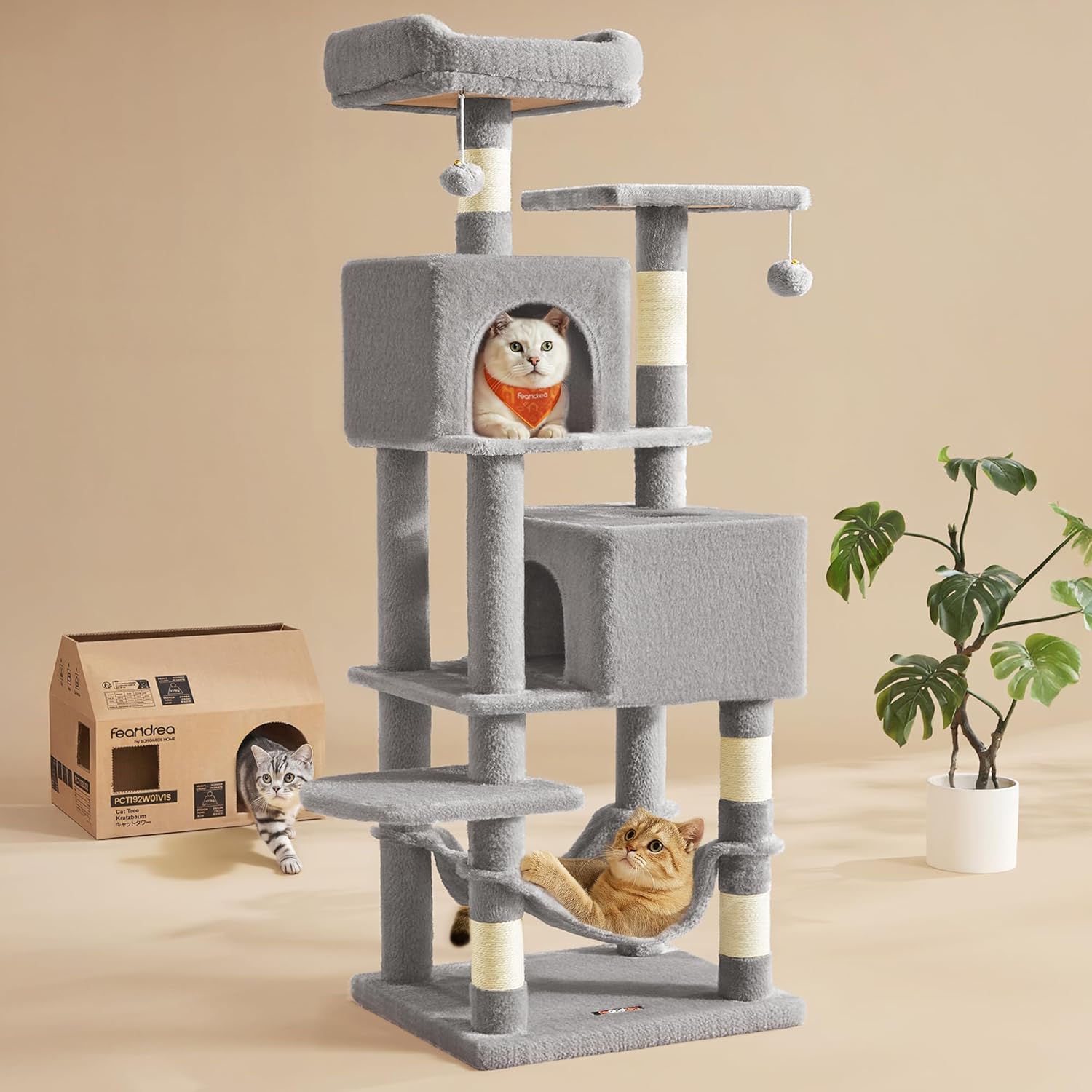
Multi-Level Cat Tree with Scratching Posts
This multi-level cat tree satisfies your cat's need for vertical territory with 3 platforms, 2 cozy condos, and multiple sisal scratching posts. Perfect for indoor cats who need environmental enrichment. For more enrichment ideas, see our guide on creating a stimulating indoor environment.
Check Amazon PriceFeline Communication: How Cats Talk
Cats communicate through a sophisticated combination of body language, vocalizations, and scent marking. Understanding this feline communication system is essential for interpreting your cat's needs and emotions.
Body Language: The Silent Conversation
A cat's body speaks volumes. Here's how to interpret common postures and movements:
Tail Up
A tail held high with a slight curve at the tip indicates a happy, confident cat. This is often a greeting posture.
Tail Twitching
Gentle tail twitching usually indicates concentration (while watching birds) or mild irritation.
Puffed Tail
A bottlebrush tail indicates fear or aggression. The cat is trying to appear larger to intimidate a threat.
Slow Blinks
Slow blinking is a cat's way of showing trust and affection. You can "slow blink" back to communicate love.
Ears Forward
Forward-facing ears show interest and attention. The more intense the situation, the more forward they point.
Ears Flattened
Ears flattened sideways or back indicate fear, anxiety, or aggression. This is a defensive posture.
Vocalizations: The Feline Vocabulary
Cats have developed an extensive vocal repertoire specifically for communicating with humans. Research from the University of Sussex suggests cats have learned to modify their meows to manipulate human behavior.
| Vocalization | Meaning | Context |
|---|---|---|
| Short Meow | Standard greeting | "Hello" or acknowledgment |
| Multiple Meows | Excited greeting | "I'm so happy to see you!" |
| Mid-pitch Meow | Request or demand | "I want food/attention/access" |
| Long, Drawn-out Meow | Complaint | "You're late with my dinner!" |
| Low-pitch Meow | Dissatisfaction | "I don't like this" |
| High-pitch Meow | Pain or anger | "That hurt!" or extreme distress |
| Purring | Contentment or self-soothing | Happy or in pain (self-comfort) |
| Chattering | Frustrated hunting instinct | Watching prey they can't reach |
Scent Marking: The Invisible Communication
Cats have scent glands on their cheeks, paws, and base of their tail. When they rub against you or furniture, they're depositing pheromones that mark their territory and create a familiar, comforting environment.
Friendly Marking
When your cat rubs their cheek against you, they're marking you as "safe" and part of their social group. This is a sign of affection and ownership.
Visual and Scent Marking
Scratching leaves both visual marks and scent from paw glands. It communicates territory boundaries and helps stretch muscles.
Stress or Territory Marking
Urine spraying (backing up to vertical surfaces) is different from normal elimination. It's a potent territory marker often triggered by stress or competition.

Common Cat Behaviors Explained
Many cat behaviors that seem puzzling or problematic are actually normal feline expressions. Here's what common behaviors mean and how to respond appropriately:
ZimuShop 2026 Cat Behavior Survey
We surveyed 1,854 cat owners about their cats' most common behaviors:
| Behavior | Percentage of Cats | Most Common Interpretation | Owner Understanding |
|---|---|---|---|
| Kneading (Making Biscuits) | 92% | Contentment, comfort-seeking | 78% correct |
| Head Butting | 87% | Affection, scent marking | 65% correct |
| Chattering at Birds | 76% | Frustrated hunting instinct | 42% correct |
| Zoomies (FRAPs) | 94% | Excess energy, play behavior | 89% correct |
| Bringing "Gifts" | 68% | Teaching behavior, sharing | 31% correct |
| Sleeping in Odd Positions | 97% | Complete trust, comfort | 84% correct |
Based on 1,854 survey responses from cat owners tracking behaviors over 6 months.
Interactive Cat Toy
Editor's Choice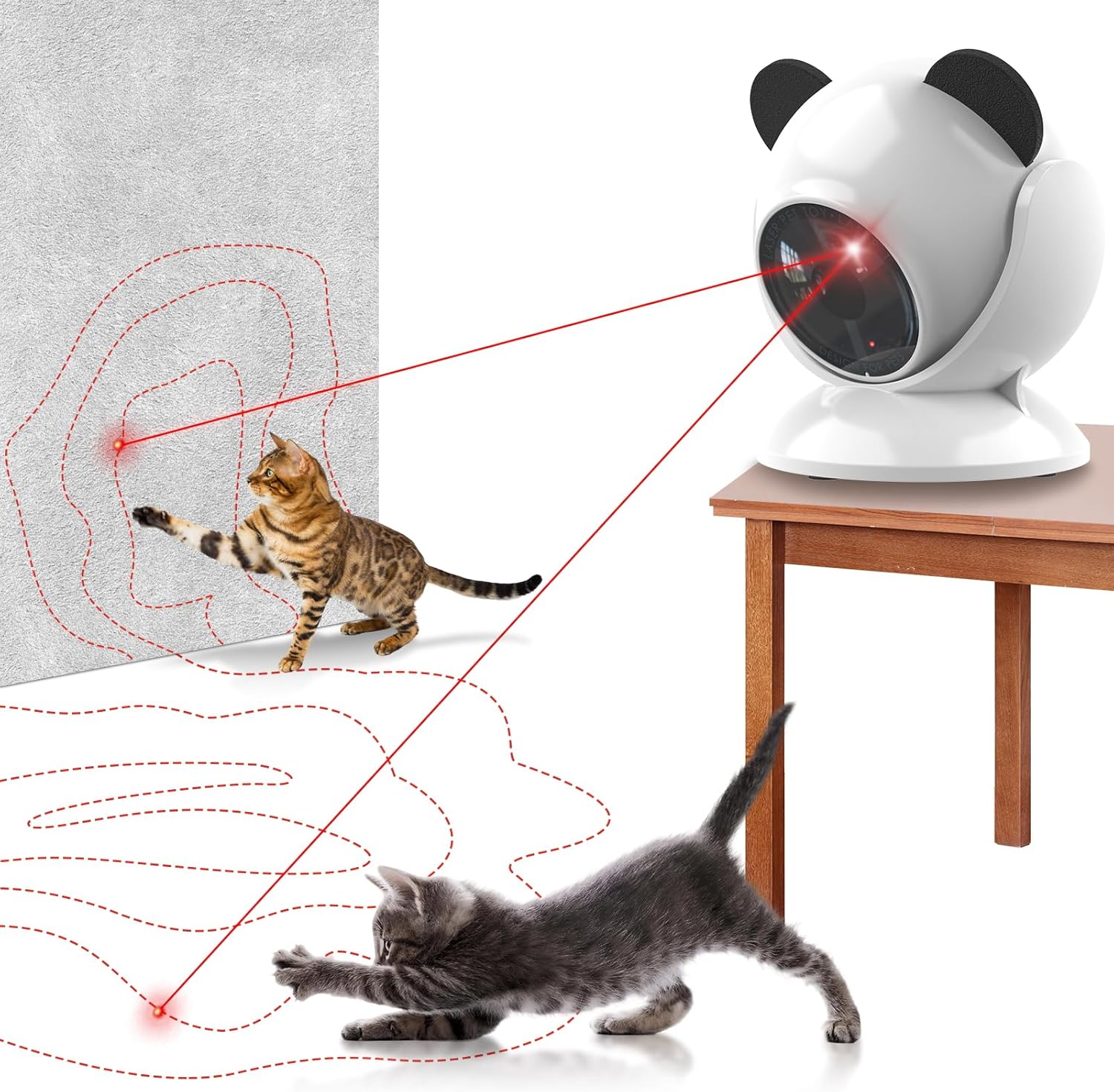
Automatic Laser Cat Toy with Timer
This automatic laser toy provides hours of interactive play, satisfying your cat's hunting instincts. Features multiple pattern settings and automatic shut-off. According to the ASPCA, regular interactive play is essential for preventing behavior problems in indoor cats.
Check Amazon PriceCat Social Structure and Hierarchy
Contrary to popular belief, cats are not strictly solitary animals. They form complex social relationships based on resource availability and familiarity.
Colony Structure
Feral cats form colonies centered around resources (food, shelter). These are typically matriarchal societies where related females cooperate in raising kittens.
Social Hierarchy
Cat hierarchies are fluid rather than linear. Status depends on context - a cat might be dominant over food but deferential in resting spots. There's rarely a single "alpha."
Introduction Protocol
Cats are territorial and introductions must be gradual. The standard protocol involves scent swapping, visual access without contact, and supervised meetings over 2-4 weeks.
Affiliative Behaviors
Cats show affection through allogrooming (mutual grooming), sleeping touching, and sharing territory. These behaviors strengthen social bonds within compatible groups.
Common Multi-Cat Household Mistakes
- Insufficient resources: The general rule is one litter box per cat plus one extra, and multiple feeding/water stations
- Forced interactions: Never force cats to interact; let them set the pace of relationships
- Punishing aggression: Punishment increases stress and exacerbates conflicts
- Ignoring subtle signs: Staring, blocking access, and tense body language precede overt aggression
For a comprehensive guide to managing multiple cats, see our complete multi-cat household guide.
Solving Common Behavioral Problems
Behavioral issues are often communication attempts or responses to stress. Understanding the underlying cause is the first step toward resolution.
Litter Box Issues
Litter box problems are among the most common reasons cats are relinquished to shelters. Most issues are solvable with proper diagnosis and management.
Rule Out Health Issues
Urinary tract infections, kidney disease, arthritis, and other medical conditions can cause litter box avoidance. Always consult a veterinarian first.
Evaluate Setup
Check: Is the box clean? Is it in a quiet location? Is it large enough? Is the litter type acceptable? Most cats prefer unscented, fine-grained clumping litter.
Create Ideal Conditions
Add more boxes (n+1 rule), try different litter types, ensure boxes aren't near food/water, and provide boxes on every floor of multi-level homes.
Positive Reinforcement
Never punish accidents. Clean soiled areas with enzymatic cleaner. Reward appropriate elimination with treats and praise. Consider synthetic pheromones (Feliway) to reduce stress.
Destructive Scratching
Scratching is normal feline behavior that serves multiple purposes: claw maintenance, stretching, and scent marking. The goal isn't to stop scratching but to redirect it appropriately.
Scratching Post Success Tips
- Location matters: Place posts near sleeping areas and in high-traffic zones
- Stability is crucial: Posts must not wobble or tip during use
- Texture variety: Offer both vertical and horizontal surfaces with different materials (sisal, carpet, cardboard)
- Make furniture unattractive: Use double-sided tape, aluminum foil, or plastic covers on inappropriate surfaces
- Make posts attractive: Rub with catnip, hang toys from them, reward use with treats
Aggression
Cat aggression falls into several categories, each requiring different approaches:
| Type | Triggers | Solutions | Mood Indicator |
|---|---|---|---|
| Play Aggression | Understimulation, inappropriate play | Regular interactive play, appropriate toys | Playful |
| Fear Aggression | Threats, past trauma, lack of socialization | Create safe spaces, desensitization, avoid punishment | Stressed |
| Redirected Aggression | Unable to reach actual trigger (outdoor cat) | Remove visual access, calm before reintroduction | Frustrated |
| Petting-Induced | Overstimulation, sensitive areas | Learn tolerance signs, shorter petting sessions | Mixed |
| Inter-cat | Resource competition, hierarchy disputes | Multiple resources, gradual reintroduction | Competitive |

Environmental Enrichment for Indoor Cats
Indoor cats live longer, safer lives but require intentional environmental enrichment to prevent boredom, obesity, and behavioral problems. A stimulating environment addresses all five feline needs: hunting, catching, killing, eating, and grooming.
Hunting Simulation
Use wand toys to mimic prey movement: quick, erratic motions that trigger chase instinct. End each session with a "catch" (toy in mouth) followed by a food reward.
Vertical Territory
Provide cat trees, shelves, window perches, and cleared cabinet tops. Vertical space increases usable territory and provides safe observation points.
Food Puzzles
Instead of food bowls, use puzzle feeders that require manipulation. This engages natural foraging behavior and slows eating, preventing obesity.
Visual Stimulation
Create bird/squirrel viewing stations with secure window perches. Consider aquarium-style videos designed for cats or outdoor enclosures (catios).
Case Study: Oliver's Transformation
Oliver, a 3-year-old tabby, was showing multiple behavior problems: nighttime vocalization, furniture scratching, and attention-seeking aggression. His owners were considering rehoming him.
- Assessment: Oliver was an indoor-only cat with minimal environmental enrichment
- Intervention: Implemented a comprehensive enrichment plan including scheduled play sessions, food puzzles, and vertical territory
- Week 2: Nighttime vocalization reduced by 80%
- Month 1: Furniture scratching redirected to appropriate posts
- Month 3: Attention-seeking aggression eliminated through scheduled interaction times
Oliver's case demonstrates how unmet behavioral needs manifest as "problem behaviors." Addressing the root cause through environmental enrichment solved multiple issues simultaneously.
Food Puzzle Toy
Mental Stimulation
Interactive Cat Food Puzzle Feeder
This food puzzle engages your cat's natural foraging instincts, slowing eating and providing mental stimulation. Adjustable difficulty levels. Research from the Cornell Feline Health Center shows food puzzles reduce stress and prevent obesity in indoor cats.
Check Amazon PriceCat Intelligence and Learning
Cats are highly intelligent animals with excellent problem-solving abilities, though their learning style differs from dogs. They're independent learners who excel at observational learning and trial-and-error problem solving.
Feline Cognitive Abilities
Recent research has revealed impressive cognitive abilities in cats:
| Cognitive Ability | Evidence | Implications for Owners |
|---|---|---|
| Object Permanence | Cats understand objects exist when out of sight | Explains searching behaviors, puzzle solving |
| Cause and Effect | Can learn mechanisms (levers, buttons) | Trainable with clickers, food puzzles |
| Social Learning | Learn by observing other cats and humans | Model desired behaviors, use other cats as teachers |
| Memory | Excellent long-term memory for people/places | Early positive experiences crucial for socialization |
| Communication Understanding | Recognize their names, some human words | Use consistent verbal cues in training |
Positive Reinforcement Training for Cats
Cats are highly trainable using positive reinforcement methods. Training strengthens your bond and provides mental stimulation.
- Use high-value treats (tiny pieces)
- Keep sessions short (1-5 minutes)
- End on a success
- Never use punishment
- Be patient and consistent
- Touch target (nose to stick)
- Sit (using lure with treat)
- High five
- Come when called
- Go to mat/bed
- Carrier acceptance
- Nail trimming tolerance
- Accepting medication
- Harness training
- Veterinary exam cooperation
- Long training sessions
- Low-value rewards
- Inconsistent cues
- Getting frustrated
- Missing training opportunities
Recognizing Stress and Anxiety in Cats
Cats are masters at hiding discomfort, but subtle signs indicate stress. Chronic stress contributes to behavior problems and medical issues like Feline Idiopathic Cystitis.
Behavioral Signs
Hiding, decreased grooming, changes in eating patterns, increased vocalization, aggression, litter box avoidance, excessive grooming (barbering).
Physical Signs
Dilated pupils, flattened ears, tense body posture, low tail carriage, increased shedding, weight loss/gain, digestive issues.
Environmental Stressors
Changes in routine, new pets/people, construction noise, insufficient resources, conflict with other pets, outdoor cats visible through windows.
Stress Reduction
Maintain routines, provide hiding spots, use pheromone diffusers (Feliway), ensure resource availability, create predictable environments.
Creating a Cat-Friendly Home
- Safe spaces: Provide hiding spots in every room (boxes, covered beds, high perches)
- Predictable routines: Feed, play, and interact at consistent times
- Resource distribution: Multiple litter boxes, water stations, and resting areas
- Environmental control: Allow cats to choose between interaction and solitude
- Positive associations: Pair potentially stressful events (vet visits, grooming) with treats and praise

Building a Strong Bond with Your Cat
The human-feline bond is unique and rewarding when built on mutual understanding and respect. Here's how to strengthen your relationship with your cat:
Let Your Cat Initiate
Allow your cat to choose when to interact. An outstretched finger lets them decide to approach or not. Respect when they signal they've had enough petting.
Communicate in Cat
Use slow blinks to show trust. Avoid direct stares (threatening in cat language). Pay attention to ear, tail, and whisker positions.
Engage in Preferred Activities
Does your cat prefer lap sitting or parallel presence? Interactive play or quiet observation? Cater to their individual preferences.
Create Good Experiences
Associate your presence with positive things: treats, play, gentle grooming. Never use your hands for play (to prevent biting).
Additional Resources
Final Thoughts on Understanding Cat Behavior
Understanding cat behavior transforms the human-feline relationship from mysterious to meaningful. When we learn to see the world through our cats' eyes, we discover that their "odd" behaviors are logical expressions of their feline nature.
Remember that every cat is an individual with unique preferences and personality. What works for one may not work for another. The key is observation, patience, and a willingness to adapt to your cat's needs.
Your cat's behavior is their way of communicating with you. By learning their language, you're not just solving problems - you're building a deeper, more satisfying bond with your feline companion. That's the true reward of understanding feline psychology.